🌍 World News
Live
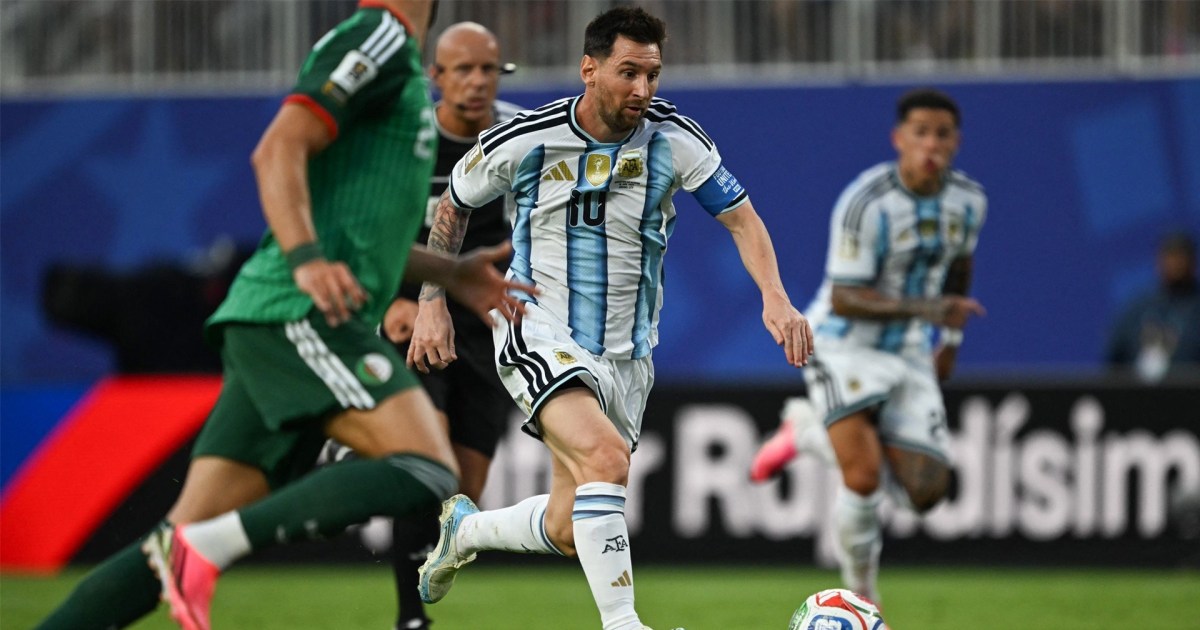
Messi celebra su noche histórica y destaca la unión de Argentina
Tras su triplete ante Argelia e igualar a Miroslav Klose como máximo goleador histórico de los Mundiales, Lionel Messi destacó la unión del grupo. Mac Allister y Scaloni resaltaron el valor de inicia…
NBC News — 16 June 2026
Text:
33
0
0
Tras su triplete ante Argelia e igualar a Miroslav Klose como máximo goleador histórico de los Mundiales, Lionel Messi destacó la unión del grupo. Mac
Read Full Story at NBC News →
⚡ Quickyla Analysis
Original editorial context — not sourced from the article above
The milestone Messi achieved in Argentina’s World Cup opener—equaling Miroslav Klose’s record of 16 World Cup goals—wasn’t just a personal triumph, but a symbolic validation of a tactical and cultural evolution in Argentine football. Beyond the numbers, the performance against Algeria underscored a deeper shift: Argentina’s ability to blend individual brilliance with collective cohesion. Messi’s celebration, framed by his emphasis on team unity, reflects a deliberate departure from the era when his relationship with the national team was strained by high expectations and tactical misalignments. Now, under Lionel Scaloni’s steady leadership, the squad has transformed into a unit where roles are fluid, pressure is shared, and even midfielders like Mac Allister can emerge as unexpected heroes. This convergence of talent and teamwork could redefine how Argentina is perceived—not as a one-man show, but as a balanced, resilient collective capable of adapting to adversity.
The broader significance lies in how this moment challenges the narrative of Messi’s legacy. For years, debates raged about whether his World Cup triumph in Qatar was inevitable or whether it would come at the cost of his club career. The fact that he’s now adding records in his fourth World Cup cycle signals not just enduring skill, but an unmatched commitment to the national cause. Yet the underlying story is Scaloni’s project: a low-key, methodical rebuild that prioritized chemistry over star power. The inclusion of players like Mac Allister—often overlooked in global football discourse—highlights how Argentina’s success is built on depth, not just individual genius.
What remains to be seen is whether this form can be sustained against tougher opponents. Algeria’s defensive frailties were exposed, but the real tests await against higher-pressure teams. Will Argentina’s unity hold when facing tactical masterminds like France or England? The open question is whether this blend of pragmatism and passion can evolve into a sustainable model beyond a single tournament. If so, it could influence how other nations approach squad-building, proving that in the modern game, collective identity may matter as much as individual talent. For now, Messi’s record is a footnote to a larger story—one about resilience, adaptation, and the quiet art of turning a group of stars into a team.
Sources

🌍 World News
Agitators outside Delaney Hall set up organized logistics operation before Newark protests began

🌍 World News
Man fleeing police attacked by alligator before continuing his getaway, Louisiana authorities say
🌍 World News
US crude exports hit record high in May as Iran war tightens global oil supplies

🌍 World News
French doctors sound alarm over drinking water pollution

🌍 World News
Iran, Kuwait, Bahrain hit: Is the war in the Gulf escalating again?

🌍 World News
Four people trapped in flooded cave in Laos pulled to safety


