NASA Says Farewell to MAVEN Mars Mission, Hosts Media Call Today
The first mission devoted to observing the Martian atmosphere and its evolution, NASA’s MAVEN (Mars Atmosphere and Volatile Evolution), has ended after more than 11 years in orbit at Mars and a decad…
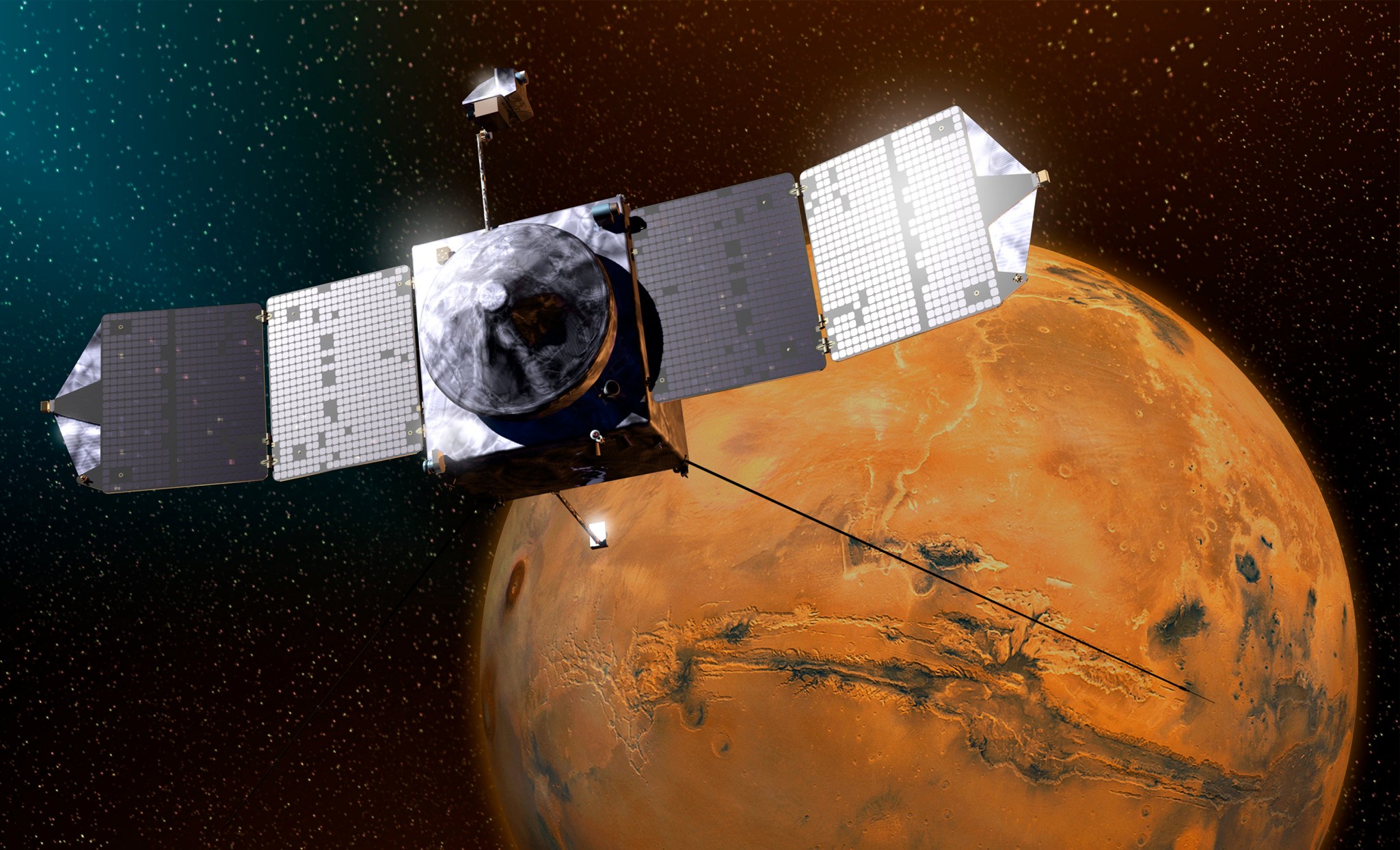
The first mission devoted to observing the Martian atmosphere and its evolution, NASA’s MAVEN (Mars Atmosphere and Volatile Evolution), has ended afte
Read Full Story at NASA →Why This Matters
MAVEN’s decade-plus mission has redefined our understanding of Mars by proving the planet once had a thick atmosphere capable of supporting liquid water—a critical pivot in the search for extraterrestrial habitability. Its solar wind data also provided the first direct evidence that atmospheric stripping by solar particles stripped Mars of its protective shield, reshaping theories about planetary evolution and the fate of Earth-like worlds.
Background Context
Launched in a tight 2013 window between Mars mission failures and budgetary constraints, MAVEN emerged from NASA’s cost-capped Discovery Program, proving that even modest missions could deliver transformative science. Its longevity—far exceeding its two-year primary mission—was a testament to robust engineering, but also underscored the risks of aging spacecraft relying on diminishing propellant reserves for orbit maintenance.
What Happens Next
With MAVEN’s decommissioning, future Martian atmospheric studies may shift to instruments aboard newer orbiters like ESA’s Trace Gas Orbiter or NASA’s Mars Sample Return campaign, though none are dedicated solely to upper-atmosphere analysis. Meanwhile, MAVEN’s data archives will fuel research for years, potentially revealing new insights about Mars’ climate history and informing human exploration strategies for the 2030s.
Bigger Picture
MAVEN’s success exemplifies a broader trend in planetary science: the shift from short-term reconnaissance to long-term climate archaeology, where orbiters double as time capsules of planetary change. Its mission’s end also highlights a looming challenge in solar system exploration—the aging fleet of legacy spacecraft struggling to balance dwindling resources with the demand for high-impact discoveries.






