NASA Webb captures Centaurus A’s warped core from collision
NASA’s James Webb Space Telescope revealed Centaurus A’s warped core and star-forming jets, showing how a past galaxy collision reshaped it. The findings help scientists understand how mergers drive g
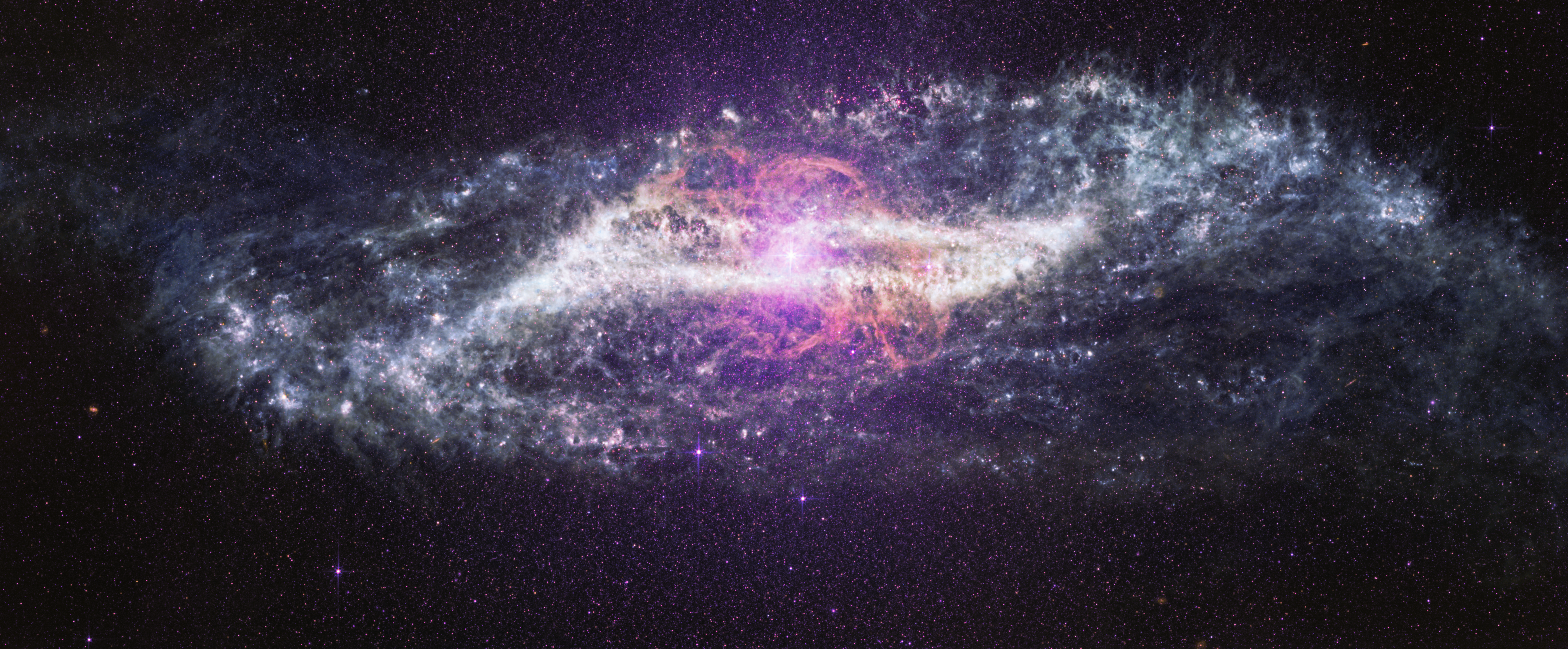
NASA’s James Webb Space Telescope has revealed a dramatic new view of the galaxy Centaurus A, showing how a past cosmic collision reshaped it into a t
Read Full Story at NASA →Why This Matters
The discovery underscores how galactic collisions—long theorized as cosmic architects—are not just destructive events but creative forces that sculpt new star-forming regions and energy flows. By mapping the warped core and ionized jets of Centaurus A, Webb provides a high-fidelity snapshot of a process that has shaped galaxies across billions of years, offering clues to the origins of our own Milky Way.
Background Context
Centaurus A, one of the closest active galaxies to Earth, has long been a laboratory for studying galactic mergers due to its distorted dust lane and powerful radio jets. Earlier observations by Hubble and ground-based telescopes hinted at a violent past, but Webb’s infrared sensitivity now pierces the dust to reveal the collision’s lingering scars in unprecedented detail, bridging gaps between theory and observable evidence.
What Happens Next
Researchers will likely prioritize follow-up studies to trace the distribution of heavy elements ejected by the merger, which could reveal how such collisions seed future star formation. The data may also inform simulations of our galaxy’s eventual encounter with Andromeda, while prompting astronomers to re-examine other warped galaxies for similar collision signatures, potentially rewriting merger chronologies.
Bigger Picture
This finding aligns with growing evidence that galactic collisions are not rare aberrations but fundamental to galaxy evolution, with mergers driving bursts of starbirth and reshaping central black holes. As Webb continues to peer deeper into the universe, its observations could recalibrate models of cosmic structure formation, challenging assumptions about the quiet uniformity of galactic lifecycles.