🔬 Science
Live
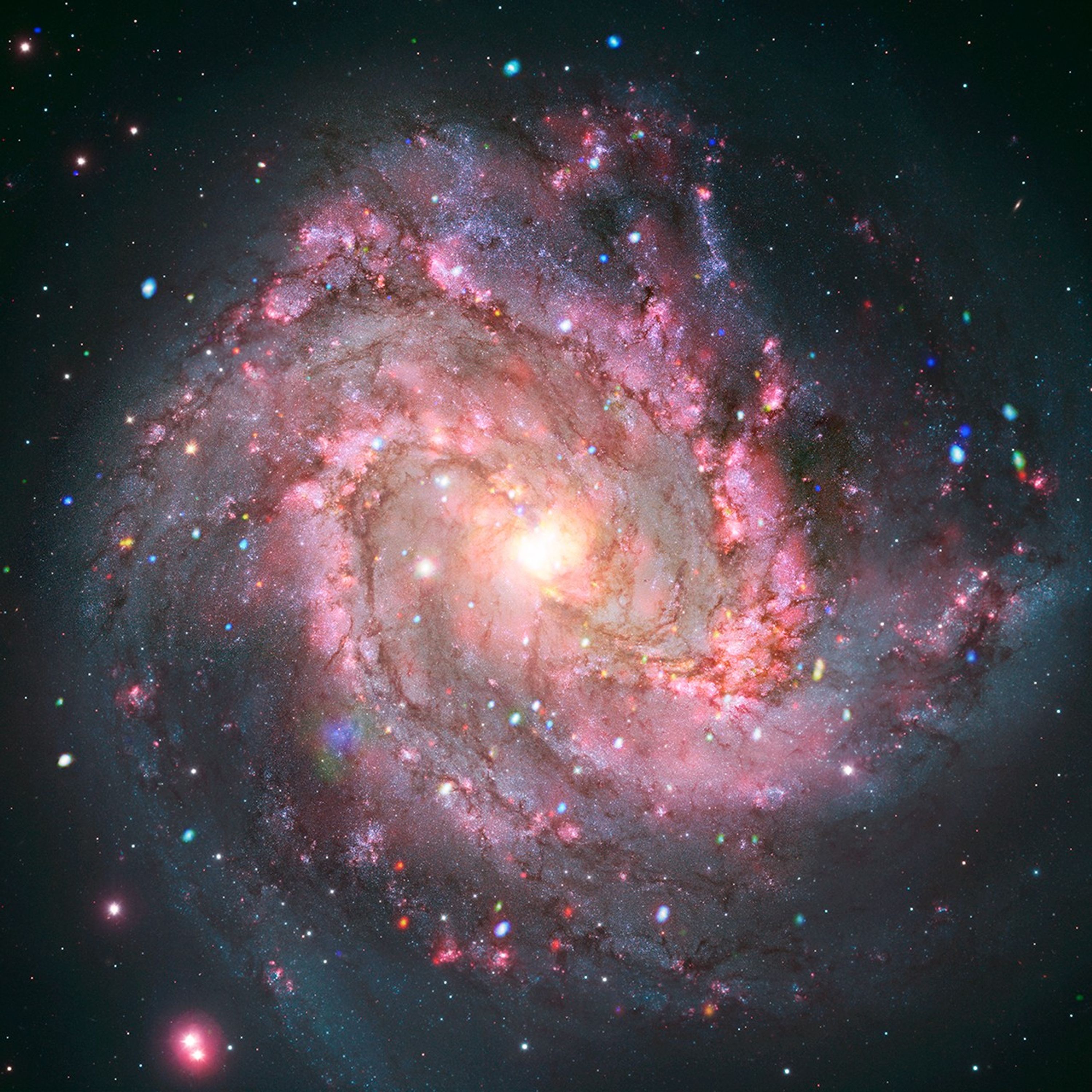
NASA’s Chandra Finds Unexpected Fireworks in Aftermath of Stellar Explosions
The aftermath of a supernova, a stellar explosion, is usually a slowly fading cloud of hot gas. So when astronomers pointed NASA’s Chandra X-ray Observatory at the nearby galaxy Messier 83 (M83), the…
NASA — 15 June 2026
Text:
18
0
0
The aftermath of a supernova, a stellar explosion, is usually a slowly fading cloud of hot gas. So when astronomers pointed NASA’s Chandra X-ray Obser
Read Full Story at NASA →
⚡ Quickyla Analysis
Original editorial context — not sourced from the article above
NASA’s Chandra X-ray Observatory has uncovered an unexpected phenomenon in the aftermath of stellar explosions within Messier 83, a galaxy just 15 million light-years away. While supernova remnants are typically thought to fade gradually into diffuse, cooling gas, the observations reveal a dynamic, almost explosive environment—one that defies conventional astrophysical models. This discovery matters because it challenges long-held assumptions about how massive stars end their lives and how their energy reshapes their surroundings. If supernovae aren’t as simple as fading embers but instead inject energy in bursts long after the initial explosion, it could force a reevaluation of galactic evolution, particularly in star-forming regions where such events are frequent.
The broader significance extends beyond M83. Stellar explosions are cosmic engines that seed galaxies with heavy elements, trigger new star formation, and regulate the interstellar medium. If these remnants are more energetic and long-lived than previously believed, it may explain why some galaxies maintain high levels of X-ray emissions despite older stellar populations. The data also suggests that the interplay between shockwaves, magnetic fields, and cosmic rays in supernova remnants is far more complex than models predict. This could have implications for understanding the origins of high-energy particles that pervade the universe.
What remains unclear is whether M83’s behavior is an outlier or a common trait among similar galaxies. If Chandra detects comparable patterns in other systems, it might indicate that the standard model of supernova remnants needs revision. Another open question is how these energetic outbursts interact with the galactic magnetic fields, potentially influencing the formation of future stars or even the propagation of cosmic rays toward Earth.
This discovery aligns with a broader trend in astrophysics: the growing recognition that the universe is far more turbulent and interconnected than once assumed. From fast radio bursts to the role of black holes in shaping galaxies, unexpected phenomena are revealing that cosmic processes are often nonlinear, with feedback loops and delayed effects. As telescopes like Chandra peer deeper into these stellar fireworks, the line between supernova remnants and active energetic systems may blur, reshaping our understanding of the life cycles of stars and galaxies alike.
Sources

🔬 Science
'Astonishing': James Webb telescope spots the most chemically primitive galaxy in the ancient universe

🔬 Science
El Niño Is Underway

🔬 Science
Astronomers gaze into the 'Crystal Ball Nebula' and see a vision of our dying sun — Space photo of the week

🔬 Science
Bacteria uncover distinct strategy to import rare sugar polymers, crystal structures show

🔬 Science
NASA Awards Contract for Johnson Space Center Infrastructure

🔬 Science
Repairing DNA damage: Scientists discover a surprising new benefit of melatonin

