🔬 Science
Live
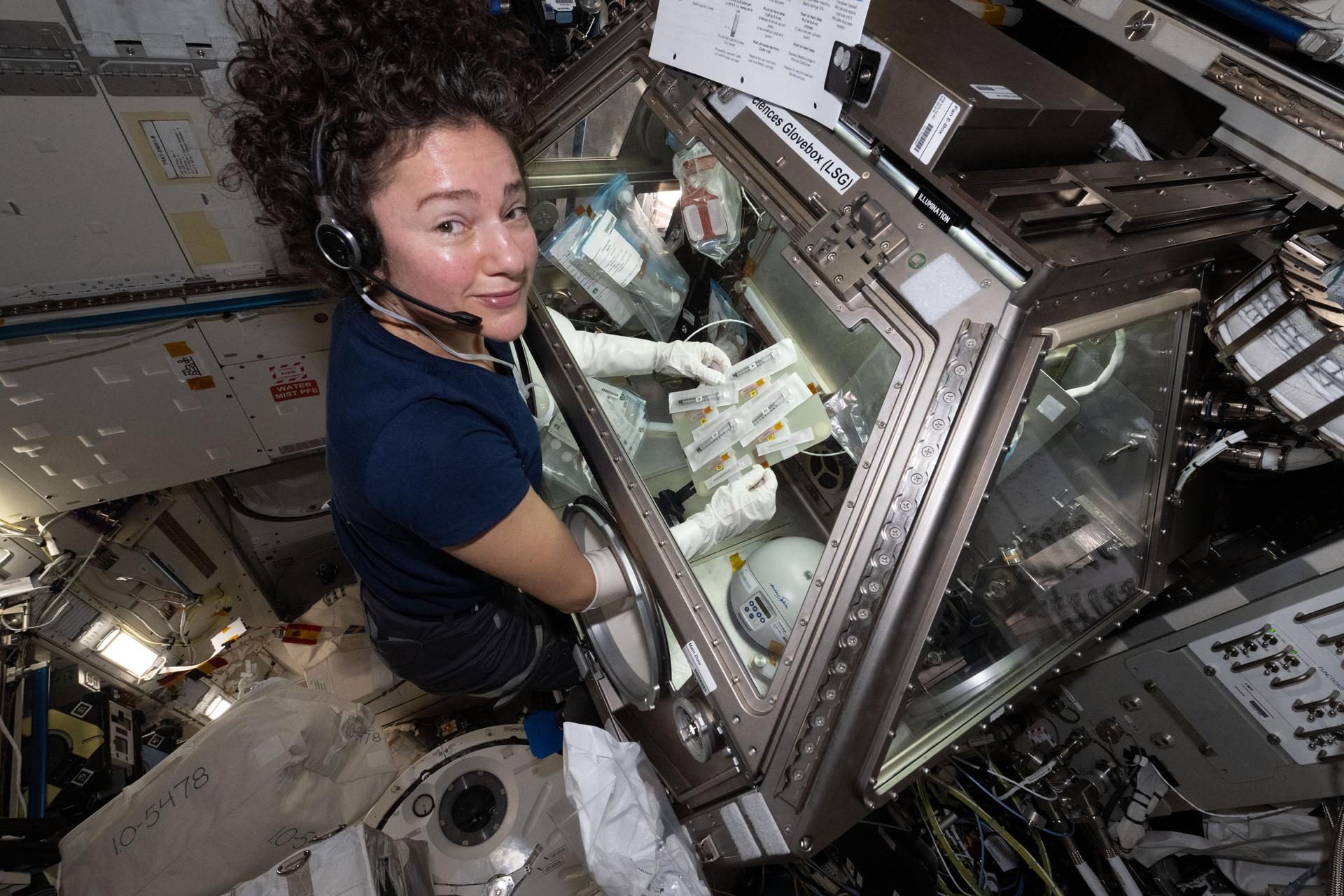
NASA’s SpaceX CRS-34 Dragon Returns Packed with Space Station Science
Scientists await a big splash in the Pacific Ocean as one of the most research-packed Dragon spacecraft to date returns, completing the 34th SpaceX commercial resupply mission to the International Sp…
NASA — 15 June 2026
Text:
15
0
0
Scientists await a big splash in the Pacific Ocean as one of the most research-packed Dragon spacecraft to date returns, completing the 34th SpaceX co
Read Full Story at NASA →
⚡ Quickyla Analysis
Original editorial context — not sourced from the article above
The return of SpaceX’s CRS-34 Dragon spacecraft from the International Space Station (ISS) marks more than just another resupply mission—it underscores the accelerating pace at which orbital science is transitioning from experimental curiosity to operational necessity. This mission carried an unusually dense payload of experiments, including life sciences, materials research, and technology demonstrations, reflecting a broader shift in how space agencies and private companies view the ISS: not merely as a laboratory in low Earth orbit, but as a critical hub for advancing capabilities that will support long-duration human spaceflight and future commercial ventures beyond Earth’s atmosphere.
What makes this return particularly significant is the sheer volume of data and biological samples making their way back to researchers. Among the cargo are experiments examining how microgravity affects plant growth, immune cell function, and the crystallization of pharmaceutical compounds—findings that could influence both Earth-based medicine and the sustainability of deep-space missions. The Dragon’s payload also included hardware for future lunar and Martian missions, hinting at the ISS’s role as a testing ground for technologies destined for NASA’s Artemis program and private sector ambitions like SpaceX’s Starship.
Looking ahead, the completion of CRS-34 raises questions about the sustainability of this research pipeline. With commercial ventures like Axiom Space and Sierra Space preparing their own orbital platforms, the ISS may soon share the spotlight with a constellation of private stations. Yet the Dragon’s return also highlights a persistent challenge: the bottleneck in data analysis and sample retrieval. As missions grow more complex, delays in processing results could slow scientific progress, underscoring the need for improved infrastructure both in space and on the ground.
This mission is a microcosm of a larger trend—the normalization of space as a domain for routine scientific and industrial activity. The question now is not whether these experiments will yield breakthroughs, but how quickly they can be translated into tangible benefits, whether for healthcare, manufacturing, or humanity’s expansion beyond Earth. The splashdown in the Pacific isn’t just the end of a mission; it’s a milestone in proving that space is no longer an exception to the rules of innovation, but a place where those rules are rewritten.
Sources

🔬 Science
'Astonishing': James Webb telescope spots the most chemically primitive galaxy in the ancient universe

🔬 Science
El Niño Is Underway

🔬 Science
Astronomers gaze into the 'Crystal Ball Nebula' and see a vision of our dying sun — Space photo of the week

🔬 Science
NASA Awards Contract for Johnson Space Center Infrastructure

🔬 Science
Bacteria uncover distinct strategy to import rare sugar polymers, crystal structures show

🔬 Science
Repairing DNA damage: Scientists discover a surprising new benefit of melatonin

