NASA’s Webb Catches Exoplanet Getting Roasted
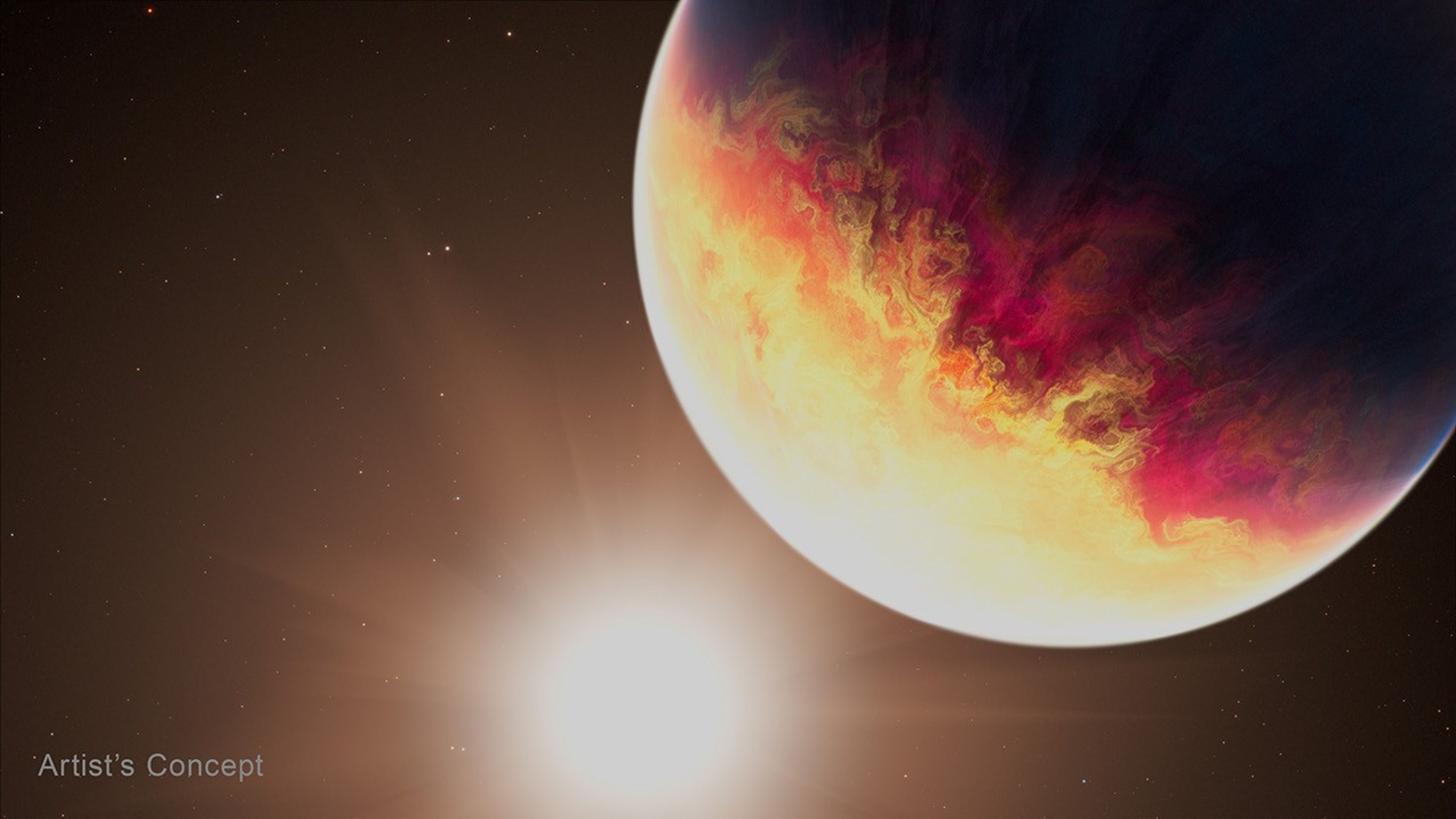
One well-done gas giant, coming right up! That’s the latest from researchers analyzing NASA’s James Webb Space Telescope’s observations of HD 80606 b, an exoplanet four times the mass of Jupiter with…
NASA — 16 June 2026
Text:
20
0
0
One well-done gas giant, coming right up! That’s the latest from researchers analyzing NASA’s James Webb Space Telescope’s observations of HD 80606 b,
Read Full Story at NASA →
⚡ Quickyla Analysis
Original editorial context — not sourced from the article above
NASA’s James Webb Space Telescope has once again delivered a reminder of the universe’s extremes, this time capturing an exoplanet so violently heated by its star that it stretches the limits of planetary science. HD 80606 b, a gas giant four times the mass of Jupiter, undergoes dramatic temperature swings as it skims perilously close to its star before hurtling away in a stretched-out orbit. This so-called "ultra-hot Jupiter" isn’t just a curiosity—it’s a critical case study in how planets evolve under the harshest conditions imaginable, challenging long-held assumptions about planetary formation, migration, and atmospheric resilience.
What makes this exoplanet particularly intriguing is its orbit, which defies the neat circular paths we associate with our solar system’s gas giants. HD 80606 b is caught in a highly eccentric trajectory, swinging from a scorching 1,000°C to a more temperate 100°C in just a few hours as it passes near its star. This extreme variability offers astronomers a rare opportunity to observe dynamic atmospheric processes in real time, from storm systems to chemical reactions driven by sudden temperature shifts. The Webb’s infrared instruments can now dissect these changes in unprecedented detail, revealing how heat redistributes across the planet’s surface and whether it retains any semblance of stability despite its violent environment.
The findings also raise questions about the origins of such worlds. Did HD 80606 b form further out in its system before migrating inward, or was it always doomed to this fiery dance? The answer could reshape our understanding of how gas giants—both in our solar system and beyond—are sculpted by gravitational forces and stellar radiation. With hundreds of similar exoplanets already identified, this one may serve as a Rosetta Stone for decoding their behavior.
Looking ahead, further Webb observations could uncover whether these ultra-hot Jupiters host weather patterns akin to Earth’s jet streams or if their atmospheres are too chaotic to sustain anything but violent upheavals. The data may also hint at whether planets like HD 80606 b could eventually settle into more stable orbits—or if they’re destined to be torn apart by their stars. Either way, this exoplanet is more than a scientific oddity; it’s a window into the brutal, beautiful chaos of the cosmos.
Sources

🔬 Science
'Astonishing': James Webb telescope spots the most chemically primitive galaxy in the ancient universe

🔬 Science
El Niño Is Underway

🔬 Science
Astronomers gaze into the 'Crystal Ball Nebula' and see a vision of our dying sun — Space photo of the week

🔬 Science
Bacteria uncover distinct strategy to import rare sugar polymers, crystal structures show

🔬 Science
NASA Awards Contract for Johnson Space Center Infrastructure

🔬 Science
Repairing DNA damage: Scientists discover a surprising new benefit of melatonin

