NASA’s X-59 is about to break the sound barrier for the first time
NASA’s futuristic X-59 jet is about to face its biggest challenge yet: breaking the sound barrier for the first time. After a successful series of test flights that pushed the aircraft to near-supers…
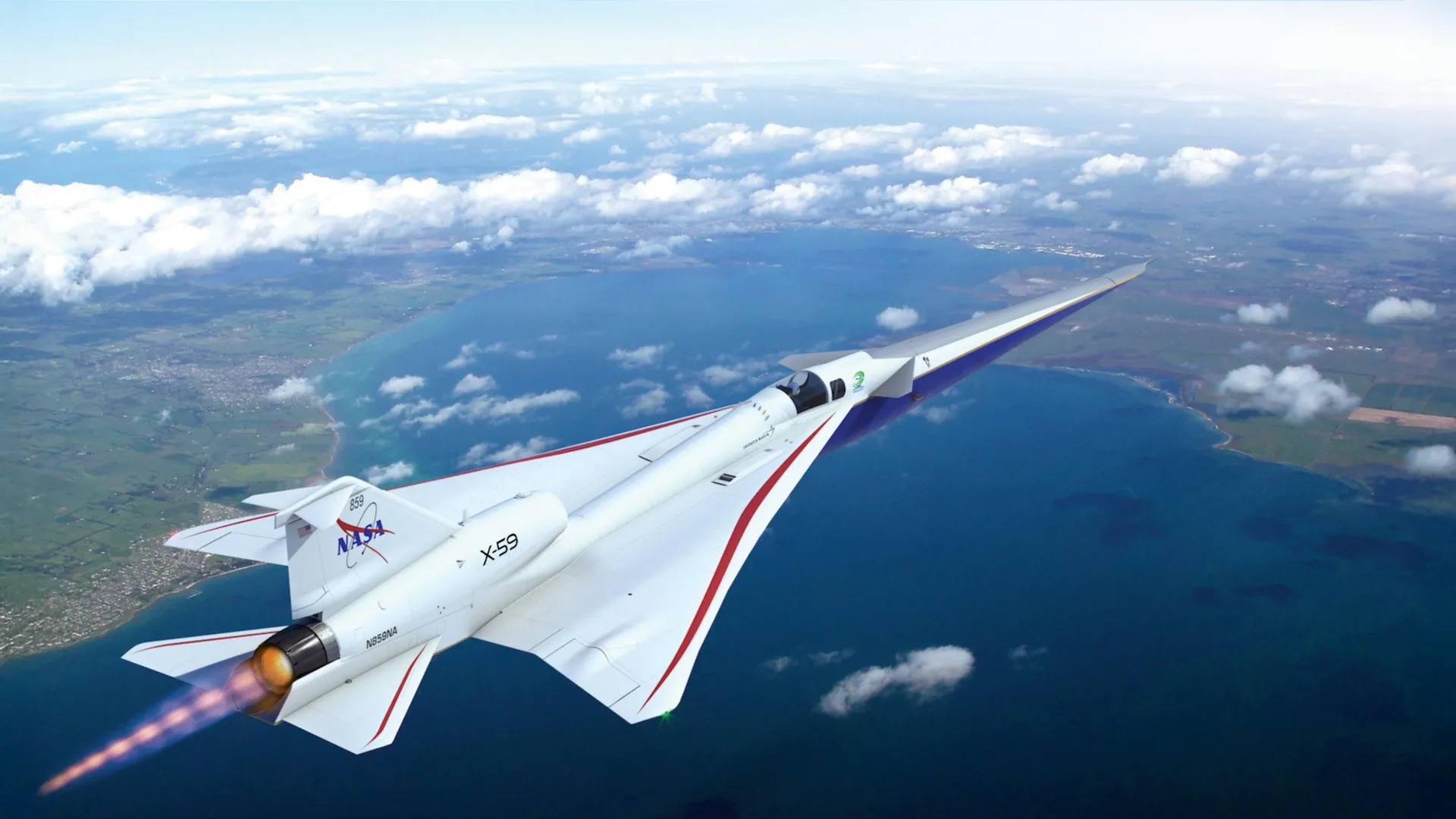
NASA’s futuristic X-59 jet is about to face its biggest challenge yet: breaking the sound barrier for the first time. After a successful series of tes
Read Full Story at Science Daily →Why This Matters
The X-59’s imminent supersonic test isn’t just another flight milestone—it’s the first real-world trial of a technology that could reshape commercial aviation by silencing the thunderclap of breaking the sound barrier. If successful, it would finally unlock the door to overland supersonic travel, a prohibition that has stifled innovation since the Concorde’s demise. Beyond speed, this test validates NASA’s decade-long bet on quiet supersonics as a sustainable path forward in an era obsessed with decarbonization and efficiency.
Background Context
Developed under NASA’s $247 million Quiet Supersonic Technology (QueSST) program, the X-59 is the result of a deliberate pivot from military secrecy to civilian utility. Its design eliminates the traditional sonic boom by stretching the shockwaves into a series of quieter "thumps," a concept first theorized in the 1960s but never scaled. The project’s survival hinged on congressional support, which wavered after the 2003 Concorde shutdown left regulators wary of repeating history.
What Happens Next
If the X-59’s sonic boom test meets NASA’s predicted 75-perceived-decibel "thump," the FAA will face mounting pressure to revisit its 1973 ban on commercial supersonic overland flights. Industry watchers anticipate a domino effect, with startups like Boom Supersonic and Hermeus accelerating their own low-boom prototypes. The biggest unknown remains public tolerance—will communities along test routes accept the noise, or will legal challenges stall progress before certification?
Bigger Picture
This test arrives amid a broader renaissance in high-speed aviation, where the race isn’t just for speed but for sustainability. As battery-electric and hydrogen-powered jets dominate headlines, the X-59 represents a quieter, more incremental revolution—one that could coexist with emerging technologies rather than compete with them. Its success might also redefine defense contracts, proving that civilian aerospace breakthroughs can trickle back into military applications.







