🔬 Science
Live
Nebraska’s Wide, Rolling Domain
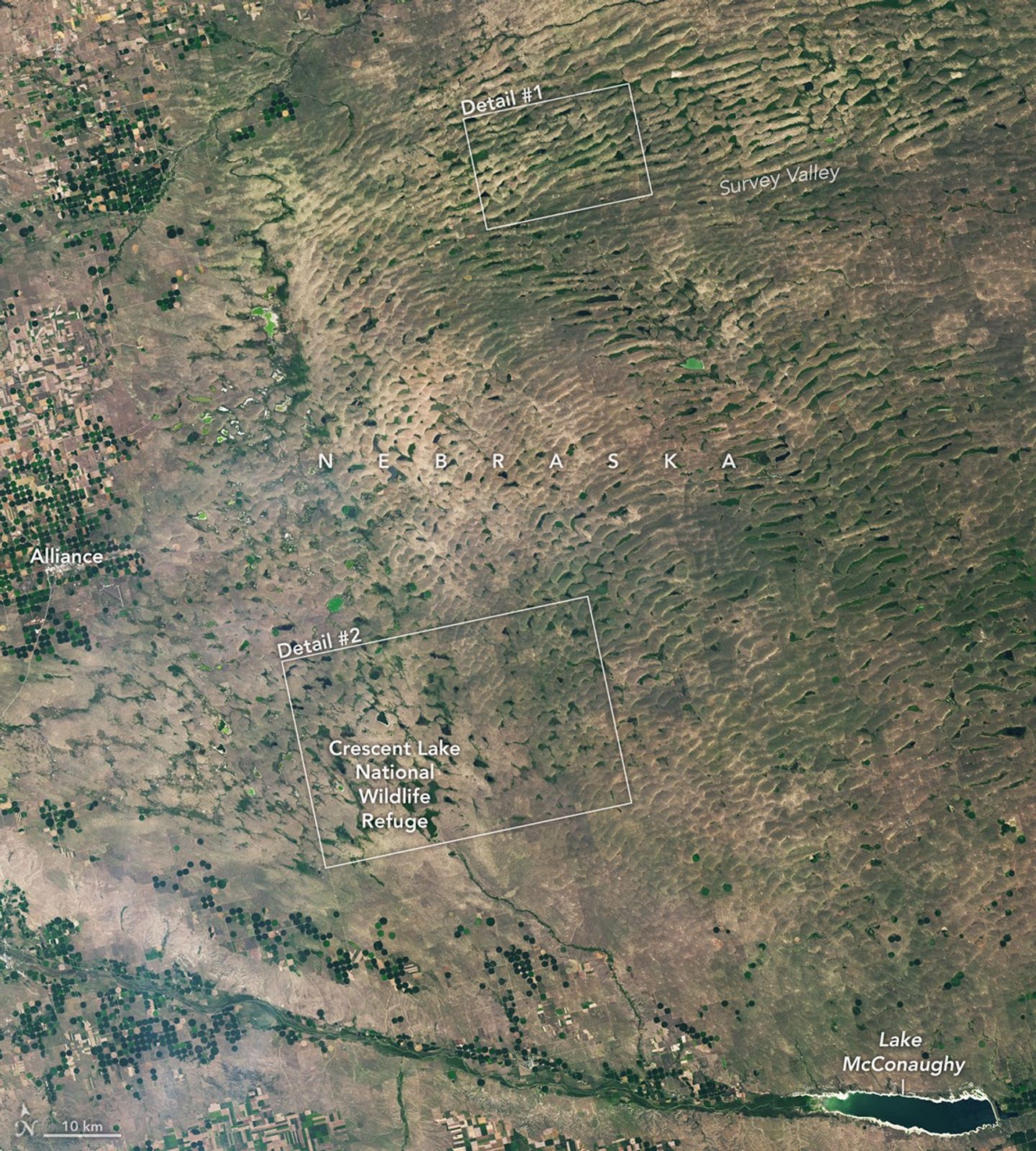
The Nebraska Sandhills—the largest system of sand dunes in the Western Hemisphere—stretch across about one-quarter of the state.
NASA — 15 June 2026
Text:
16
0
0
The Nebraska Sandhills—the largest system of sand dunes in the Western Hemisphere—stretch across about one-quarter of the state. This report comes fr
Read Full Story at NASA →
⚡ Quickyla Analysis
Original editorial context — not sourced from the article above
Nebraska’s Sandhills, a vast and shifting landscape of grass-stabilized dunes, hold more than just the title of the Western Hemisphere’s largest sand sea—they encapsulate a paradox of fragility and resilience. This region, covering roughly 24,000 square miles, is not just a geological curiosity but a critical ecological and economic linchpin for the state. Unlike the arid deserts often associated with sand dunes, the Sandhills are held together by a delicate balance of moisture and prairie grasses, making them one of the most stable dune systems in the world despite their unruly appearance. Their existence challenges the conventional narrative of Nebraska as an endless expanse of farmland, offering instead a glimpse into the state’s deeper natural history—a landscape that has shaped both its environment and its identity.
The Sandhills’ significance extends beyond their size. They serve as a vital aquifer recharge zone, a natural filtration system for the Ogallala Aquifer, one of the most important underground water sources in the U.S. With agriculture driving Nebraska’s economy, the health of these dunes is intrinsically linked to the state’s long-term water security. Yet, their stability is increasingly threatened by climate change. Rising temperatures and shifting precipitation patterns could disrupt the delicate equilibrium between sand and vegetation, risking soil erosion and reduced groundwater replenishment. Meanwhile, agricultural expansion and groundwater depletion elsewhere in the Great Plains pose additional pressures, raising questions about how Nebraska will prioritize conservation in a state where economic interests often clash with ecological preservation.
Looking ahead, the Sandhills face a future where human intervention may become necessary to preserve their unique character. Conservation efforts, such as controlled grazing and invasive species management, will likely intensify, but balancing these with economic demands—particularly in an era of water scarcity—will be no small feat. The region also remains a subject of scientific fascination, with researchers studying its resilience as a potential model for adapting other landscapes to climate change. For now, the Sandhills endure as both a natural wonder and a quiet reminder of the invisible forces—water, wind, and time—that continue to shape the American heartland.
Sources

🔬 Science
'Astonishing': James Webb telescope spots the most chemically primitive galaxy in the ancient universe

🔬 Science
El Niño Is Underway

🔬 Science
Astronomers gaze into the 'Crystal Ball Nebula' and see a vision of our dying sun — Space photo of the week

🔬 Science
Bacteria uncover distinct strategy to import rare sugar polymers, crystal structures show

🔬 Science
NASA Awards Contract for Johnson Space Center Infrastructure

🔬 Science
Repairing DNA damage: Scientists discover a surprising new benefit of melatonin

