🕌 Religion & Faith
Live
New poll: 250 years in, Americans prefer religious diversity
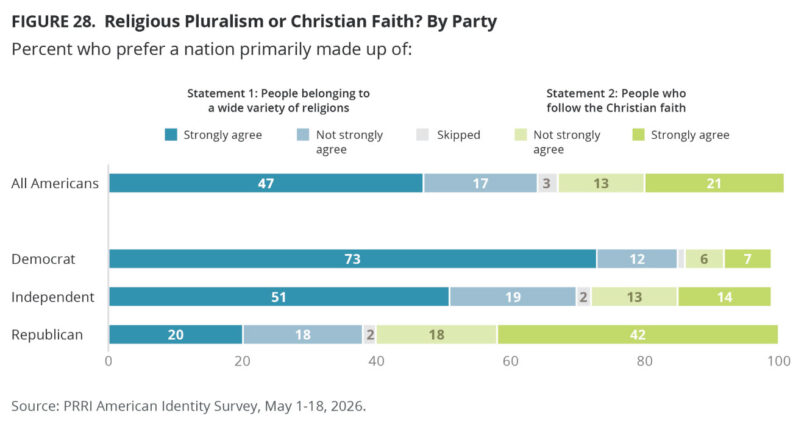
(RNS) — A new poll by PRRI shows two-thirds of Americans still prefer a nation made of many different faiths, despite the growth of Christian nationalism in the public square.
Religion News Service — 17 June 2026
Text:
31
0
0
(RNS) — A new poll by PRRI shows two-thirds of Americans still prefer a nation made of many different faiths, despite the growth of Christian national
Read Full Story at Religion News Service →
⚡ Quickyla Analysis
Original editorial context — not sourced from the article above
The latest PRRI poll underscoring that two-thirds of Americans still prefer a religiously diverse nation, even amid rising Christian nationalism, offers a revealing snapshot of a society grappling with identity and pluralism. While headlines often focus on political movements pushing for a singular vision of faith in public life, this data suggests a deeper cultural tension—one where the ideal of diversity persists even as exclusionary rhetoric gains traction. The finding matters not just as a statistic but as evidence of a resilient civic commitment, one that has defined American pluralism since the nation’s founding, even if that legacy is now under strain.
What makes this poll particularly significant is its timing. Christian nationalism has found new energy in recent years, with figures invoking religious rhetoric to justify political agendas, from restrictions on reproductive rights to opposition to LGBTQ+ protections. Yet the poll indicates that a strong majority of Americans still reject the idea of a monolithic faith shaping the nation’s laws and culture. This suggests that, despite the noise, the principle of religious freedom remains a foundational value—one that has historically allowed the U.S. to absorb waves of immigration and cultural change without fracturing along sectarian lines.
The deeper context here is America’s long, uneven journey toward true pluralism. The country was founded in part by religious minorities fleeing persecution, yet it has also repeatedly excluded groups—Catholics, Jews, Mormons, and more—from full participation in the public sphere. The poll’s results hint at a maturation of that history; pluralism is no longer just an aspiration but a lived reality for many. Yet the persistence of Christian nationalism reveals the fragility of that consensus. The question now is whether this preference for diversity can withstand the pressures of polarization, economic anxiety, and the weaponization of identity in politics.
What happens next may depend on how institutions—religious, educational, and political—choose to engage with this divide. Will they reinforce the ideal of pluralism, or will they cater to the loudest factions? The poll suggests there’s still a majority to defend it, but majorities do not always dictate the future. The story of American religious life may well hinge on whether that preference translates into action—or whether it fades into the background as more assertive movements reshape the national narrative.
Sources

🕌 Religion & Faith
Defense Department rejiggers list of recognized religions after backlash, narrows it to 30

🕌 Religion & Faith
Odiong guilty in Texas: Questions remain for several Church leaders

🕌 Religion & Faith
Trump’s latest attack on Leo XIV isn’t really about the pope

🕌 Religion & Faith
Pope Leo XIII updates just war theory

🕌 Religion & Faith
Photos of the Week: Ebola responses, end of Hajj

🕌 Religion & Faith
High hopes, many challenges for Bangladesh’s first Indigenous Catholic MP

