🌍 World News
Live
Obama encourages people to not give in to despair in current political climate
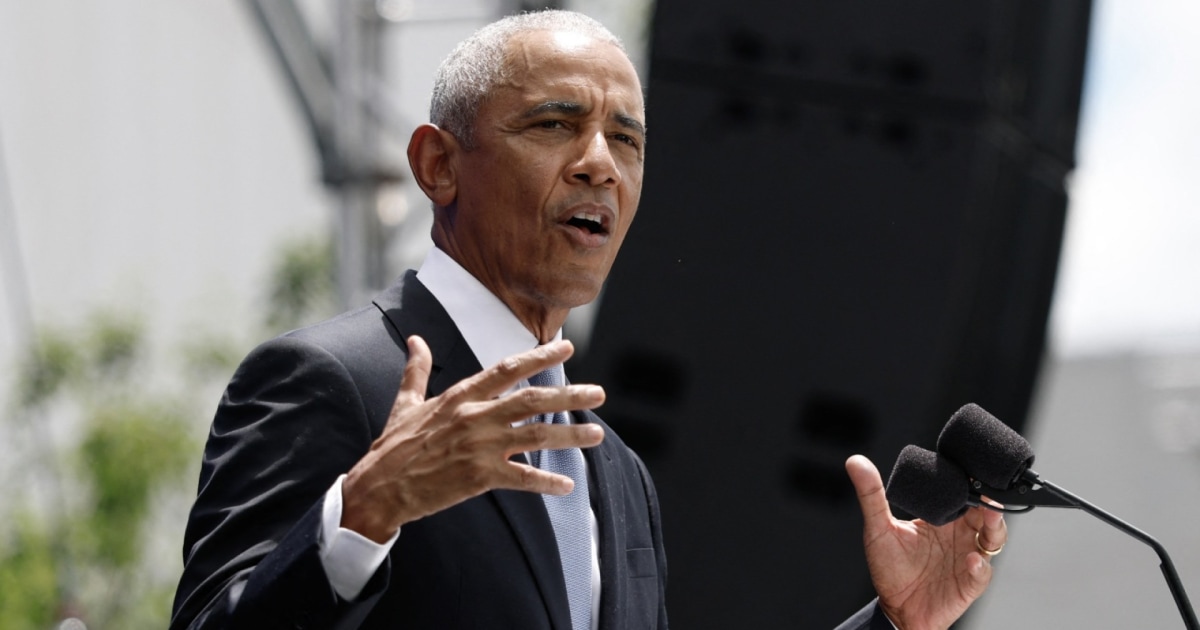
Former President Barack Obama speaks at the opening of the Obama Presidential Center, imploring Americans not to give in to cynicism and despair in the current divisive political climate.
NBC News — 18 June 2026
Text:
29
0
0
Former President Barack Obama speaks at the opening of the Obama Presidential Center, imploring Americans not to give in to cynicism and despair in th
Read Full Story at NBC News →
⚡ Quickyla Analysis
Original editorial context — not sourced from the article above
Barack Obama’s call to resist despair amid today’s polarized political climate arrives at a moment when American democracy feels increasingly fragile, not just in rhetoric but in tangible fractures. His remarks at the Obama Presidential Center’s opening transcend mere ceremony; they serve as a deliberate counterweight to the relentless cycle of outrage and disillusionment that dominates public discourse. In an era where political identity often dictates reality, Obama’s plea underscores a deeper crisis: the erosion of shared belief in institutions capable of mediating conflict. This isn’t just about partisan divisions—it’s about whether a society can sustain the belief that progress, however uneven, remains possible when cynicism becomes the default posture.
The backdrop matters. Obama’s presidency was marked by historic achievements—like the Affordable Care Act and economic recovery—yet it also fueled a backlash that reshaped American politics, culminating in Donald Trump’s rise and the radicalization of the Republican Party. The Obama Presidential Center itself is a symbol of that tension: a $1 billion investment in Chicago’s South Side, designed to inspire but also flanked by criticism over gentrification and displacement. This duality reflects a broader paradox: progress often demands disruption, yet disruption fuels the very despair Obama warns against. His challenge, then, is not just moral but existential—how to reconcile the ideal of democratic resilience with the reality of lived disillusionment.
What happens next is uncertain. Obama’s intervention could reinvigorate civic engagement, particularly among younger voters who came of age in the shadow of his presidency but now feel politically adrift. Alternatively, it may be dismissed as a relic of a bygone era, when bipartisan compromise still seemed plausible. The deeper question is whether American democracy can outlast the cultural fatigue that now defines it. This moment echoes past inflection points—like the post-Watergate era or the civil rights movement—where despair threatened to overwhelm hope. But those eras also saw movements that channeled frustration into durable change. The difference today is the absence of a unifying crisis to force reckoning. Without one, Obama’s words risk becoming a lament rather than a rallying cry. The real test will be whether Americans, confronted with their own exhaustion, choose to act—or simply scroll past.
Sources

🌍 World News
Man fleeing police attacked by alligator before continuing his getaway, Louisiana authorities say
🌍 World News
US crude exports hit record high in May as Iran war tightens global oil supplies

🌍 World News
Agitators outside Delaney Hall set up organized logistics operation before Newark protests began

🌍 World News
French doctors sound alarm over drinking water pollution

🌍 World News
Iran, Kuwait, Bahrain hit: Is the war in the Gulf escalating again?

🌍 World News
Four people trapped in flooded cave in Laos pulled to safety

