Magyar government begins dismantling Orbán system.
Magyar's government is dismantling Orbán's financial and political networks, including foundations controlling €5-9 billion in public assets, to end corruption and unlock €17 billion in EU funds. Thes
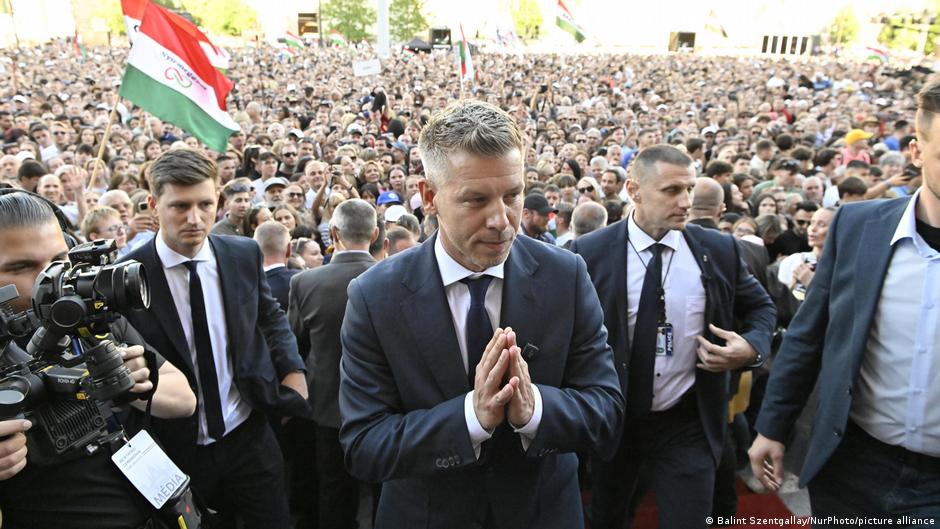
Hungarian Prime Minister Peter Magyar has launched a sweeping crackdown on the legacy of his predecessor, Viktor Orbán, in a move dubbed "Operation Pu
Read Full Story at DW World →Why This Matters
This sweeping dismantling of Orbán’s institutionalized patronage networks marks a tectonic shift in Hungary’s post-authoritarian politics, signaling not just a change in leadership but a fundamental reordering of state power. Beyond the immediate financial stakes, the move exposes the systemic corruption that has long trapped Hungary in a cycle of kleptocratic governance, with implications for democratic backsliding across Central Europe.
Background Context
Orbán’s two-decade rule systematically decentralized state resources through opaque foundations, leveraging EU funds and public assets to reward loyalists while insulating his network from legal scrutiny. The €5–9 billion in controlled assets now targeted by Magyar’s government represents years of unchecked financial accumulation, much of it channeled through entities like the State Holding Company (MNV) and the Hungarian National Bank’s shadowy investment vehicles.
What Happens Next
Legal battles over the foundations’ legitimacy will dominate the coming months, with Orbán’s allies likely to deploy constitutional challenges and EU lobbying to delay or dilute the reforms. Meanwhile, the €17 billion in frozen EU funds—long withheld over rule-of-law concerns—could be unlocked swiftly if Brussels perceives genuine progress, reshaping Hungary’s economic prospects and its relationship with Western partners.
Bigger Picture
The purge reflects a broader trend in Central Europe, where new governments are weaponizing anti-corruption rhetoric to dismantle predecessor networks, yet often replicating the same centralized control under different colors. If successful, Hungary could emerge as a test case for whether democratic revival can coexist with the institutional inertia of entrenched oligarchic systems—or whether Magyar’s campaign merely signals another phase in the region’s endless cycle of power consolidation.








