🔬 Science
Live
Oxford physicists just made Schrödinger’s cat even stranger
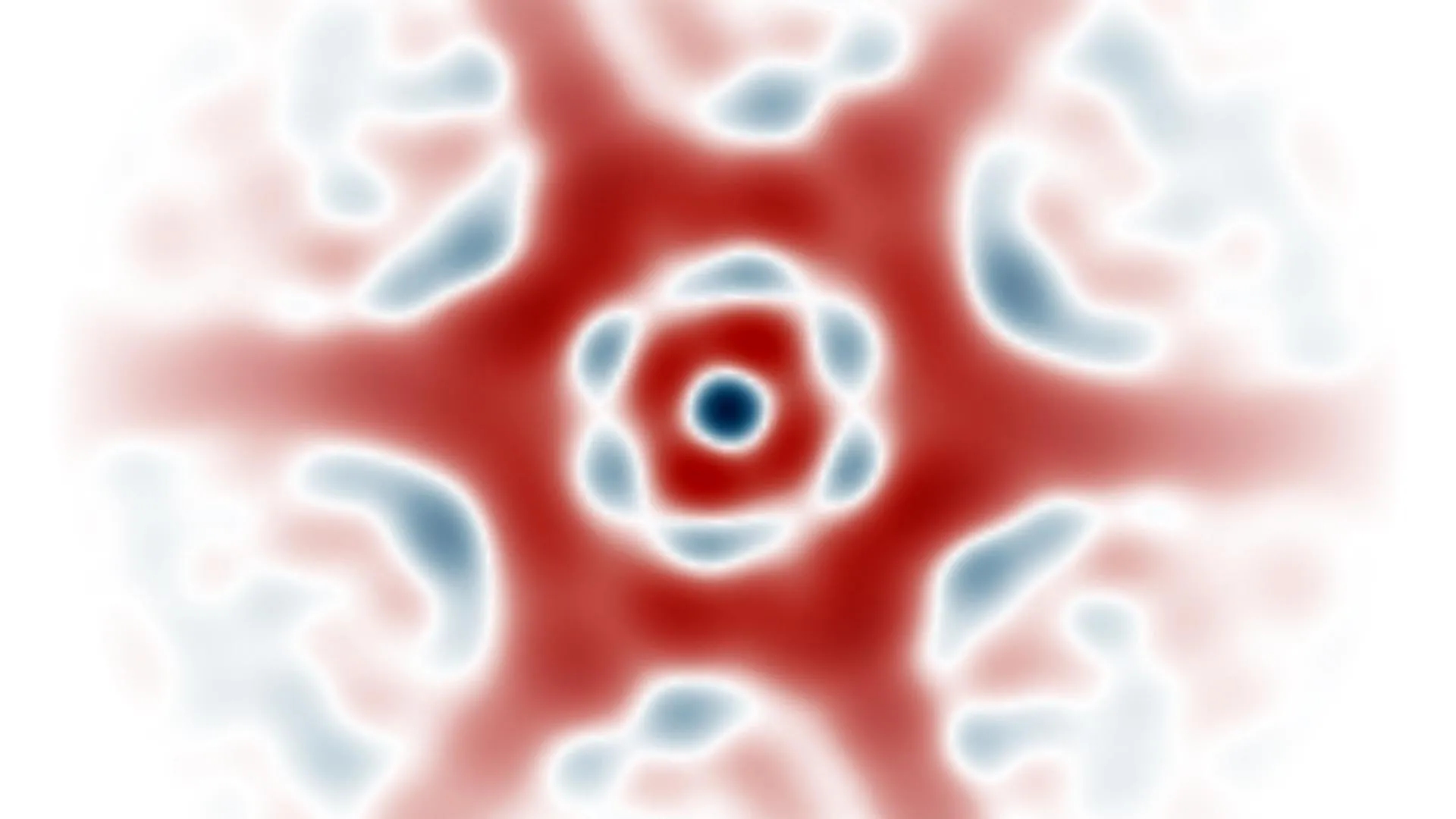
Oxford physicists have created an entirely new type of Schrödinger’s cat-like quantum state using components that are themselves highly quantum in nature. The advance could open new possibilities for…
ScienceDaily — 15 June 2026
Text:
14
0
0
Oxford physicists have created an entirely new type of Schrödinger’s cat-like quantum state using components that are themselves highly quantum in nat
Read Full Story at ScienceDaily →
⚡ Quickyla Analysis
Original editorial context — not sourced from the article above
The latest quantum breakthrough from Oxford physicists—expanding on Schrödinger’s famous thought experiment—marks more than just a clever tweak of one of science’s most enduring paradoxes. By engineering a "cat state" using components that are themselves quantum in nature, the team has pushed the boundaries of what we mean by superposition, collapsing a boundary that once seemed fundamental: the divide between the quantum and the classical. This isn’t merely a refinement of an old idea; it’s a redefinition. Historically, Schrödinger’s cat was meant to expose the absurdity of applying quantum rules—where particles can exist in multiple states at once—to macroscopic objects. But now, as quantum systems become increasingly complex, the very notion of "macroscopic" is being rewritten. When the components of the system are inherently quantum, the line blurs further. The implications aren’t just philosophical; they strike at the heart of quantum computing, where stable, scalable superpositions are the holy grail.
What makes this work particularly compelling is the method. Unlike traditional approaches that rely on large, fragile quantum systems to approximate classical behavior, Oxford’s approach leverages the quantum nature of its own building blocks—think superconducting qubits or trapped ions behaving in ways that defy classical intuition. This isn’t just about making "cat states" bigger; it’s about making them more coherent, more controllable, and potentially more useful. The broader scientific community has long grappled with decoherence—the tendency of quantum systems to lose their quantum properties as they interact with the environment. By embedding the paradox within a fully quantum framework, the researchers may have stumbled upon a way to sidestep some of those challenges, though the path from lab curiosity to practical application remains unclear.
The most pressing question now is whether this approach can scale without collapsing under its own complexity. Quantum systems are notoriously fragile, and introducing more quantum elements only amplifies that fragility. Yet, if successful, this could accelerate progress toward fault-tolerant quantum computers or even new forms of quantum sensors that exploit superposition in ways currently unimaginable. It also raises fresh puzzles: if a cat state can be built from quantum parts, what does that say about the nature of reality at the edges of the quantum world? The experiment doesn’t just make Schrödinger’s cat stranger—it makes the entire quantum landscape feel more fluid, more dynamic, and far less constrained by the rules we once thought governed it.
Sources

🔬 Science
'Astonishing': James Webb telescope spots the most chemically primitive galaxy in the ancient universe

🔬 Science
El Niño Is Underway

🔬 Science
Astronomers gaze into the 'Crystal Ball Nebula' and see a vision of our dying sun — Space photo of the week

🔬 Science
Bacteria uncover distinct strategy to import rare sugar polymers, crystal structures show

🔬 Science
NASA Awards Contract for Johnson Space Center Infrastructure

🔬 Science
Repairing DNA damage: Scientists discover a surprising new benefit of melatonin

