🕌 Religion & Faith
Live
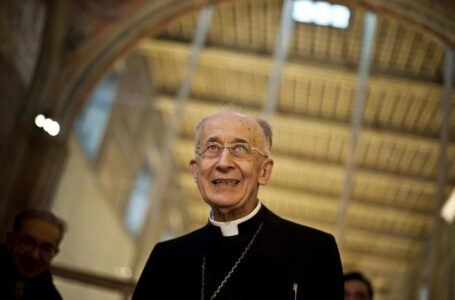
Passing of Italy’s Card. Ruini marks end of an era
Cardinal Camillo Ruini's frankness and capacity for friendship offer valuable lessons to 21st-century churchmen.
Crux Now — 17 June 2026
Text:
34
0
0
Cardinal Camillo Ruini's frankness and capacity for friendship offer valuable lessons to 21st-century churchmen. This report comes from Crux Now. The
Read Full Story at Crux Now →
⚡ Quickyla Analysis
Original editorial context — not sourced from the article above
Cardinal Camillo Ruini’s passing is more than the loss of a prominent figure in the Catholic Church—it marks the end of a generation of leaders whose influence extended far beyond ecclesiastical matters. Ruini, a towering presence in Italian Catholicism during the late 20th and early 21st centuries, was not just a theological or administrative figure; he was a bridge between the Church and Italian society at a time of rapid cultural and political transformation. His ability to navigate the complexities of secularization while maintaining deep personal relationships with figures across the political spectrum made him a rare voice of moderation in an era often defined by polarization. For historians and observers of the Church, his tenure as Vicar General of Rome and President of the Italian Episcopal Conference offers a case study in how institutional religion adapts—or resists—change without sacrificing its core values.
What many outside Italy may not realize is how deeply Ruini’s leadership shaped the Church’s response to Italy’s secular drift. While the Vatican under Pope John Paul II and Benedict XVI often took a confrontational stance on moral issues, Ruini’s approach was subtler: he emphasized dialogue over denunciation, seeking common ground even with political adversaries. This strategy reflected a broader tension within the Church—between those who saw cultural engagement as essential and those who viewed accommodation as surrender. His passing raises an open question: who, if anyone, will inherit his knack for balancing fidelity to doctrine with the pragmatism needed to remain relevant in an increasingly pluralistic society?
The broader trend this underscores is the decline of a certain type of ecclesiastical leadership—one that could command respect across political divides while still wielding moral authority. Younger clergy, shaped by the clerical abuse scandals and the rise of social media, often operate in a different paradigm, one that prioritizes visibility and digital engagement over behind-the-scenes diplomacy. Ruini’s legacy, then, is not just a historical footnote but a challenge to the Church of the 21st century: can it preserve the relational wisdom of an older generation while adapting to a world that increasingly questions institutional authority altogether? The answer may well determine whether Catholicism in Italy—and beyond—can sustain its cultural influence in the decades to come.
Sources

🕌 Religion & Faith
Defense Department rejiggers list of recognized religions after backlash, narrows it to 30

🕌 Religion & Faith
Odiong guilty in Texas: Questions remain for several Church leaders

🕌 Religion & Faith
Trump’s latest attack on Leo XIV isn’t really about the pope

🕌 Religion & Faith
Pope Leo XIII updates just war theory
🕌 Religion & Faith
Photos of the Week: Ebola responses, end of Hajj
🕌 Religion & Faith
High hopes, many challenges for Bangladesh’s first Indigenous Catholic MP

