Potential Taiwan tension sparked 'last minute' change in Trump-Xi National Archives visit
U.S. President Donald Trump (2nd-L) speaks to Archivist of the United States Bradford Wilson (L) as he views the U.S. Constitution during a tour of the National Archives Museum alongside first lady M…
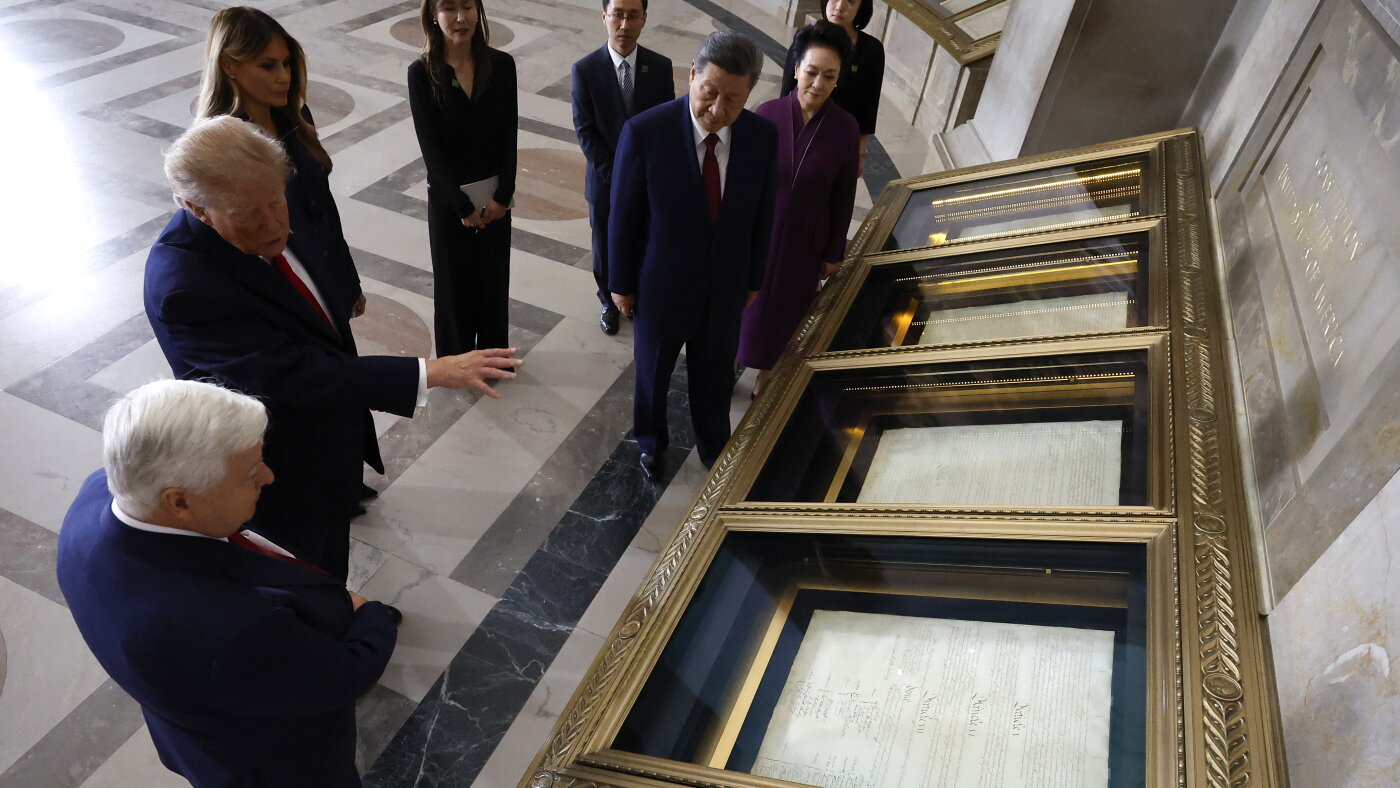
U.S. President Donald Trump (2nd-L) speaks to Archivist of the United States Bradford Wilson (L) as he views the U.S. Constitution during a tour of the National Archives Museum alongside first lady Melania Trump, President of China Xi Jinping and first lady of China Peng Liyuan on September 25, 2026 in Washington, DC. Kevin Dietsch/Getty Images hide caption
On Friday, the National Archives Museum prepared to welcome President Trump and the Chinese leader Xi Jinping.
Inside the museum's main foyer, a long table had been set up in the center of the room that morning, with a temporary display resting on the black tablecloth showcasing a brick from the Great Wall of China and an elaborate 19th century scroll sent by a Qing emperor.
But the entire display was removed, due to a "last minute" change in the event, according to a Chinese diplomat granted anonymity because they were not authorized to speak publicly.
The sudden change was precipitated because of Chinese displeasure over one document that the U.S. had planned to show: the Treaty of San Francisco of 1951, according to the diplomat and two other people familiar with the matter granted anonymity because they were not authorized to speak publicly.
Beijing was irate over the Treaty of San Francisco "because the U.S. and Japan signed it, but not China," according to one of the Chinese diplomats.
The treaty, which ended World War II hostilities between Japan and the Allied Powers, including the U.S. Both Trump and Xi referenced last week how the two countries fought together on the same side during the conflict. But the treaty also leaves the status of Taiwan undetermined and does not state that the island belongs to Beijing.
"It is a point of contention for the Chinese because they were not signatories to the Treaty of San Francisco, and they do not like the fact that the treaty of SF leaves undetermined Taiwan's political status," said Ryan Hass , a Taiwan and China expert at the think tank Brookings Institution in Washington.
Read Full Story at NPR News →