🌍 World News
Live
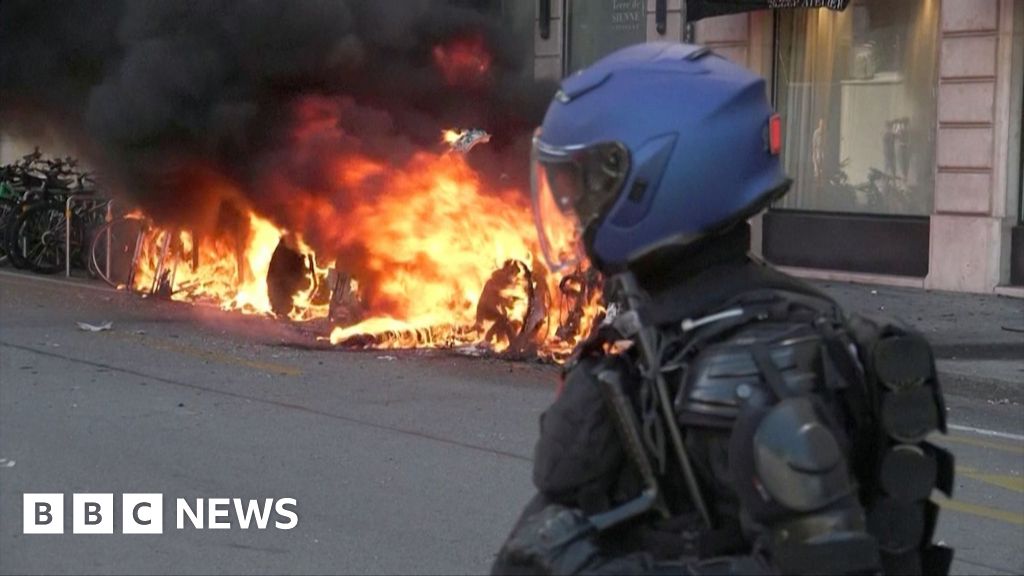
Protesters clash with police ahead of G7 summit in Geneva
Protesters clashed with police forces during a demonstration against the upcoming G7 summit in Geneva. Tear gas and a water cannon were deployed to disperse the large crowd after protesters smashed …
BBC World News — 14 June 2026
Text:
16
0
0
Protesters clashed with police forces during a demonstration against the upcoming G7 summit in Geneva. Tear gas and a water cannon were deployed to d
Read Full Story at BBC World News →
⚡ Quickyla Analysis
Original editorial context — not sourced from the article above
The renewed confrontations between protesters and police ahead of the G7 summit in Geneva are not merely a local law-and-order issue; they are a microcosm of wider tensions that have dogged global governance forums for decades. While Geneva’s hosting of the G7’s outreach sessions may seem an unlikely flashpoint—given the city’s reputation as a diplomatic crossroads—the choice of Switzerland is itself significant. Neutrality has long been the country’s diplomatic currency, yet even this carefully curated image is now straining under the weight of opposition to an economic elite whose policies are increasingly seen as out of sync with public sentiment on climate, inequality and geopolitical accountability.
What observers might overlook is the historical trajectory of these summits. The G7 began as a crisis-response club for the world’s richest democracies, but its agenda has expanded into areas—like debt relief, pandemics, and artificial intelligence—where power is diffuse and legitimacy contested. Protesters in Geneva are explicitly rejecting the premise that seven finance ministries can set global rules for eight billion people. The use of tear gas and water cannons signals a hardening of security responses, a trend mirrored at recent climate and trade summits where authorities have treated dissent as a tactical rather than a democratic challenge.
Looking ahead, the immediate question is whether these clashes will escalate or recede as the summit approaches. Local organizers have called for non-violent civil disobedience, but radical factions may seek to exploit the global media spotlight. Longer term, the episode underscores a broader dilemma: can multilateral institutions regain public trust without addressing the grievances that drive these protests, or will each summit merely deepen the cycle of confrontation and containment? The presence of Swiss riot police in full gear may deter isolated violence, but it cannot resolve the underlying demand for a more inclusive model of global governance.
Sources

🌍 World News
Man fleeing police attacked by alligator before continuing his getaway, Louisiana authorities say
🌍 World News
US crude exports hit record high in May as Iran war tightens global oil supplies

🌍 World News
Agitators outside Delaney Hall set up organized logistics operation before Newark protests began

🌍 World News
French doctors sound alarm over drinking water pollution

🌍 World News
Iran, Kuwait, Bahrain hit: Is the war in the Gulf escalating again?

🌍 World News
Four people trapped in flooded cave in Laos pulled to safety

