Pumice Rafts Encroach on Admiralty Islands
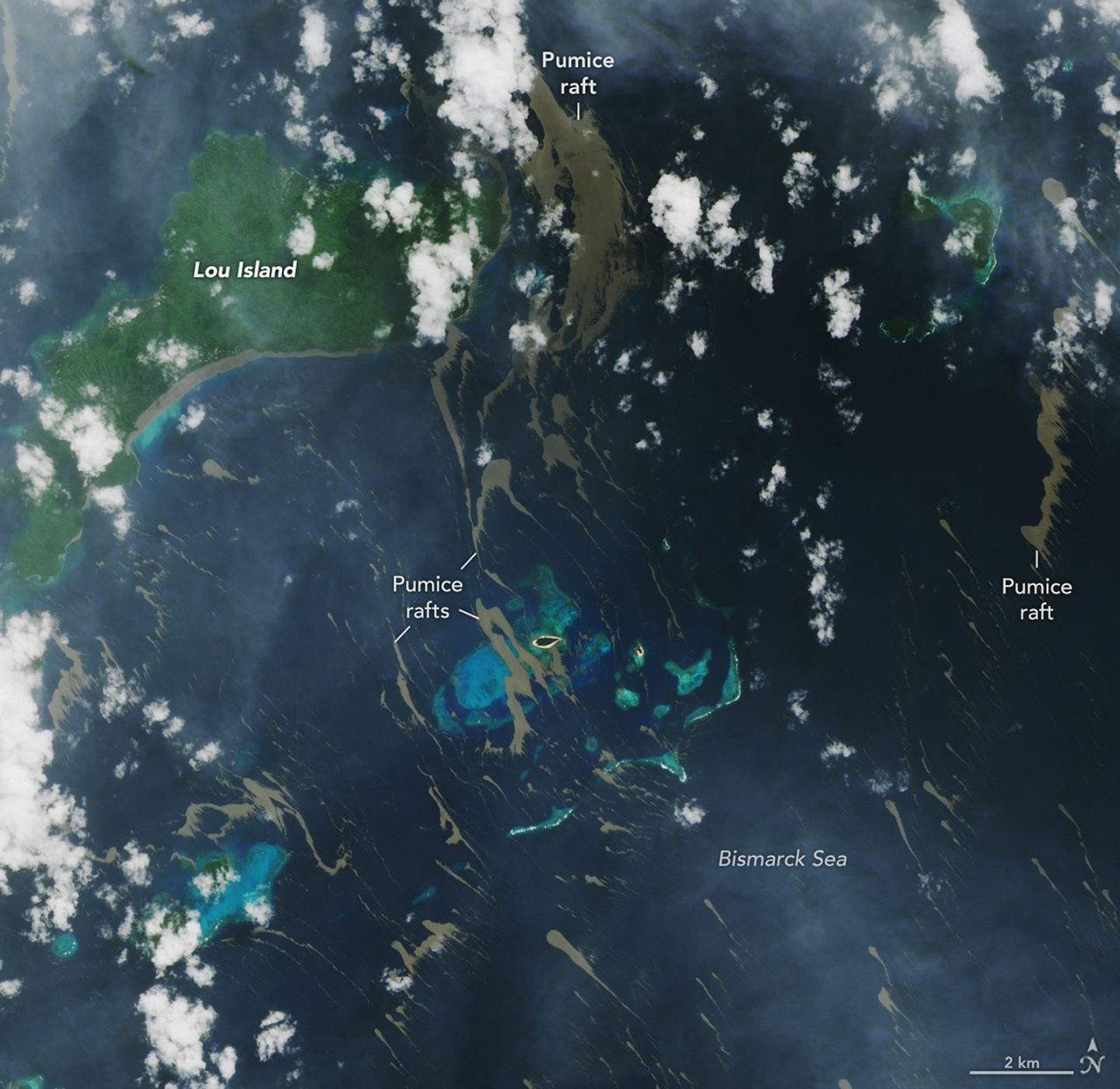
Buoyant volcanic rock fragments from an underwater eruption drifted across the Bismarck Sea and choked island coasts.
NASA — 14 June 2026
Text:
4
0
0
Buoyant volcanic rock fragments from an underwater eruption drifted across the Bismarck Sea and choked island coasts. This report comes from NASA. Th
Read Full Story at NASA →
⚡ Quickyla Analysis
Original editorial context — not sourced from the article above
The sudden appearance of pumice rafts along the shores of the Admiralty Islands isn’t just an unusual maritime phenomenon—it’s a stark reminder of how interconnected and unpredictable Earth’s geological processes can be. These floating islands of volcanic rock, expelled from an underwater eruption in the Bismarck Sea, have turned once-navigable waters into a hazard zone, disrupting fishing routes and clogging harbors. But beyond the immediate inconvenience, the event underscores a broader vulnerability in island ecosystems, where even distant geological activity can reshape livelihoods overnight.
The Bismarck Sea is no stranger to volcanic activity, but pumice rafts of this scale are relatively rare. These buoyant rock fragments, formed when lava cools rapidly in water, can drift for months or even years, creating temporary but treacherous obstacles for ships. For coastal communities that rely on marine resources, the sudden appearance of these rafts can disrupt fishing schedules, damage equipment, and even alter local marine life patterns as the pumice alters water chemistry. The Admiralty Islands, part of Papua New Guinea, are particularly exposed, with limited infrastructure to mitigate such disruptions.
What happens next depends on several factors. If the eruption was a one-off event, the rafts may eventually disperse or sink, though some fragments could linger for years. However, if the underwater volcano remains active, additional pumice could continue drifting toward populated areas. There’s also the question of ecological impact—while pumice rafts can carry organisms that colonize new habitats, they can also smother coral reefs or introduce invasive species. Monitoring will be critical, but for now, the immediate challenge is managing the disruption to local economies.
This event also fits into a larger pattern of increasing awareness about cascading environmental risks. As climate change and human activity stress marine ecosystems, even natural hazards like volcanic eruptions can have outsized consequences. The Admiralty Islands’ predicament serves as a case study in how geological events, coupled with human dependence on fragile environments, can create unforeseen crises. For now, residents and authorities are left to navigate the fallout—literally—until the sea reclaims its course.
Sources

🔬 Science
El Niño Is Underway

🔬 Science
'Astonishing': James Webb telescope spots the most chemically primitive galaxy in the ancient universe

🔬 Science
Astronomers gaze into the 'Crystal Ball Nebula' and see a vision of our dying sun — Space photo of the week

🔬 Science
NASA Awards Contract for Johnson Space Center Infrastructure

🔬 Science
Bacteria uncover distinct strategy to import rare sugar polymers, crystal structures show

🔬 Science
Putin's quest to avoid the grim reaper: What’s behind the $26 Billion longevity programme?

