🕌 Religion & Faith
Live
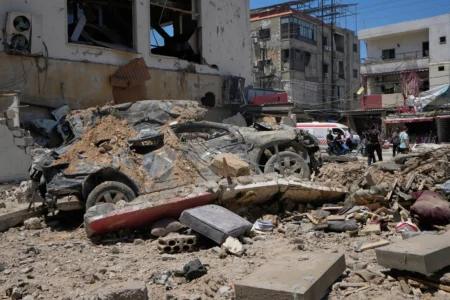
Residents return to war-ravaged southern Lebanon with hope and sorrow after the US-Iran deal
Pope Leo XIV has welcomed the agreement between the U.S. and Iran, and acknowledged the host of thorny issues outstanding.
Crux Now — 18 June 2026
Text:
26
0
0
Pope Leo XIV has welcomed the agreement between the U.S. and Iran, and acknowledged the host of thorny issues outstanding. This report comes from Cru
Read Full Story at Crux Now →
⚡ Quickyla Analysis
Original editorial context — not sourced from the article above
The fragile return of displaced civilians to southern Lebanon following the U.S.-Iran deal carries weight far beyond the immediate ceasefire lines. For months, the region has been a pressure cooker of cross-border strikes, Hezbollah-Israel tensions, and the looming specter of a wider regional war. The diplomatic breakthrough—even if incomplete—signals at least a temporary pause in one of the most volatile fronts since October 7. But the human dimension is what lingers. Families who fled homes pockmarked by artillery and drone strikes now face a landscape of shattered infrastructure, unexploded ordnance, and the psychological scars of displacement. Their cautious return is not just about reclaiming property; it’s a test of whether diplomacy can outpace the cycle of vengeance that has defined this conflict for decades.
The deal’s broader significance lies in its potential to recalibrate power dynamics that have kept southern Lebanon in a state of perpetual tension. Iran’s influence over Hezbollah is well-documented, but the agreement’s ripple effects could extend to Syria, Iraq, and Yemen, where Tehran-backed militias operate. Washington’s willingness to engage—however reluctantly—may signal a strategic shift toward de-escalation, but it also risks alienating allies like Israel, which sees any concession to Iran as a direct threat. The Vatican’s cautious endorsement suggests global relief, yet it underscores the fragility of the moment. The deal leaves critical questions unanswered: Will Hezbollah fully disengage from the Gaza conflict? Can Israel be persuaded to lift its blockade on Lebanon’s ports? And crucially, will the international community commit the resources necessary to rebuild, or will southern Lebanon remain a bargaining chip in a larger geopolitical game?
For now, the focus is on the returnees—families navigating a landscape where the past and present collide. Their resilience may yet become a counterweight to the forces that have kept this region on the brink. But history offers little comfort. Without sustained pressure for accountability and reconstruction, even the most hopeful returns risk becoming temporary respite before the next round of violence.
Sources

🕌 Religion & Faith
Defense Department rejiggers list of recognized religions after backlash, narrows it to 30
🕌 Religion & Faith
Odiong guilty in Texas: Questions remain for several Church leaders

🕌 Religion & Faith
Pope Leo XIII updates just war theory
🕌 Religion & Faith
Trump’s latest attack on Leo XIV isn’t really about the pope

🕌 Religion & Faith
High hopes, many challenges for Bangladesh’s first Indigenous Catholic MP
🕌 Religion & Faith
Photos of the Week: Ebola responses, end of Hajj

