Rogue planet moons could harbor alien life for billions of years
Scientists say moons around rogue planets wandering through the galaxy could remain warm enough for life thanks to tidal heating and hydrogen-rich atmospheres. These dark, starless worlds may have ha…
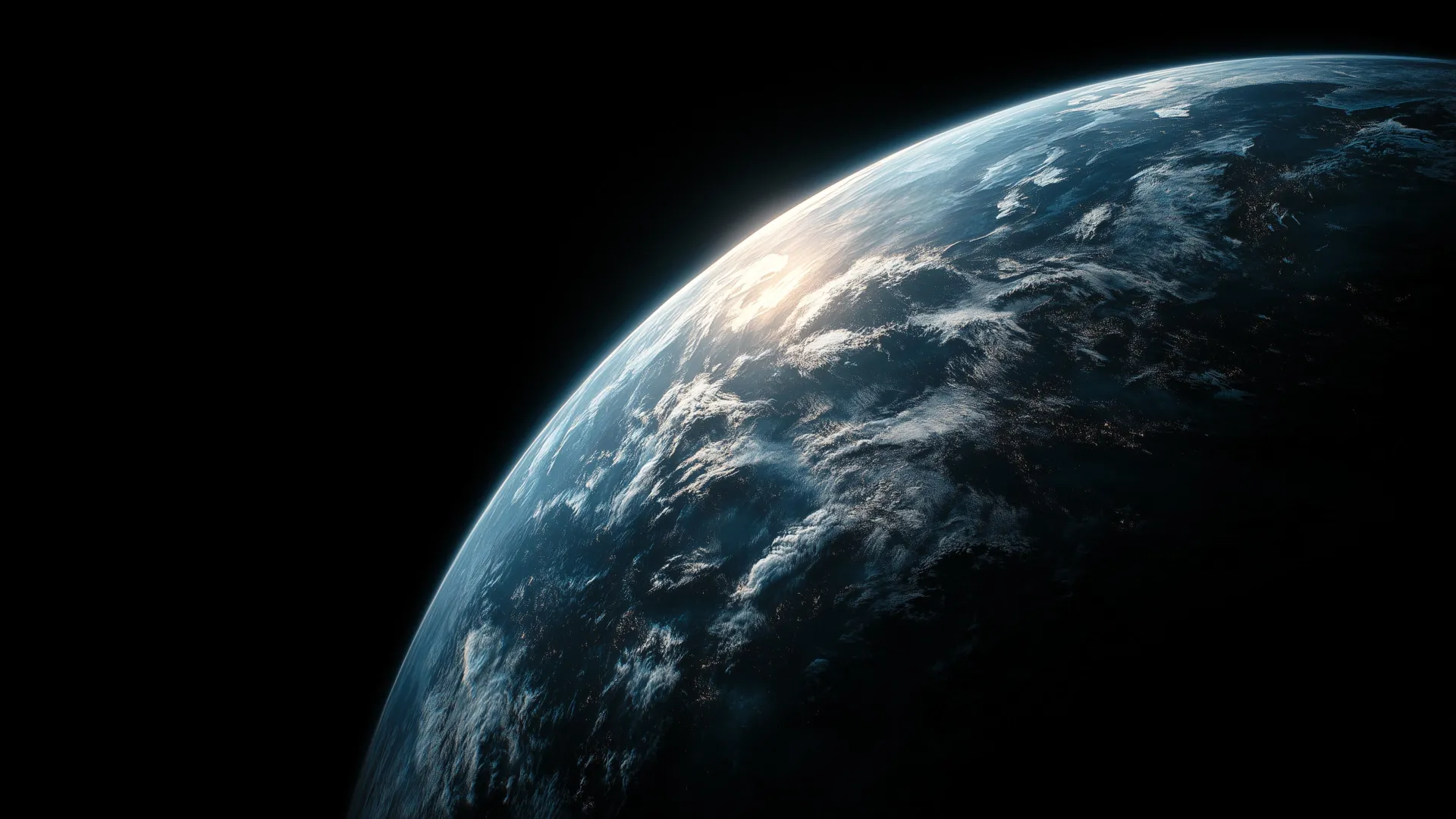
Scientists say moons around rogue planets wandering through the galaxy could remain warm enough for life thanks to tidal heating and hydrogen-rich atm
Read Full Story at Science Daily →Why This Matters
The discovery challenges the long-held assumption that life requires a star’s warmth to survive. Instead, it suggests that even in the depths of interstellar space, where sunlight never reaches, hidden oceans beneath moon surfaces could sustain microbial ecosystems—or even more complex life forms—for eons. This redefines the very boundaries of where we might find extraterrestrial life, forcing scientists to reconsider the habitable zone as not just a stellar neighborhood but a dynamic interplay of forces in complete darkness.
Background Context
Rogue planets, untethered to any star, were once thought to be frozen wastelands where no chemistry could thrive. However, recent models of tidal heating—driven by gravitational interactions with moons or passing stars—have revealed that subsurface oceans might persist for billions of years, defying expectations. The hydrogen-rich atmospheres these worlds could develop, possibly from volcanic outgassing or primordial gases, add another layer of thermal insulation, creating unexpected cradles for life in the void.
What Happens Next
Next-generation telescopes like the James Webb Space Telescope and upcoming Habitable Worlds Observatory are poised to scan these rogue systems for spectral signatures of water vapor or biosignatures like methane. If confirmed, future missions may target such moons directly, deploying landers or orbiters to probe their icy shells for signs of hydrothermal activity. The findings could also accelerate the search for life in our own solar system’s moons, such as Europa or Enceladus, by demonstrating that warmth and chemistry can thrive in even the most extreme environments.
Bigger Picture
This research aligns with a growing consensus that life may be far more resilient—and ubiquitous—than previously imagined, thriving in niches we once dismissed as inhospitable. It also underscores the need to expand our definition of a "habitable" world beyond the traditional Goldilocks zone. As exoplanet discoveries multiply and rogue planets are detected in greater numbers, the line between science fiction and astrobiological reality continues to blur, hinting at a universe far richer in potential for life than humanity has dared to hope.







