💻 Technology
Live
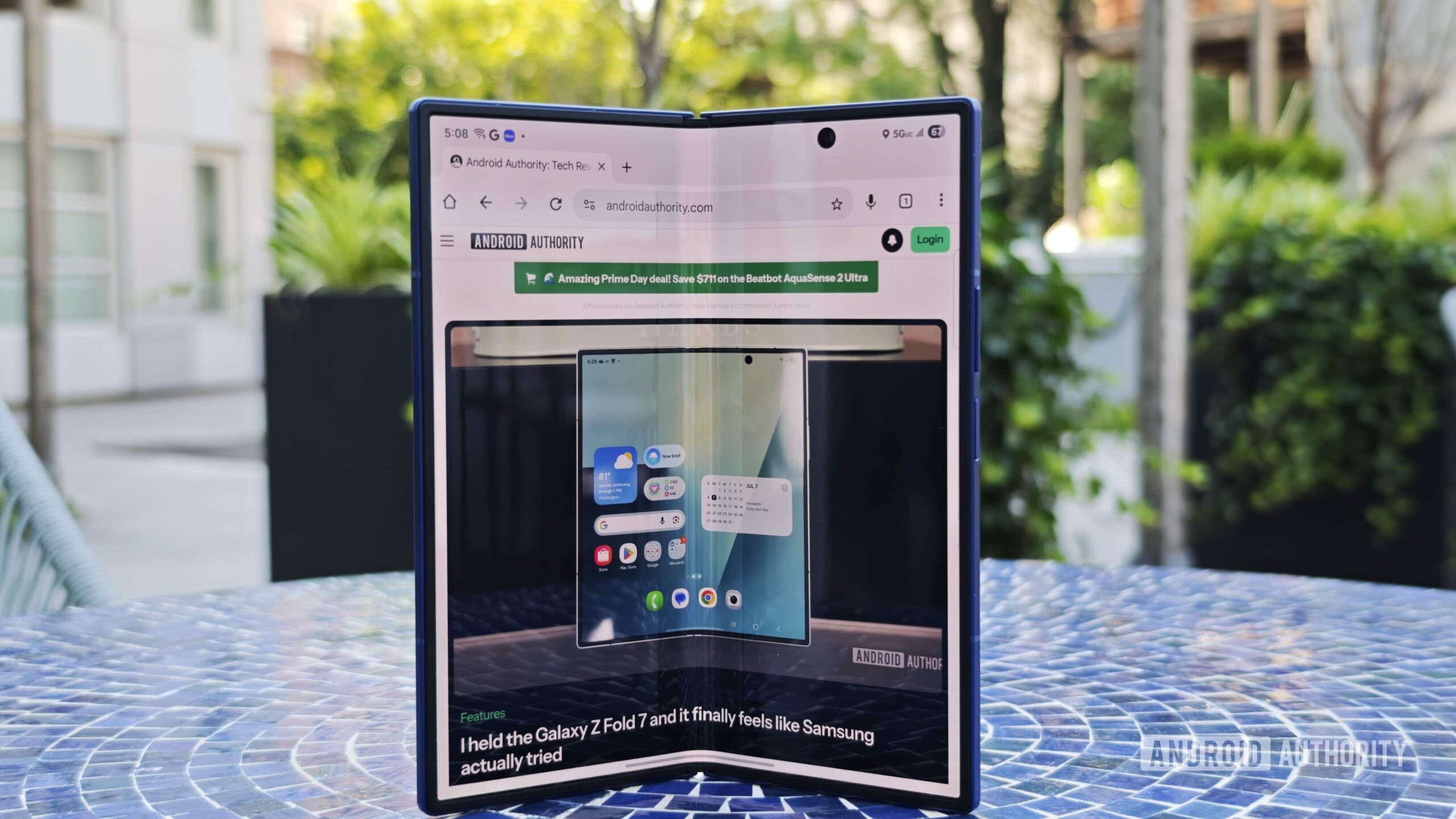
Samsung’s extra-wide Galaxy Z Fold might come with a smoother internal display
Affiliate links on Android Authority may earn us a commission. Learn more. Along with price and durability, one of the major drawbacks of foldables as we know them is that folding phones’ internal d…
Android Authority — 15 June 2026
Text:
24
0
0
Affiliate links on Android Authority may earn us a commission. Learn more. Along with price and durability, one of the major drawbacks of foldables a
Read Full Story at Android Authority →
⚡ Quickyla Analysis
Original editorial context — not sourced from the article above
Samsung’s rumored next-gen Galaxy Z Fold could mark another incremental but meaningful step toward making foldables feel more like conventional phones—this time by addressing one of their most persistent friction points: the crease. The internal display of folding devices has long been a compromise between flexibility and visual uniformity, with the faint line where the screen bends serving as a constant reminder that these devices are still works in progress. If Samsung manages to smooth out that seam, even slightly, it wouldn’t just be a cosmetic upgrade; it would chip away at the psychological barrier that keeps mainstream users from embracing foldables as everyday devices. That’s significant because Samsung’s foldables aren’t just niche experiments—they’re the company’s most aggressive bet on redefining smartphone design, and their success or failure influences whether the entire industry doubles down on this form factor.
The challenge isn’t just technical but perceptual. Early foldables struggled with durability, but even as those issues improved, the crease remained a visible trade-off. For a market already skeptical of foldables’ practicality, that single line can overshadow all other advantages—like the expanded screen real estate or the potential for multi-tasking. Samsung has hinted at this before, with incremental refinements in hinge mechanics and panel materials, but a truly seamless internal display would signal a maturation phase. It could also pressure competitors like Huawei, Motorola, and even Apple (if it ever enters the space) to prioritize display quality over mere novelty.
What remains unclear is whether this refinement will arrive with the next Z Fold or trickle in later models, and how much it will cost. Samsung has historically priced foldables at a premium, partly to offset R&D risks, so a smoother display might not drive down prices immediately. Another open question is whether consumers will even notice—or care—about the difference. If the crease becomes nearly invisible, will it matter, or will foldables finally stop being judged by their most glaring flaw? Either way, this isn’t just about Samsung. It’s about whether foldables can evolve from being technological curiosities into devices that feel inevitable.
Sources

💻 Technology
You can now beat ChatGPT Codex rate limits, if you have friends

💻 Technology
Meta is reportedly developing an AI pendant

💻 Technology
Coders are refusing to work without AI — and that could come back to bite them

💻 Technology
Cash App made a magic wand for contactless payments

💻 Technology
Hackers hijacked Instagram accounts by tricking Meta AI support chatbot into granting access

💻 Technology
Asus gives the ROX Xbox Ally the OLED screen it deserves

