Scientists found a way to explain bird flocks that “defy” Newton’s third law
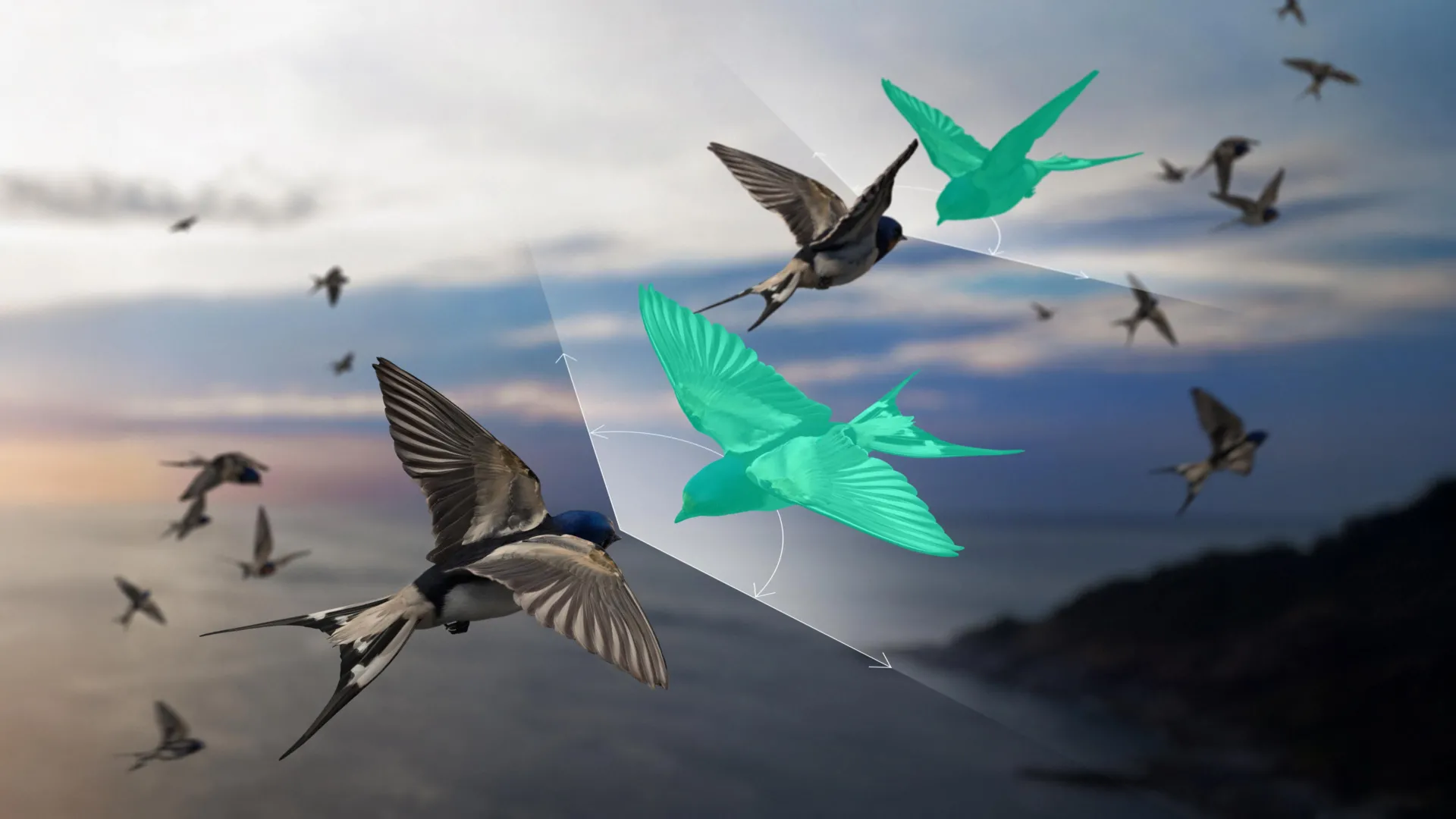
Physicists have solved a long-standing problem involving systems that appear to violate Newton’s third law, such as bird flocks and bacterial swarms. By adding carefully designed “imaginary partners”…
ScienceDaily — 16 June 2026
Text:
10
0
0
Physicists have solved a long-standing problem involving systems that appear to violate Newton’s third law, such as bird flocks and bacterial swarms.
Read Full Story at ScienceDaily →
⚡ Quickyla Analysis
Original editorial context — not sourced from the article above
The discovery that physicists have accounted for systems like bird flocks seemingly defying Newton’s third law introduces a subtle but profound shift in how we understand collective motion in nature. Newton’s third law—the principle that every action has an equal and opposite reaction—has long served as a cornerstone of classical physics, yet its apparent absence in swarming behaviors has puzzled researchers for decades. These systems, where individual organisms move in coordinated patterns without obvious counterforces, challenge the very framework that governs motion in the physical world. By introducing “imaginary partners” into their models—abstract forces that balance the forces within the flock—the team provides a mathematical workaround, effectively preserving Newtonian mechanics while explaining the dynamics of collective behavior. This isn’t just an academic curiosity; it suggests that Newton’s laws may be more adaptable than previously thought when applied to complex, living systems.
The breakthrough gains deeper significance when placed in the context of interdisciplinary science. For years, biologists and physicists have grappled with the mechanics of swarms, from starling murmurations to bacterial colonies, where traditional physics often falls short. The new model bridges this gap by treating these systems not as exceptions to physical laws but as extensions of them, redefining how we model interactions in biology. This could reshape approaches to fields like robotics, where engineers have long sought to replicate the efficiency of natural swarms, or epidemiology, where disease spread through populations shares striking similarities with flocking behavior.
What remains uncertain is how far this framework can stretch. Can it explain even more complex systems, like neural networks or economic markets, where collective behaviors emerge without clear causal chains? And while the “imaginary partners” offer a compelling solution, their abstract nature raises questions about their physical reality—are they a mathematical convenience, or do they hint at deeper, yet-unseen forces governing these systems? The answers may redefine not just physics, but how we perceive the hidden order in nature’s most chaotic displays.
Sources

🔬 Science
'Astonishing': James Webb telescope spots the most chemically primitive galaxy in the ancient universe

🔬 Science
El Niño Is Underway

🔬 Science
Astronomers gaze into the 'Crystal Ball Nebula' and see a vision of our dying sun — Space photo of the week

🔬 Science
Bacteria uncover distinct strategy to import rare sugar polymers, crystal structures show

🔬 Science
NASA Awards Contract for Johnson Space Center Infrastructure

🔬 Science
Repairing DNA damage: Scientists discover a surprising new benefit of melatonin

