Scientists mapped every neural connection in a fruit fly and found a surprise
A groundbreaking new connectome maps every neural connection in an adult fruit fly’s central nervous system, creating an unprecedented view of how the brain and body work together. The findings sugge…
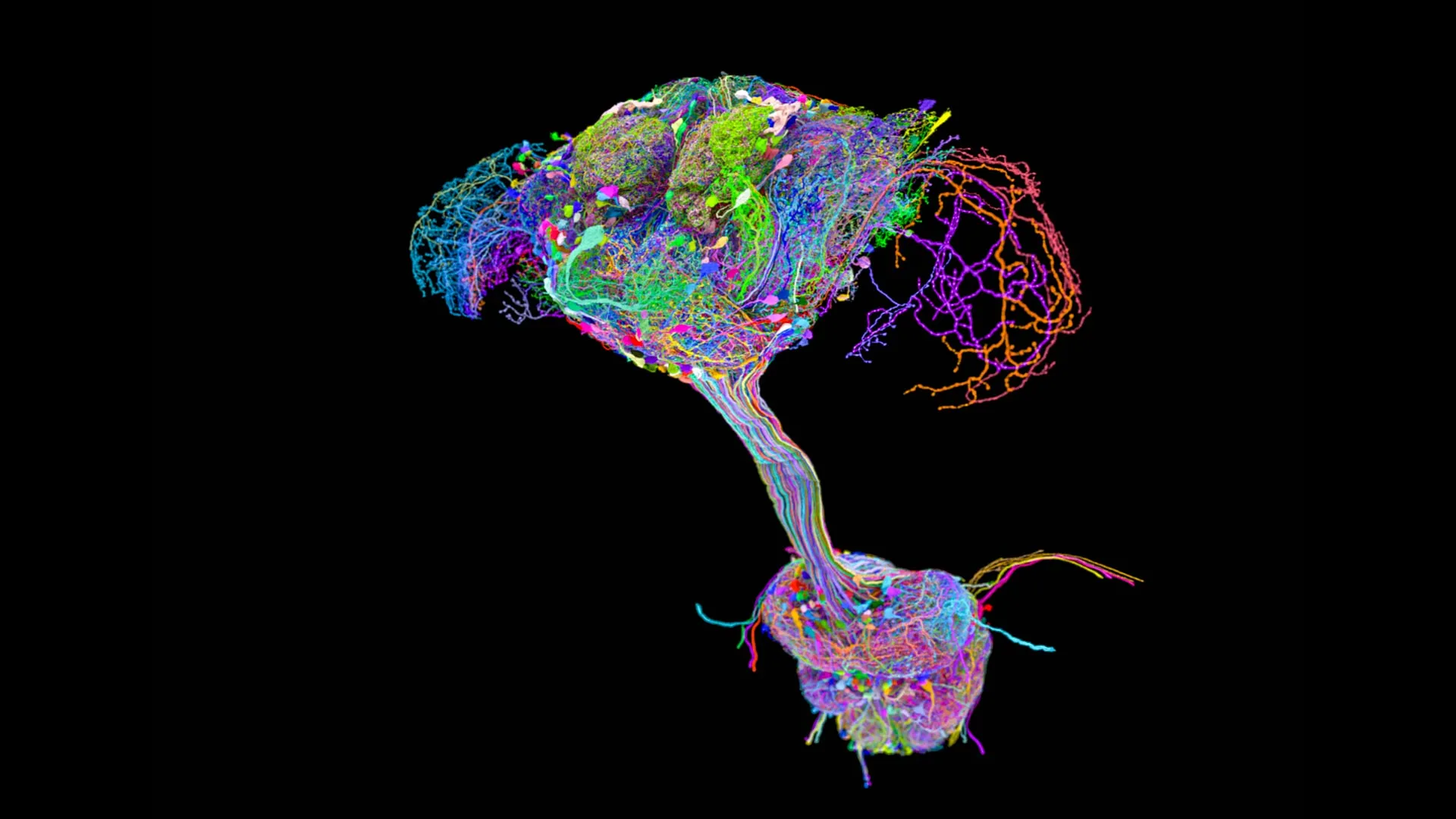
A groundbreaking new connectome maps every neural connection in an adult fruit fly’s central nervous system, creating an unprecedented view of how the
Read Full Story at ScienceDaily →Why This Matters
The complete mapping of the fruit fly’s neural connections—known as a connectome—represents a leap forward in neuroscience, offering a blueprint for understanding how complex behaviors emerge from simple networks. For the first time, researchers can trace how sensory input translates into movement, decision-making, and even social behaviors, bridging the gap between cellular-level wiring and whole-organism function.
Background Context
Fruit flies (*Drosophila melanogaster*) have been a cornerstone of genetic research for over a century, but their nervous systems remained a black box until recently. Early efforts relied on partial reconstructions, while modern advances in electron microscopy and AI-driven image analysis have only now made whole-brain mapping feasible at this scale. The project builds on decades of work in connectomics, a field that gained momentum after the first full connectome of a simpler organism, the *Caenorhabditis elegans* worm, in the 1980s.
What Happens Next
This dataset will likely catalyze a wave of comparative studies, as researchers compare the fly’s neural architecture to other insects or even vertebrates. The findings may also accelerate efforts to reverse-engineer biological intelligence, informing the design of neuromorphic computing systems. Meanwhile, gaps in the data—such as how the connectome dynamically rewires during learning—will drive new experimental and computational approaches.
Bigger Picture
As connectomics matures, it’s joining forces with advances in synthetic biology and machine learning, blurring the lines between natural and artificial neural systems. The fly’s connectome could serve as a testbed for theories about neural efficiency, redundancy, and the origins of cognition—questions that resonate across disciplines from robotics to medicine.






