🌍 World News
Live
Search for six-year-old Ebola patient after armed men storm DR Congo hospital
Authorities in eastern Democratic Republic of Congo are searching for a six-year-old Ebola patient and her mother after armed men stormed the hospital where they were being treated. The child was ta…
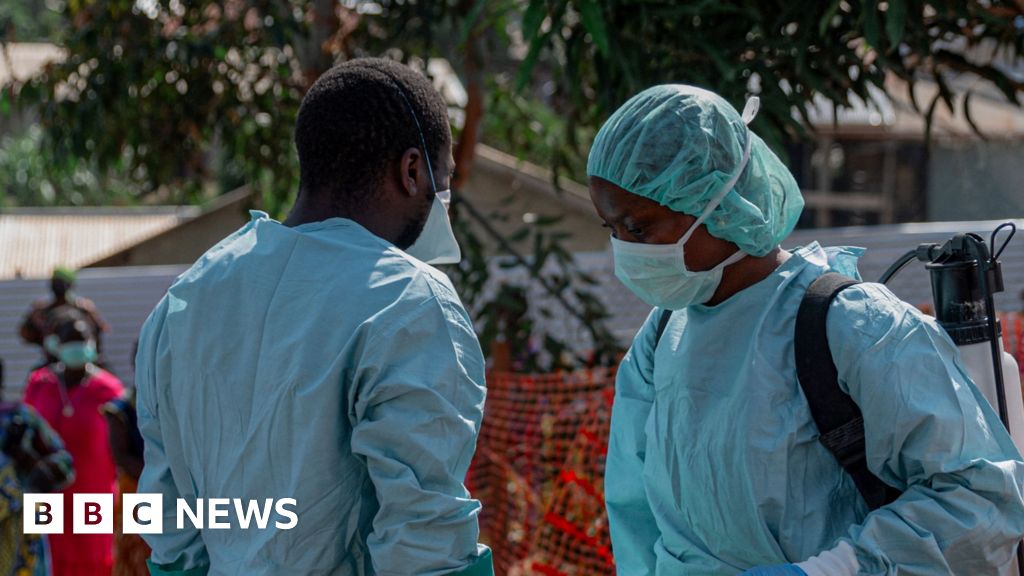
BBC World News — 17 June 2026
Text:
25
0
0
Authorities in eastern Democratic Republic of Congo are searching for a six-year-old Ebola patient and her mother after armed men stormed the hospital
Read Full Story at BBC World News →
⚡ Quickyla Analysis
Original editorial context — not sourced from the article above
The abduction of a six-year-old Ebola patient and her mother from a hospital in eastern Democratic Republic of Congo underscores the persistent volatility that undermines public health efforts in a region long ravaged by conflict. Hospitals in conflict zones are already fragile institutions, routinely targeted by armed groups seeking to assert control or intimidate communities. But the theft of a highly infectious patient—one whose disease status may not be widely known—raises immediate concerns about the spread of Ebola, a virus notorious for its rapid transmission in unsterile environments. The kidnapping also signals a deeper collapse in the rule of law, where armed actors operate with near-total impunity, and where health workers, patients, and entire communities are treated as collateral damage in a broader struggle for power and resources.
Eastern DRC has been the epicenter of multiple Ebola outbreaks since 2018, with over 3,500 cases and 2,300 deaths recorded. The region’s instability has repeatedly disrupted containment efforts, as militias, community resistance, and distrust of authorities have hindered vaccination campaigns and contact tracing. This incident compounds those challenges, highlighting how armed groups exploit public health crises to further destabilize governance. It also reflects a broader trend in modern conflicts, where non-state actors increasingly view hospitals and medical facilities not as neutral spaces but as strategic targets or bargaining chips.
What happens next remains uncertain. If the child and her mother are not quickly located, the risk of Ebola transmission in an area with limited medical infrastructure could escalate. Authorities may face pressure to escalate security around treatment centers, potentially militarizing response efforts in ways that further erode trust. Meanwhile, international health organizations will likely reassess their operational security, possibly delaying or scaling back interventions in high-risk zones—a setback that could prolong outbreaks.
This episode is less about a single incident than it is about the erosion of humanitarian space in conflict zones. When armed groups can abduct patients from hospitals with impunity, it signals that no institution—public or medical—is safe. The broader question is whether the international community will adapt its strategies to protect civilians in these environments or continue to accept that health crises and armed violence are inherently intertwined.
Sources

🌍 World News
Man fleeing police attacked by alligator before continuing his getaway, Louisiana authorities say
🌍 World News
US crude exports hit record high in May as Iran war tightens global oil supplies

🌍 World News
Agitators outside Delaney Hall set up organized logistics operation before Newark protests began

🌍 World News
French doctors sound alarm over drinking water pollution

🌍 World News
Iran, Kuwait, Bahrain hit: Is the war in the Gulf escalating again?

🌍 World News
Four people trapped in flooded cave in Laos pulled to safety

