🌍 World News
Live
Sigh of relief in Africa as the Strait of Hormuz 'reopens'
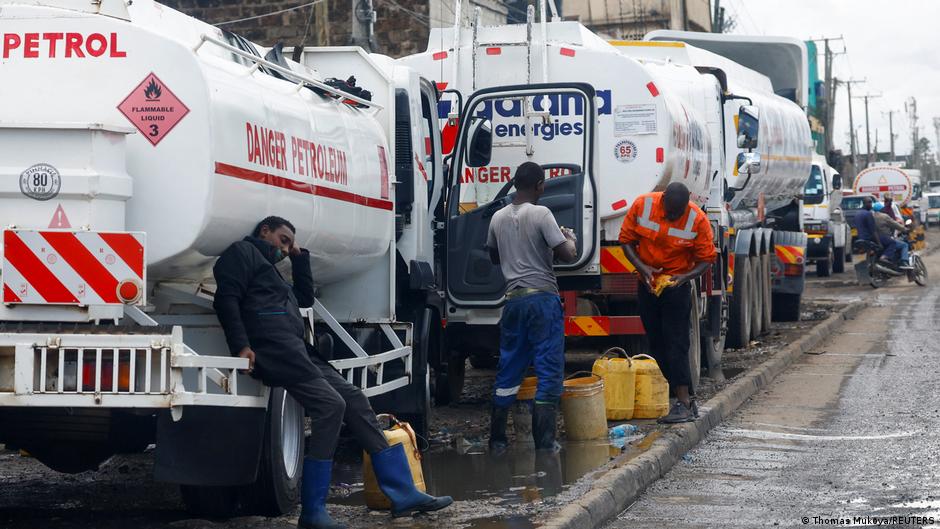
The prospect of a peace agreement between the United States and Iran is fueling optimism across global financial and commodity markets. At the center of attention is the Strait of Hormuz —one of the …
DW World — 16 June 2026
Text:
31
0
0
The prospect of a peace agreement between the United States and Iran is fueling optimism across global financial and commodity markets. At the center
Read Full Story at DW World →
⚡ Quickyla Analysis
Original editorial context — not sourced from the article above
The easing of tensions between the United States and Iran, evidenced by renewed optimism around a potential peace agreement, carries outsized significance for Africa—a continent where energy security and economic stability remain fragile yet critical. The Strait of Hormuz, through which roughly a fifth of the world’s oil passes, is no distant chokepoint for African economies; its closure in recent years has sent shockwaves through fuel-importing nations like South Africa, Nigeria, and Kenya, exacerbating inflation and straining foreign exchange reserves. A sustained de-escalation could stabilize global oil prices, but Africa’s relief may extend deeper than economics. It could signal a broader geopolitical realignment in which African states, long caught between great-power rivalries, gain breathing room to negotiate energy deals without the specter of regional conflict looming over their supply chains.
This quiet transformation is rooted in shifting power dynamics. Iran’s weakened position—exacerbated by sanctions and domestic unrest—has forced a recalibration of its regional ambitions, while the U.S. appears increasingly willing to prioritize stability over confrontation amid global energy transition pressures. For Africa, this moment underscores a hard-won lesson: the continent’s vulnerabilities are not just internal but tethered to distant conflicts it cannot control. The Strait’s reopening, even if partial or fragile, could embolden African policymakers to diversify energy sources, from liquefied natural gas terminals in Mozambique to West African offshore oil projects, reducing reliance on volatile Gulf routes.
Yet the road ahead is littered with uncertainty. A fragile détente between Washington and Tehran could collapse under domestic pressure in either capital, or be derailed by proxies in Yemen, Syria, or Lebanon. Africa’s energy-importing nations must brace for volatility if the agreement proves short-lived. Meanwhile, exporters like Nigeria and Angola face a paradox: higher oil prices could boost revenues, but only if global demand holds steady in an era of accelerating green transitions. The broader trend here is clear—global energy geopolitics is entering a phase where Africa’s role as a swing supplier is gaining prominence, but its ability to capitalize depends on stability it cannot guarantee alone.
Sources

🌍 World News
Man fleeing police attacked by alligator before continuing his getaway, Louisiana authorities say
🌍 World News
US crude exports hit record high in May as Iran war tightens global oil supplies

🌍 World News
Agitators outside Delaney Hall set up organized logistics operation before Newark protests began

🌍 World News
French doctors sound alarm over drinking water pollution

🌍 World News
Iran, Kuwait, Bahrain hit: Is the war in the Gulf escalating again?

🌍 World News
Four people trapped in flooded cave in Laos pulled to safety

