🌍 World News
Live
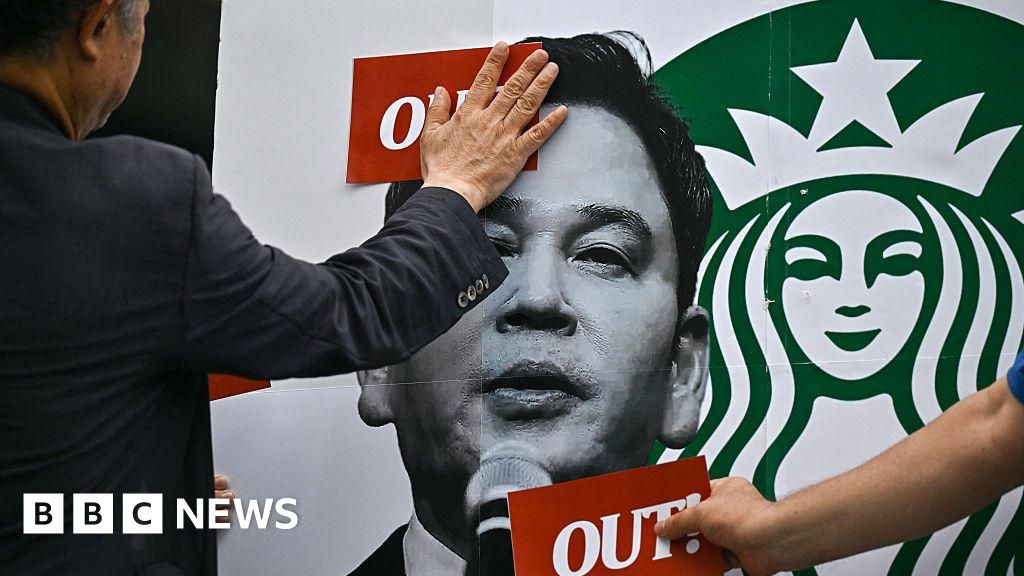
South Korea's Starbucks to shut for staff history lesson after backlash
Starbucks in South Korea will shut all its shops for half a day next week so staff can attend a history lesson following public outrage over a promotional campaign that evoked a deadly crackdown on p…
BBC World News — 15 June 2026
Text:
29
0
0
Starbucks in South Korea will shut all its shops for half a day next week so staff can attend a history lesson following public outrage over a promoti
Read Full Story at BBC World News →
⚡ Quickyla Analysis
Original editorial context — not sourced from the article above
South Korea’s decision to shutter its Starbucks locations for a mandatory staff history lesson underscores how global brands must navigate the delicate balance between commerce and cultural sensitivity—especially in markets where historical wounds remain raw. The move follows public backlash to a promotions campaign that inadvertently evoked the 1980 Gwangju Uprising, a pivotal but violent chapter in South Korea’s struggle for democracy. While the intent may have been commercial, the symbolism proved jarring in a country where collective memory of state violence still shapes national identity. For Starbucks, a company that prides itself on inclusivity, the incident reveals how even well-intentioned marketing can stumble into political minefields when it fails to account for local historical context.
The broader significance lies in how multinational corporations adapt—or fail to adapt—to hyper-local sensitivities. South Korea is not alone in this challenge; global brands from H&M to Dolce & Gabbana have faced similar backlashes in markets where historical trauma intersects with consumer identity. But South Korea’s case is particularly acute given the Gwangju Uprising’s enduring emotional resonance. The protest, which saw civilians violently suppressed by military forces, remains a defining moment in the nation’s democratization, often compared to Tiananmen Square or the Arab Spring in its moral weight. Starbucks’ response—shutting stores to educate employees—suggests an acknowledgment that cultural fluency is no longer optional but essential for survival in markets where history is a living force.
What remains unclear is whether this will be enough to restore trust. Will consumers see it as a genuine effort at reconciliation or a performative gesture? The move also raises questions about accountability: Who within Starbucks greenlit the campaign, and why wasn’t local cultural review more robust? Meanwhile, competitors may watch closely to see if this becomes a new standard for crisis management in South Korea.
Ultimately, the episode reflects a broader trend: in an era of heightened historical consciousness, brands can no longer afford to treat cultural context as an afterthought. The lesson for global corporations is that when history is weaponized, even a coffee break can become a battleground.
Sources

🌍 World News
Man fleeing police attacked by alligator before continuing his getaway, Louisiana authorities say
🌍 World News
US crude exports hit record high in May as Iran war tightens global oil supplies

🌍 World News
Agitators outside Delaney Hall set up organized logistics operation before Newark protests began

🌍 World News
French doctors sound alarm over drinking water pollution

🌍 World News
Iran, Kuwait, Bahrain hit: Is the war in the Gulf escalating again?

🌍 World News
Four people trapped in flooded cave in Laos pulled to safety

