Spain's Sánchez digs in after eight years as PM as wave of scandals threatens survival
Pedro Sánchez, Spain’s prime minister for eight years, faces scandal threats to his government after corruption investigations involving influence-peddling, money laundering, and dirty-tricks campaig…
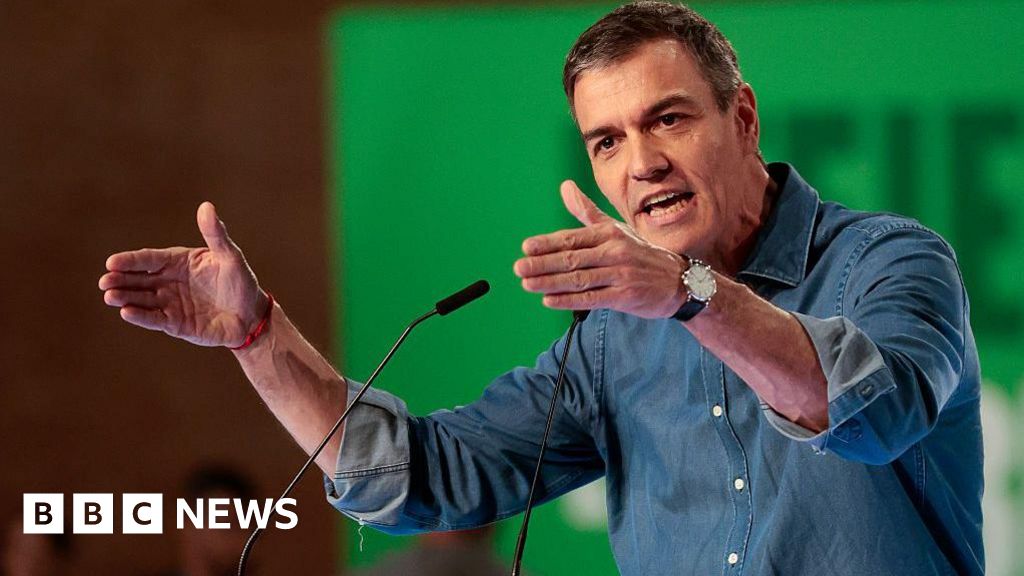
Pedro Sánchez is marking eight years as Spain’s prime minister today amid a mounting storm of corruption investigations that threaten not only his pol
Read Full Story at BBC World News →Why This Matters
The crisis confronting Pedro Sánchez’s government underscores a deeper reckoning with institutional decay in Spain, where allegations of systemic corruption now intersect with the erosion of public trust in democratic institutions. As one of Europe’s longest-serving leaders, Sánchez’s survival hinges not just on political maneuvering but on whether Spain’s political class can reclaim legitimacy amid a wave of scandals that have already toppled lesser administrations.
Background Context
Sánchez’s tenure has been marked by a delicate balance between progressive reforms and fragile alliances, but his government’s reliance on regional parties—particularly the Catalan left—has amplified vulnerabilities to corruption inquiries. The current investigations, spanning influence-peddling and financial irregularities, echo past scandals like the Gürtel case, which ensnared the conservative Popular Party and exposed the rot within Spain’s political establishment over the past two decades.
What Happens Next
If the corruption probes gain momentum, Sánchez may face either a confidence vote or a snap election, though his Socialist Party (PSOE) would likely prefer to exhaust legal defenses first. Meanwhile, the opposition’s strategy hinges on whether they can frame the scandals as systemic to the left’s governance, rather than isolated incidents tied to specific allies. The coming months will reveal whether Spain’s judiciary operates with sufficient independence to hold power to account.
Bigger Picture
This crisis reflects a broader European pattern in which long-serving leaders—from Macron to Meloni—are increasingly hemmed in by scandals that test the durability of their coalitions. In Spain, the scandals also intersect with regional tensions, as separatist parties implicated in some cases could see their leverage further eroded, reshaping the country’s political map ahead of 2027 elections.








