🌍 World News
Live
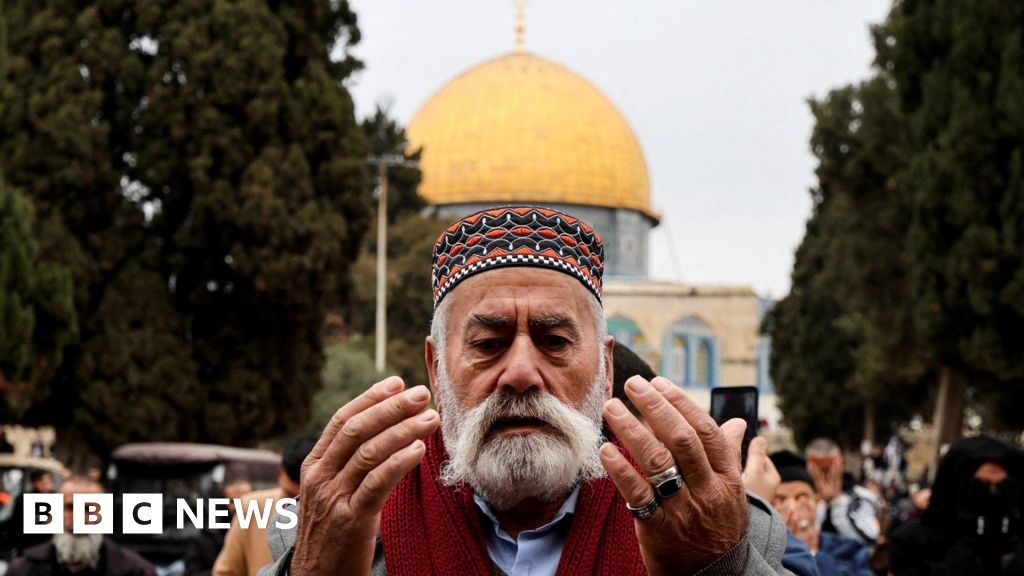
Status quo at Jerusalem's holiest site under threat as Israeli nationalists flout rules
"The whole land of Israel was promised to the children of God… and this is where we are going to build a new Temple for the entire humanity to come and pray together." Those were the potentially inc…
BBC World News — 17 June 2026
Text:
18
0
0
"The whole land of Israel was promised to the children of God… and this is where we are going to build a new Temple for the entire humanity to come an
Read Full Story at BBC World News →
⚡ Quickyla Analysis
Original editorial context — not sourced from the article above
The escalating tensions at Jerusalem’s Temple Mount—known to Muslims as the Haram al-Sharif and revered by Jews as the site of biblical temples—reflect more than just a localized dispute; they signal a potential unraveling of decades-old status quo arrangements that have, despite periodic flare-ups, largely held since Israel captured East Jerusalem in 1967. The recent provocations by Israeli nationalists aiming to assert Jewish prayer rights at the compound challenge the delicate balance brokered by Israel and Jordan, which has historically granted Muslims exclusive control over the site while permitting Jewish visitation, not prayer. This arrangement, though often strained, has prevented wider conflagration by acknowledging the competing claims without formalizing them—a pragmatic fiction that now faces its most serious test.
The stakes are higher than ever because the Temple Mount sits at the nexus of religious identity, national sovereignty, and geopolitical leverage. For Israel’s far-right factions, the site is not merely a religious icon but a symbol of historical reclamation, tied to messianic narratives of Jewish sovereignty over the entire land. Their encroachments—ranging from discreet violations to overt calls for Jewish prayer—are framed as a moral imperative by supporters but seen by Palestinians as a provocation designed to erode Muslim control. Meanwhile, Jordan, as custodian of the holy sites, faces growing pressure to abandon its traditional role, which has long insulated it from domestic criticism by emphasizing its guardianship of Jerusalem’s Islamic heritage.
What happens next hinges on whether Israel’s government, already emboldened by a far-right coalition, will tolerate these breaches or rein them in. A single violent incident—whether sparked by a nationalist incursion or a Palestinian response—could ignite broader unrest, drawing in regional actors like Iran-backed factions or even moderating states like Egypt and Saudi Arabia. The Biden administration’s muted response thus far contrasts with past crises, raising questions about whether Washington’s influence can still deter escalation. For now, the status quo remains tenuously intact, but its fragility suggests that the next provocation might not be met with restraint—and the consequences could reshape the contours of the Israeli-Palestinian conflict indefinitely.
Sources

🌍 World News
Man fleeing police attacked by alligator before continuing his getaway, Louisiana authorities say
🌍 World News
US crude exports hit record high in May as Iran war tightens global oil supplies

🌍 World News
Agitators outside Delaney Hall set up organized logistics operation before Newark protests began

🌍 World News
French doctors sound alarm over drinking water pollution

🌍 World News
Iran, Kuwait, Bahrain hit: Is the war in the Gulf escalating again?

🌍 World News
Four people trapped in flooded cave in Laos pulled to safety

