🌍 World News
Live
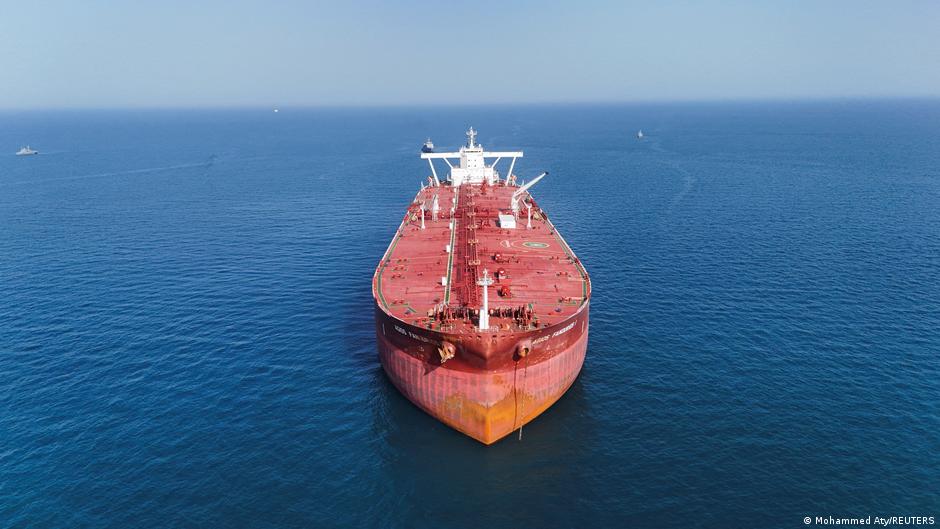
Strait of Hormuz reopening won't end shipping risks
US President Donald Trump on Sunday hailed a framework agreement between the United States and Iran aimed at ending hostilities in the Gulf that have reduced commercial shipping in the Strait of Horm…
DW World — 15 June 2026
Text:
39
0
0
US President Donald Trump on Sunday hailed a framework agreement between the United States and Iran aimed at ending hostilities in the Gulf that have
Read Full Story at DW World →
⚡ Quickyla Analysis
Original editorial context — not sourced from the article above
The announcement of a tentative U.S.-Iran framework agreement to ease tensions in the Strait of Hormuz marks a tentative step toward stabilizing one of the world’s most critical maritime chokepoints. Yet even if finalized, the deal would do little to eliminate the underlying risks that have made this narrow waterway a flashpoint for global trade. The Strait of Hormuz, through which roughly a fifth of the world’s seaborne oil passes, has long been a pressure valve for geopolitical tensions, where state-sponsored sabotage, proxy conflicts, and the ever-present threat of miscalculation have repeatedly disrupted shipping lanes. The Iran nuclear accord’s collapse in 2018, followed by a surge in attacks on tankers and seizures of vessels, underscored how quickly commercial disruptions can ripple through energy markets and supply chains.
Beyond the immediate security concerns, the region’s volatility reflects deeper structural shifts. The Gulf’s role as a transit hub has grown more precarious as Iran’s regional influence—through proxies like the Houthis in Yemen—extends its reach into critical shipping lanes. Meanwhile, the U.S. has maintained a military presence to deter aggression but has struggled to balance deterrence with de-escalation, particularly as its own allies in the Gulf pursue independent security arrangements. The framework’s success hinges on whether it can address Iran’s demand for sanctions relief while satisfying Washington’s insistence on curbing its nuclear program and regional activities—an equation that has eluded negotiators for decades.
Looking ahead, even a partial thaw in relations would not erase the structural vulnerabilities that make the Strait of Hormuz a persistent flashpoint. The rise of drone and missile technology has lowered the threshold for asymmetric attacks, while climate-induced water scarcity in the Gulf could exacerbate resource competition, further straining regional stability. Meanwhile, the global shipping industry’s growing reliance on automation and digital systems introduces new risks, from cyberattacks to supply chain bottlenecks that could be exploited in times of crisis. For now, the framework offers a glimmer of hope, but the Strait’s reopening—if it happens—will only be the first step in a far longer process of rebuilding trust in a region where trust has long been in short supply.
Sources

🌍 World News
Man fleeing police attacked by alligator before continuing his getaway, Louisiana authorities say
🌍 World News
US crude exports hit record high in May as Iran war tightens global oil supplies

🌍 World News
Agitators outside Delaney Hall set up organized logistics operation before Newark protests began

🌍 World News
French doctors sound alarm over drinking water pollution

🌍 World News
Iran, Kuwait, Bahrain hit: Is the war in the Gulf escalating again?

🌍 World News
Four people trapped in flooded cave in Laos pulled to safety

