💻 Technology
Live
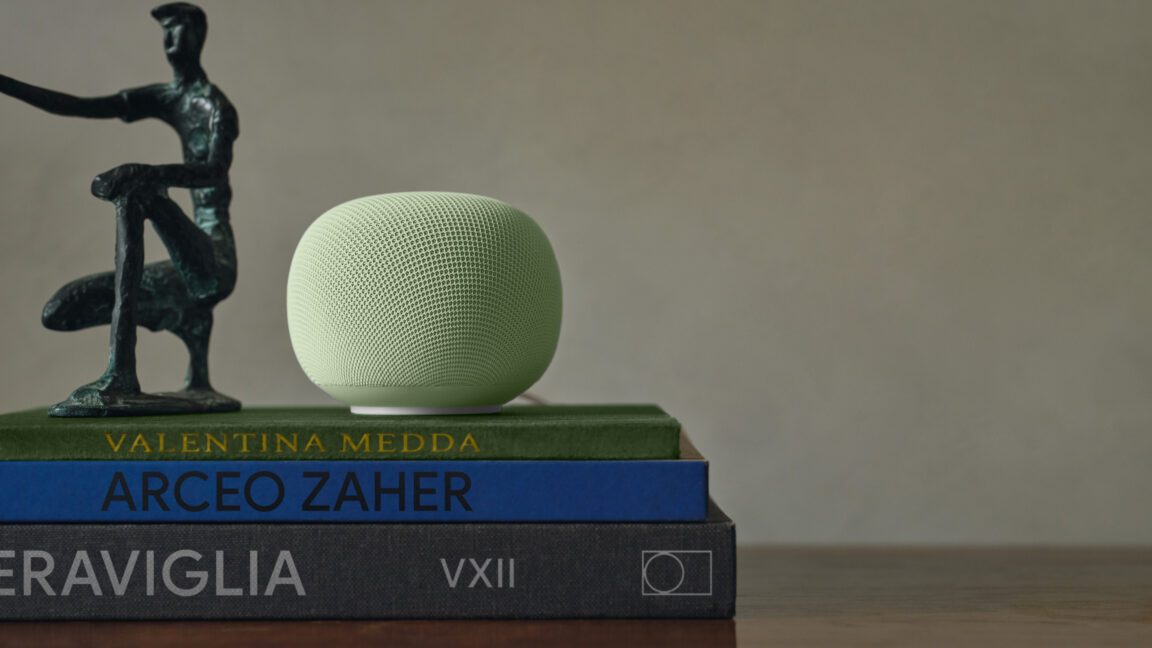
Ten months later, the $100 Google Home Speaker is finally available for preorder
Google's new smart speaker is more about Gemini than audio quality.
Ars Technica — 17 June 2026
Text:
15
0
0
Google's new smart speaker is more about Gemini than audio quality. This report comes from Ars Technica. The story centres on Ten months later, the $
Read Full Story at Ars Technica →
⚡ Quickyla Analysis
Original editorial context — not sourced from the article above
Ten months after its initial announcement, Google’s $100 Home Speaker—rebranded under the Gemini umbrella—finally enters preorder, underscoring a strategic pivot in the smart home market. This isn’t merely a price adjustment or a delayed product launch; it signals Google’s aggressive push to embed its AI assistant into everyday life by making advanced conversational AI accessible at a mass-market price point. For years, smart speakers have competed on voice clarity, bass response, or ecosystem integration, but Google’s focus here is squarely on computational power—specifically, the real-time processing capabilities of its Gemini model. By prioritizing AI over traditional audio engineering, the company is betting that users will tolerate modest sound quality in exchange for faster, more contextually aware interactions, from complex follow-up queries to on-device reasoning.
The delay itself reveals deeper industry tensions. Google’s original timeline likely faltered due to challenges in scaling the AI workloads required for Gemini within the constraints of a $100 device. Unlike its predecessors, this speaker integrates on-device processing to reduce latency and improve privacy, a move that demands significant hardware-software optimization. The wait also reflects a broader maturation phase for consumer AI, where performance benchmarks no longer hinge solely on latency or accuracy but on seamless integration into daily routines. Rivals like Amazon have tread similar ground with their own AI chips, but Google’s aggressive pricing—undercutting premium models by $30 or more—suggests a willingness to subsidize adoption, possibly to capture user data and refine its ad-targeting models.
What remains uncertain is whether consumers will prioritize AI sophistication over audio fidelity or ecosystem loyalty. Early adopters may be drawn to the novelty, but mainstream acceptance hinges on consistent, value-driven interactions. A critical question is how Google balances on-device processing with cloud-dependent features, especially as regulatory scrutiny over AI data usage intensifies. Additionally, the speaker’s success could pressure competitors to accelerate their own AI-driven hardware, potentially accelerating a commoditization cycle in the smart home space. For now, Google’s move is a calculated gamble—one that could redefine the value proposition of smart speakers, or leave users questioning whether a budget device can truly deliver premium intelligence.
Sources

💻 Technology
You can now beat ChatGPT Codex rate limits, if you have friends

💻 Technology
Cash App made a magic wand for contactless payments

💻 Technology
Coders are refusing to work without AI — and that could come back to bite them

💻 Technology
Hackers hijacked Instagram accounts by tricking Meta AI support chatbot into granting access

💻 Technology
Asus gives the ROX Xbox Ally the OLED screen it deserves

💻 Technology
‘Backrooms’ $118M WW Bonanza; ‘Obsession’ Obsessed With $148M WW; ‘Michael’ Nearing $900M WW – Global Box Office Update

