🕌 Religion & Faith
Live
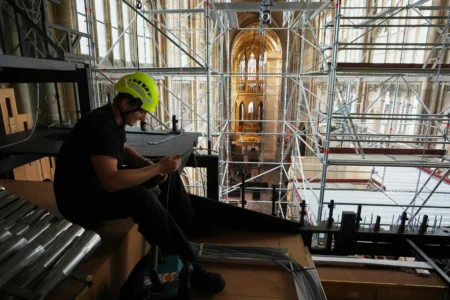
The 700-year-old St. Vitus Cathedral in Prague inaugurates a new organ
Prague’s St. Vitus Cathedral had its new organ inaugurated on Monday, giving the 700-year-old building, the largest in the Czech Republic, a proper instrument to accompany religious services and conc…
Crux Now — 16 June 2026
Text:
32
0
0
Prague’s St. Vitus Cathedral had its new organ inaugurated on Monday, giving the 700-year-old building, the largest in the Czech Republic, a proper in
Read Full Story at Crux Now →
⚡ Quickyla Analysis
Original editorial context — not sourced from the article above
The inauguration of a new organ at Prague’s St. Vitus Cathedral is more than a musical milestone—it is a quiet act of historical continuity in one of Europe’s most storied religious and architectural landmarks. Dating back to the 14th century, the cathedral has witnessed coronations, royal burials, and centuries of liturgical music played on organs that were, until now, interim or temporary. The arrival of a modern instrument designed to meet the demands of both historical and contemporary sacred music reflects a broader European trend: the preservation of heritage sites through careful, often painstaking, adaptation.
What makes this organ particularly significant is its role in bridging the gap between medieval grandeur and modern worship. St. Vitus Cathedral has been under continuous construction and renovation since its foundation—a literal reflection of the evolving identities of the Czech lands, from the Holy Roman Empire to the modern Czech Republic. The organ’s installation underscores how religious institutions in Europe navigate the tension between tradition and innovation. Unlike many historic buildings that become static museums, St. Vitus remains a living place of worship, demanding functional instruments that can perform everything from Gregorian chant to Baroque compositions and even contemporary works. This dual purpose highlights how sacred spaces in Europe are not relics but active participants in cultural life.
Looking ahead, the organ’s integration will likely spark discussions about authenticity and modernity in sacred spaces. Will the instrument’s design draw criticism from purists who argue that only historically accurate tools belong in such settings? Conversely, could its presence inspire other cathedrals to follow suit, blending heritage with contemporary craftsmanship? Broader still, the renovation aligns with a wider European movement to revitalize religious sites not just as tourist attractions but as communal hubs. As fewer Europeans attend regular services, these spaces must find new ways to remain relevant—a challenge that extends beyond Prague to cities like Paris, Rome, and Vienna. The organ’s inauguration thus serves as a subtle reminder: even in an era of secularization, Europe’s cathedrals are still evolving, one note at a time.
Sources

🕌 Religion & Faith
Defense Department rejiggers list of recognized religions after backlash, narrows it to 30

🕌 Religion & Faith
Odiong guilty in Texas: Questions remain for several Church leaders

🕌 Religion & Faith
Trump’s latest attack on Leo XIV isn’t really about the pope

🕌 Religion & Faith
Pope Leo XIII updates just war theory

🕌 Religion & Faith
Photos of the Week: Ebola responses, end of Hajj

🕌 Religion & Faith
High hopes, many challenges for Bangladesh’s first Indigenous Catholic MP

