💰 Business
Live
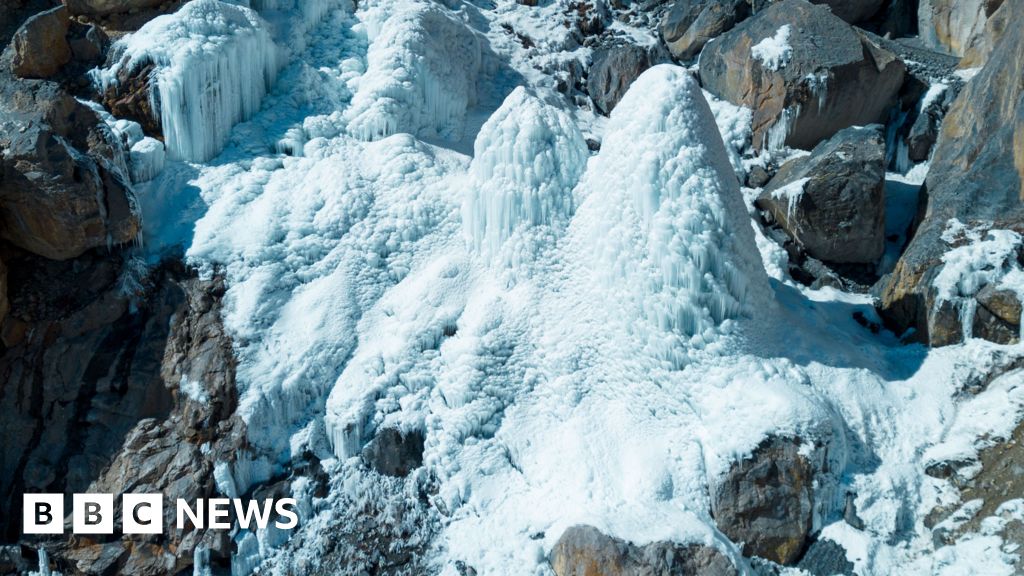
The artificial ice pyramids saving India's mountain villages
At an altitude of almost 4,000m (13,000ft) and receiving almost no rainfall, the Himalayan village of Sakti is a hostile place to be a farmer. "Ladakh has a brutal, single-cultivation season," says G
BBC Business — 18 June 2026
Text:
25
0
0
At an altitude of almost 4,000m (13,000ft) and receiving almost no rainfall, the Himalayan village of Sakti is a hostile place to be a farmer. "Ladak
Read Full Story at BBC Business →
⚡ Quickyla Analysis
Original editorial context — not sourced from the article above
The artificial ice pyramids reshaping agriculture in India’s high Himalayas are more than an engineering marvel—they represent a desperate adaptation to a climate paradox. In Ladakh, where villages like Sakti sit above 4,000 meters with scant rainfall and arid conditions, farmers once relied on glacial meltwater that is now arriving later and disappearing faster due to rising temperatures. These ice stupas, as they’re called, are a low-tech solution born of necessity, storing winter stream water in conical formations that melt gradually just as spring sowing begins. Their success in extending the growing season has made them a symbol of resilience, but they also underscore how climate change is forcing communities to rethink survival strategies in some of the planet’s most fragile ecosystems.
What makes this innovation particularly significant is its scalability. Unlike large dams, ice stupas require minimal infrastructure—just pipes, pumps, and a steep learning curve for villagers who must master the precise timing of water release. Yet their impact extends beyond agriculture; they’re also altering social structures, as younger generations return to villages to maintain the systems, reversing rural exodus in places where outmigration was once the norm. The technology’s origins trace back to 2013, when engineer Sonam Wangchuk prototyped the first stupa in Phyang, but its adoption has since spread to Nepal and Bhutan, suggesting a model for other high-altitude deserts from the Andes to the Pamirs.
Critics caution, however, that ice stupas are a stopgap measure rather than a long-term fix. Their effectiveness hinges on stable winter temperatures—a variable already in flux—and they divert water from ecosystems that may depend on seasonal flows. Questions linger about their ecological footprint: could over-extraction from already strained streams create new shortages downstream? Meanwhile, the broader trend they highlight is the quiet transformation of traditional knowledge into climate adaptation tools. As glaciers retreat and monsoon patterns shift, communities worldwide are reviving indigenous water-harvesting techniques, from India’s johads to Peru’s qochas, proving that sometimes the most enduring solutions were hiding in plain sight all along. For Ladakh, the ice stupas may yet buy time—but the real test will be whether they buy enough to adapt to a much warmer future.
Sources

💰 Business
How 'confused' AI rollout hurts firms and baffles staff

💰 Business
OpenAI let ChatGPT aid and abet mass shooters, Florida lawsuit claims

💰 Business
AI giant Anthropic announces plans to list on US stock market

💰 Business
Caribbean hot sauce producers warn of shortages and higher prices

💰 Business
Bill debt soars but many don't know help is available
💰 Business
Japan raises interest rate to highest since 1995

