The Supreme Court has left limited alternatives for protecting minority voting rights
A demonstrator holds a sign saying "PROTECT OUR VOTE!" at a May 16 rally in Montgomery, Ala., responding to the recent U.S. Supreme Court ruling that weakens Voting Rights Act protections against rac…
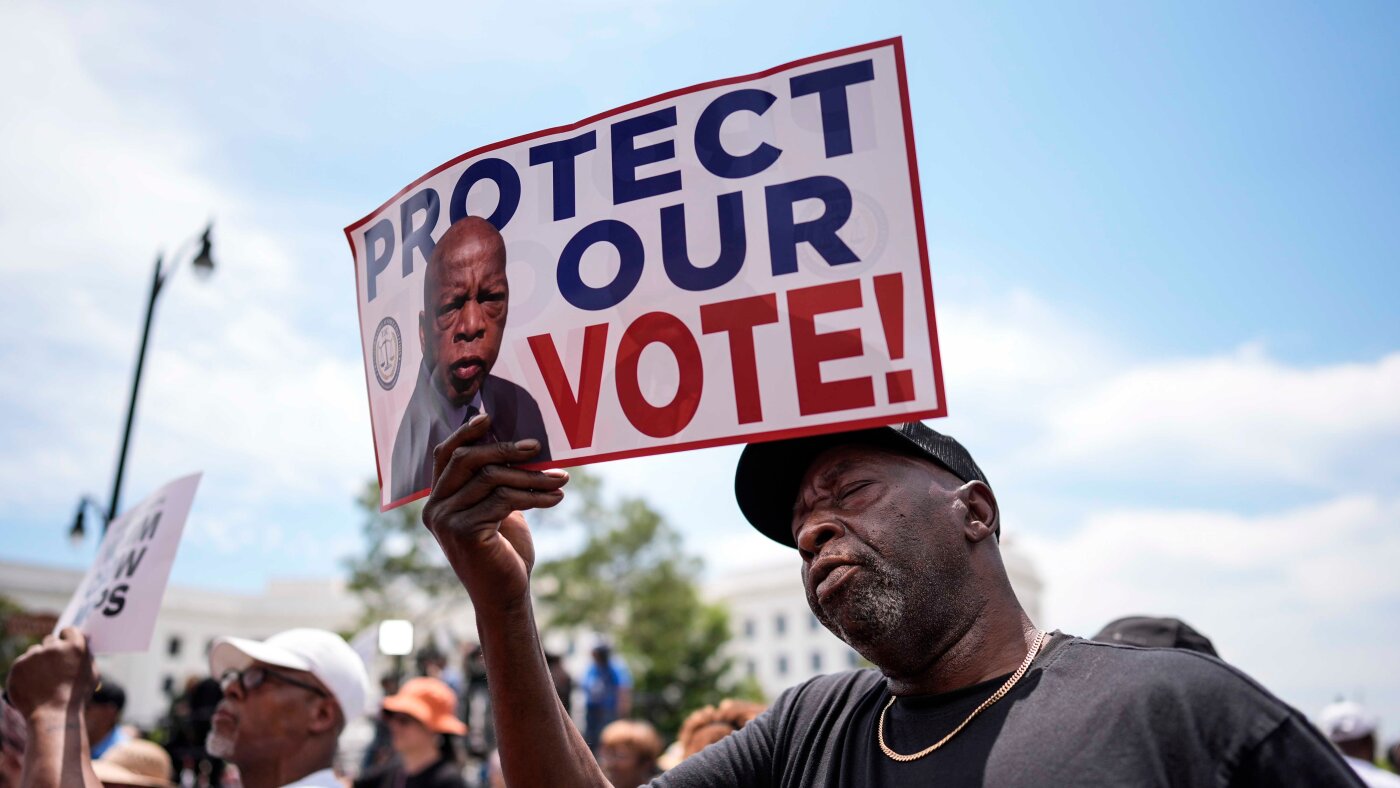
A demonstrator holds a sign saying "PROTECT OUR VOTE!" at a May 16 rally in Montgomery, Ala., responding to the recent U.S. Supreme Court ruling that
Read Full Story at NPR News →Why This Matters
The Supreme Court’s recent weakening of the Voting Rights Act strikes at the core of democratic equity, signaling a retreat from federal oversight of discriminatory election practices. This shift could embolden state legislatures to advance policies that disproportionately disenfranchise minority voters, reversing decades of progress in electoral fairness.
Background Context
Enacted in 1965, the Voting Rights Act was designed to dismantle structural barriers like literacy tests and gerrymandering that suppressed Black and other minority voters. The Shelby County v. Holder decision in 2013 already gutted preclearance requirements, and this latest ruling further erodes the legal framework meant to protect marginalized communities from electoral manipulation.
What Happens Next
State-level battles over voting rights are poised to intensify, with civil rights groups likely to pivot to costly litigation under remaining provisions of the VRA. Congress may face renewed pressure to pass stronger federal protections, though partisan gridlock makes swift action uncertain in the near term.
Bigger Picture
This ruling reflects a broader trend of the Court narrowing civil rights enforcement while empowering states to redefine electoral rules. It also underscores the growing vulnerability of minority voting rights in an era of aggressive redistricting and voter suppression tactics, raising urgent questions about the durability of American democracy.





