🔬 Science
Live
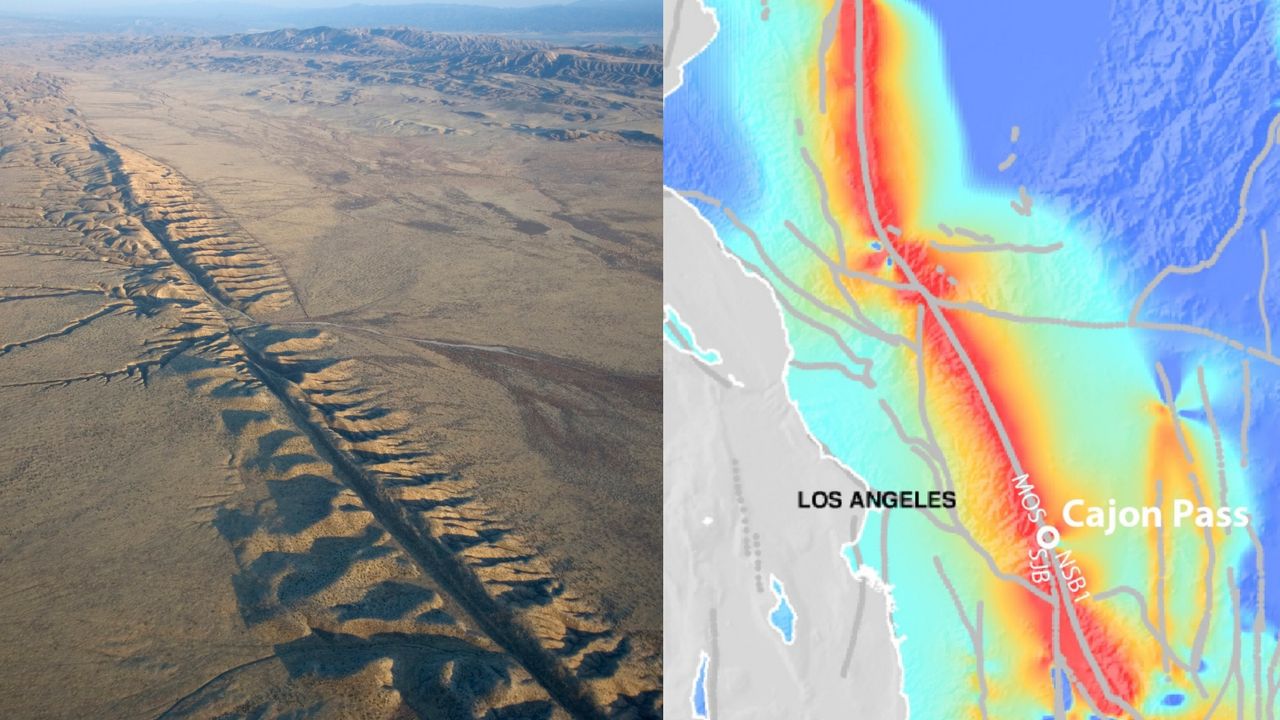
'The system is critically stressed': San Andreas and San Jacinto faults scarily close to major earthquake, study finds
The San Andreas fault and a neighboring fault in Southern California have reached their highest levels of tectonic stress in 1,000 years, and a rupture at one fault could propagate to the other, rese…
Live Science — 16 June 2026
Text:
23
0
0
The San Andreas fault and a neighboring fault in Southern California have reached their highest levels of tectonic stress in 1,000 years, and a ruptur
Read Full Story at Live Science →
⚡ Quickyla Analysis
Original editorial context — not sourced from the article above
The revelation that the San Andreas and San Jacinto faults in Southern California are now carrying their highest tectonic stress in a millennium isn’t just another seismic headline—it’s a geological alarm that demands immediate attention. These faults are among the most studied in the world, yet the discovery that their stress levels have never been more critical in recorded history underscores how little we truly understand about the cascading risks of a major rupture. The study’s implication that stress transfer between the faults could trigger a multi-fault earthquake isn’t hypothetical; it’s a plausible scenario that could redefine disaster planning for millions. The San Andreas alone has long been the poster child for "the Big One," but the San Jacinto’s proximity and shared stress load mean the next major quake might not come from a single, predictable fault line. Instead, it could unzip a network of fractures in a domino effect, amplifying shaking and complicating emergency responses.
This isn’t just about California. The study serves as a stark reminder of how interconnected fault systems can behave in ways we’re only beginning to model. Most seismic risk assessments treat faults as independent entities, but nature doesn’t work that way. When faults are positioned like the San Andreas and San Jacinto—parallel and close enough to influence each other—the potential for a rupture to jump from one to the other becomes a real, if terrifying, possibility. It challenges the assumption that we can predict or contain the worst impacts of a major quake. For a region that’s home to 23 million people, the stakes couldn’t be higher.
What happens next? The study’s authors likely hope their findings will accelerate efforts to retrofit vulnerable infrastructure, update early warning systems, and refine evacuation models. But the real question is whether policymakers will act with the urgency this data suggests. Meanwhile, seismologists will be racing to deploy more sensors along these faults, hoping to detect any telltale signs of an impending rupture. Yet even with better data, the unpredictability of fault interactions means the next major quake could still catch us off guard. This isn’t just a Southern California problem—it’s a global one, as urban centers worldwide sit atop similarly stressed fault networks. The lesson here is clear: when it comes to earthquakes, the only certainty is that the system is always closer to breaking than we’d like to admit.
Sources

🔬 Science
'Astonishing': James Webb telescope spots the most chemically primitive galaxy in the ancient universe

🔬 Science
El Niño Is Underway

🔬 Science
Astronomers gaze into the 'Crystal Ball Nebula' and see a vision of our dying sun — Space photo of the week

🔬 Science
Bacteria uncover distinct strategy to import rare sugar polymers, crystal structures show

🔬 Science
NASA Awards Contract for Johnson Space Center Infrastructure

🔬 Science
Repairing DNA damage: Scientists discover a surprising new benefit of melatonin

