💻 Technology
Live
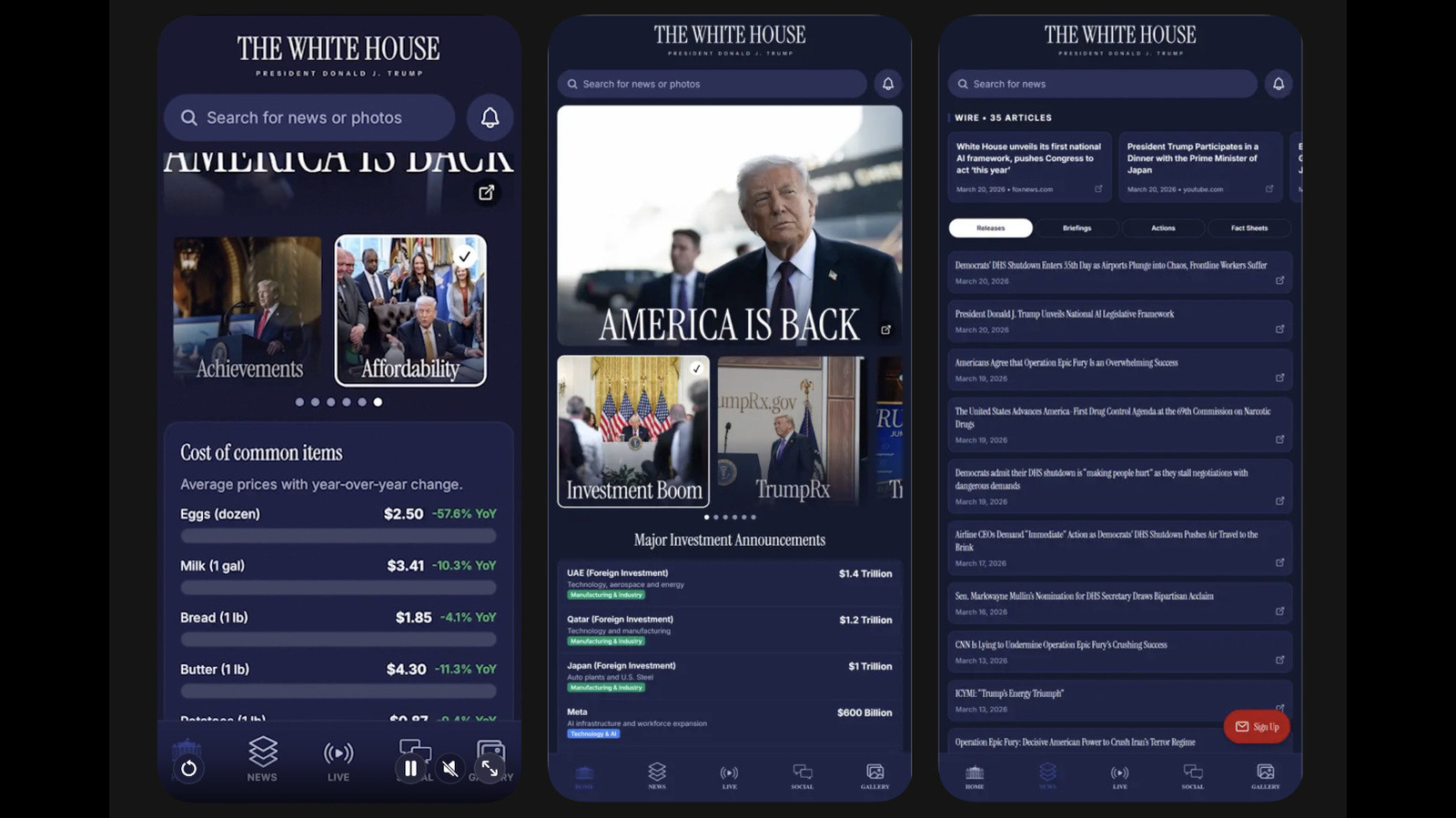
The White House app will reportedly be auto-installed on Homeland Security staff's devices
The administration sent out a notice to DHS personnel on June 16, Politico said. The White House app is reportedly coming to all devices managed by the Department of Homeland Security, whether the u…
Engadget — 17 June 2026
Text:
6
0
0
The administration sent out a notice to DHS personnel on June 16, Politico said. The White House app is reportedly coming to all devices managed by t
Read Full Story at Engadget →
⚡ Quickyla Analysis
Original editorial context — not sourced from the article above
The decision to auto-install the White House app on Department of Homeland Security devices is more than a bureaucratic IT directive—it’s a quiet expansion of digital governance into the federal workforce, raising questions about transparency, security, and institutional control. The app’s presence on DHS-managed devices, which house sensitive data and serve critical security functions, suggests a deliberate effort to streamline communication between the executive branch and its operational arms. But why now, and why this agency in particular? The timing aligns with a broader push for centralized digital engagement under the current administration, where direct outreach to federal employees may be seen as a way to bypass traditional channels that could dilute messaging. For an agency like DHS—tasked with border security, cybersecurity, and domestic intelligence—the app’s installation could normalize a model where real-time updates, policy directives, or even surveillance tools are delivered through a single, controlled interface.
This move also intersects with evolving debates over digital sovereignty in government operations. The White House app, like other federal digital services, is likely designed to operate on a closed network, raising concerns about data privacy and third-party access. DHS personnel handling classified or highly sensitive information may now find their work devices subject to a platform over which they have no administrative control—a potential vulnerability if the app’s permissions or security protocols are compromised. While the administration may frame this as an efficiency measure, it blurs the line between official communication and institutional oversight, particularly in an agency already scrutinized for its expansive powers.
Looking ahead, the rollout could face pushback from employee unions, cybersecurity experts, or congressional oversight committees concerned about compliance with federal IT policies. If other agencies follow suit, it may signal a shift toward a more consolidated digital ecosystem in government, where executive-branch tools supersede agency-specific systems. The broader trend here is the increasing fusion of technology and governance—a development that, while offering convenience, demands rigorous scrutiny to ensure it doesn’t erode the checks and balances meant to protect both public servants and the public they serve.
Sources

💻 Technology
You can now beat ChatGPT Codex rate limits, if you have friends

💻 Technology
Meta is reportedly developing an AI pendant

💻 Technology
Cash App made a magic wand for contactless payments

💻 Technology
Coders are refusing to work without AI — and that could come back to bite them

💻 Technology
Hackers hijacked Instagram accounts by tricking Meta AI support chatbot into granting access

💻 Technology
‘Backrooms’ $118M WW Bonanza; ‘Obsession’ Obsessed With $148M WW; ‘Michael’ Nearing $900M WW – Global Box Office Update

