🌍 World News
Live
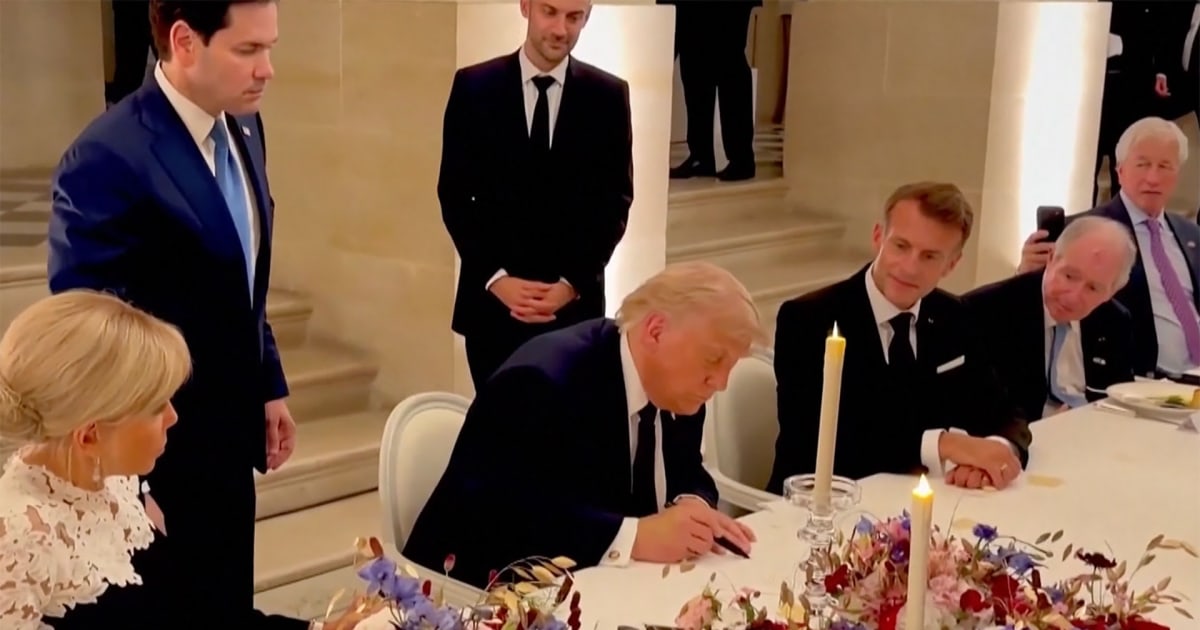
'This was not easy', Trump says while signing Iran MOU at Versailles
President Trump signed the Iran memorandum of understanding at the Palace of Versailles during dinner hosted by French President Emmanuel Macron. The signing of the interim agreement to end hostiliti…
NBC News — 18 June 2026
Text:
29
0
0
President Trump signed the Iran memorandum of understanding at the Palace of Versailles during dinner hosted by French President Emmanuel Macron. The
Read Full Story at NBC News →
⚡ Quickyla Analysis
Original editorial context — not sourced from the article above
The signing of an interim agreement to end hostilities between the United States and Iran at the Palace of Versailles is more than a diplomatic photo opportunity—it marks a tentative step toward reshaping the geopolitical landscape of the Middle East, where decades of tension have calcified into entrenched positions. The symbolic choice of Versailles, a site steeped in European history and the legacy of power negotiations, underscores the gravity of the moment. This isn’t just another handshake on the sidelines of a summit; it represents a potential thaw in relations that could ripple across global energy markets, regional security dynamics, and the fragile balance of power in the Persian Gulf. For a U.S. president who has long positioned himself as a disruptor of traditional diplomacy, the act of signing such an agreement—however preliminary—sends a message that even the most hardened adversaries can be engaged when interests align.
Yet the road to this moment has been far from straightforward. The U.S.-Iran relationship has been defined by decades of mistrust, from the 1953 coup that reinstated the Shah to the 1979 hostage crisis and the subsequent decades of sanctions and covert operations. The 2015 nuclear deal, though imperfect, was an attempt to break the cycle—only to be dismantled by the Trump administration in 2018. Now, with tensions simmering in Iraq, Syria, and the Strait of Hormuz, the need for de-escalation has never been more urgent. The fact that both sides are willing to meet in such a setting suggests a pragmatism that transcends ideological divides, even if the outcome remains uncertain.
What happens next is anyone’s guess. Will this lead to a broader détente, or will it collapse under the weight of domestic political pressures in both countries? The agreement’s interim nature leaves ample room for interpretation, and the lack of concrete milestones raises questions about its enforceability. Meanwhile, regional players like Israel and Saudi Arabia—long wary of any U.S.-Iran rapprochement—may push back, complicating the path forward. The broader trend here is the shifting calculus of power in a multipolar world, where traditional alliances are being tested and new forms of diplomacy are emerging. Whether this marks the beginning of a new chapter or just another pause in an endless cycle of conflict may depend on forces beyond the negotiating table.
Sources

🌍 World News
Man fleeing police attacked by alligator before continuing his getaway, Louisiana authorities say
🌍 World News
US crude exports hit record high in May as Iran war tightens global oil supplies

🌍 World News
Agitators outside Delaney Hall set up organized logistics operation before Newark protests began

🌍 World News
French doctors sound alarm over drinking water pollution

🌍 World News
Iran, Kuwait, Bahrain hit: Is the war in the Gulf escalating again?

🌍 World News
Four people trapped in flooded cave in Laos pulled to safety

