🌍 World News
Live
Trump says the Strait of Hormuz will be 'completely open' by Friday
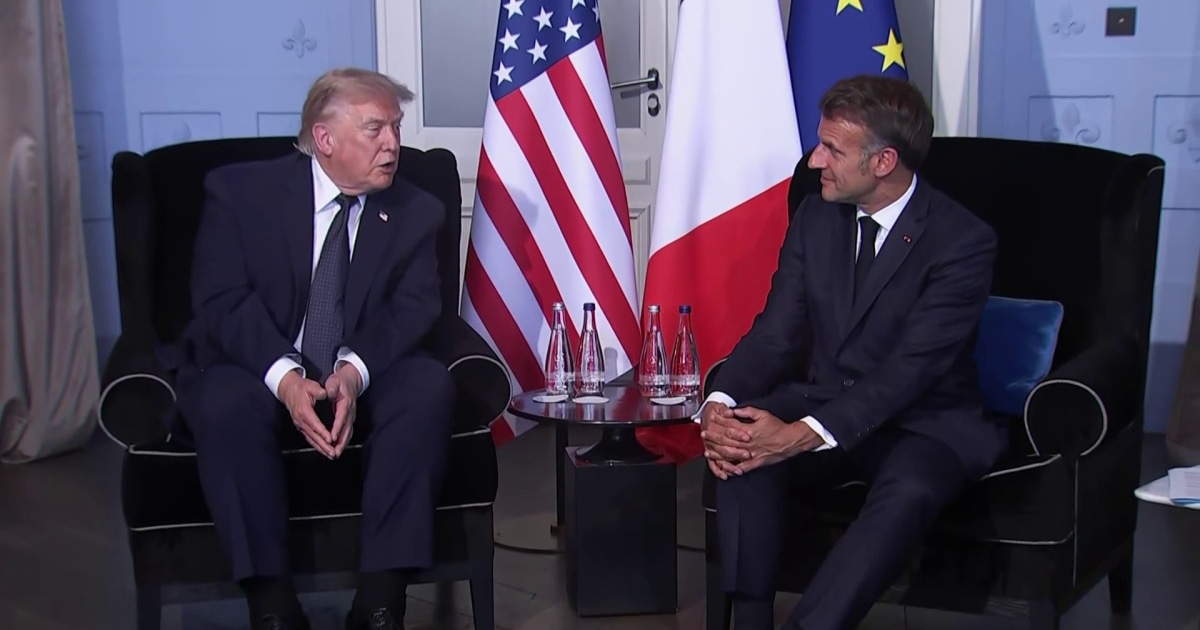
While meeting with French President Emmnual Macron at the G7 summit, President Donald Trump said that the Strait of Hormuz will fully reopen and that he expects the agreement with Iran will be signed…
NBC News — 15 June 2026
Text:
26
0
0
While meeting with French President Emmnual Macron at the G7 summit, President Donald Trump said that the Strait of Hormuz will fully reopen and that
Read Full Story at NBC News →
⚡ Quickyla Analysis
Original editorial context — not sourced from the article above
The declaration that the Strait of Hormuz will be "completely open" by Friday is more than a fleeting diplomatic soundbite—it is a signal that the White House may be preparing to de-escalate one of the most volatile flashpoints in global energy markets. The strait, through which roughly a fifth of the world’s oil passes, has been a geopolitical tinderbox for months, following a string of attacks on tankers and the downing of a U.S. drone last summer. Trump’s remarks suggest a potential thaw in tensions with Iran, even if the specifics of any agreement remain unclear. But the real significance lies in what this could mean for the broader standoff between Washington and Tehran, which has oscillated between brinkmanship and fragile ceasefires since the U.S. withdrew from the 2015 nuclear deal.
What makes this moment particularly fragile is the absence of public details about the proposed deal. If an agreement is imminent, its terms could include sanctions relief, a resumption of indirect nuclear talks, or even a mutual de-escalation of military posturing. Yet the lack of transparency raises questions: Will Iran accept partial sanctions relief, or demand a full return to pre-2018 conditions? How will regional allies like Saudi Arabia and Israel, who have grown accustomed to maximum U.S. pressure on Iran, react if Washington softens its stance? The G7 summit, where Trump made the announcement, is an odd venue for such a pivotal geopolitical development—typically, sensitive diplomacy unfolds behind closed doors, not in press briefings.
Looking ahead, the timeline itself is suspiciously tight. A "completely open" strait by Friday implies either a rapid Iranian concession or a U.S. willingness to relax its enforcement of sanctions in exchange for goodwill. Either path carries risks. If Iran perceives this as a retreat rather than a negotiation, it may double down on its regional proxy strategy, further destabilizing Iraq, Yemen, and Syria. Conversely, if Trump’s gambit is an attempt to lock in a pre-election diplomatic win, he may find himself boxed in by hardliners in Tehran who see any deal as a capitulation.
This episode fits into a broader pattern of Trump’s foreign policy—impulsive announcements, heavy on symbolism but light on substance, with outcomes that are often determined by the reactions of adversaries rather than U.S. intentions. Whether this leads to lasting stability or another cycle of confrontation remains to be seen, but one thing is certain: the Strait of Hormuz will remain a barometer of whether diplomacy can outpace brinkmanship.
Sources

🌍 World News
Agitators outside Delaney Hall set up organized logistics operation before Newark protests began

🌍 World News
Man fleeing police attacked by alligator before continuing his getaway, Louisiana authorities say
🌍 World News
US crude exports hit record high in May as Iran war tightens global oil supplies

🌍 World News
French doctors sound alarm over drinking water pollution

🌍 World News
Iran, Kuwait, Bahrain hit: Is the war in the Gulf escalating again?

🌍 World News
Four people trapped in flooded cave in Laos pulled to safety


