🌍 World News
Live
Trump says U.S.-Iran deal ‘complete’ after months of negotiations
A deal between the United States and Iran has been reached, President Donald Trump announced Sunday. The President added that the U.S. naval blockade would be removed from the Strait of Hormuz. NBC N…
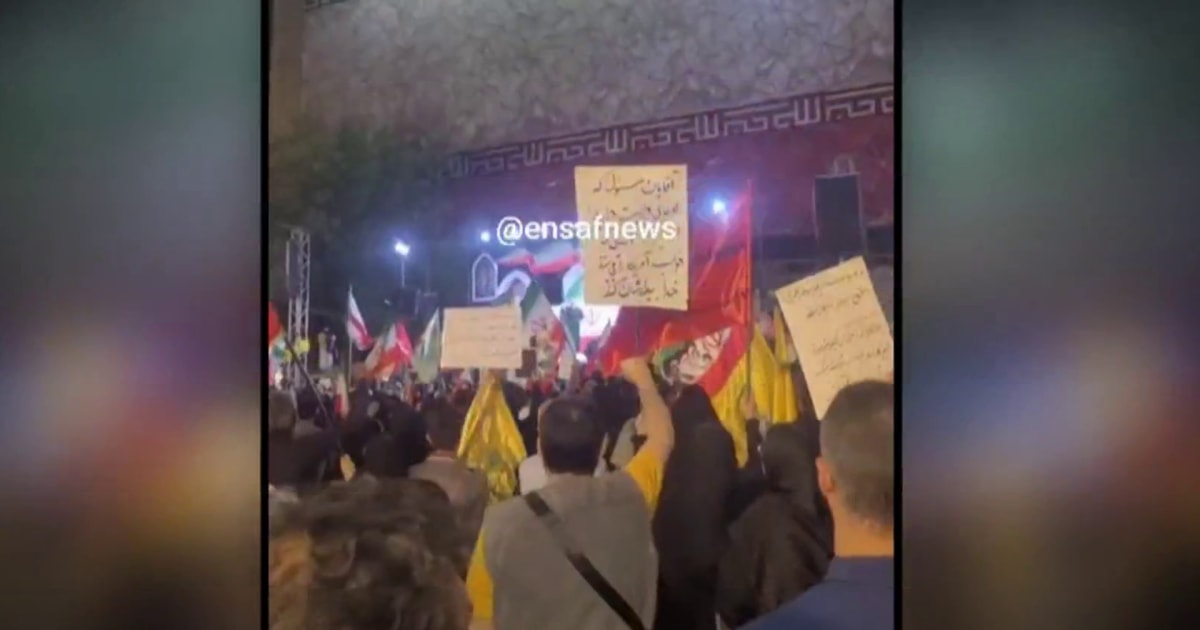
NBC News — 14 June 2026
Text:
24
0
0
A deal between the United States and Iran has been reached, President Donald Trump announced Sunday. The President added that the U.S. naval blockade
Read Full Story at NBC News →
⚡ Quickyla Analysis
Original editorial context — not sourced from the article above
The announcement of a U.S.-Iran deal, complete with the lifting of the Strait of Hormuz naval blockade, marks a rare moment of diplomatic progress in a relationship defined by decades of hostility and mistrust. While the deal’s specifics remain unclear, its significance lies in its potential to ease tensions in a region where miscalculation could trigger broader conflict. The Strait of Hormuz, a critical chokepoint for global oil shipments, has been a flashpoint for years, with Iran repeatedly threatening to disrupt traffic in response to sanctions and perceived provocations. A deal that secures its reopening—even temporarily—could stabilize energy markets and reduce the risk of a direct military confrontation between the U.S. and Iran.
Yet the deal’s durability remains uncertain. Previous agreements, such as the 2015 nuclear deal abandoned by the Trump administration, collapsed under renewed hostilities. Iran’s leadership has consistently framed negotiations as a means to lift sanctions rather than as a gesture of goodwill, raising questions about whether this deal addresses underlying grievances or merely buys time. Meanwhile, regional players like Saudi Arabia and Israel, who view Iran as an existential threat, may view any U.S.-Iran détente with skepticism—or outright opposition. Their influence could complicate Washington’s ability to sustain the agreement, especially if domestic political pressures in the U.S. or Iran demand hardline responses.
Looking ahead, the deal’s success hinges on enforcement mechanisms and the willingness of both sides to make concessions beyond the immediate easing of maritime restrictions. Will Iran curb its ballistic missile program or regional proxy activities in exchange for sanctions relief? Will the U.S. provide guarantees against future regime-change efforts? The absence of these details leaves open the possibility of renewed friction—or worse, a breakdown if either side perceives the deal as a strategic setback.
This development also fits into a broader pattern of tentative diplomatic openings amid shifting geopolitical alignments. With China and Russia increasingly engaging with Iran, the U.S. may be seeking to reassert influence before other powers fill the void. Whether this deal signals a broader thaw or merely a tactical pause in tensions will depend on how both sides navigate the coming months—and whether the political will to sustain it outlasts the next crisis.
Sources

🌍 World News
Agitators outside Delaney Hall set up organized logistics operation before Newark protests began

🌍 World News
Man fleeing police attacked by alligator before continuing his getaway, Louisiana authorities say
🌍 World News
US crude exports hit record high in May as Iran war tightens global oil supplies

🌍 World News
French doctors sound alarm over drinking water pollution

🌍 World News
Iran, Kuwait, Bahrain hit: Is the war in the Gulf escalating again?

🌍 World News
Four people trapped in flooded cave in Laos pulled to safety


