🏛️ Politics
Live
UK will play full part in reopening Strait of Hormuz, Starmer says
The UK will play its "full part" in getting the Strait of Hormuz reopened "as soon as possible", Sir Keir Starmer has pledged. The prime minister said he and French President Emmanuel Macron were br…
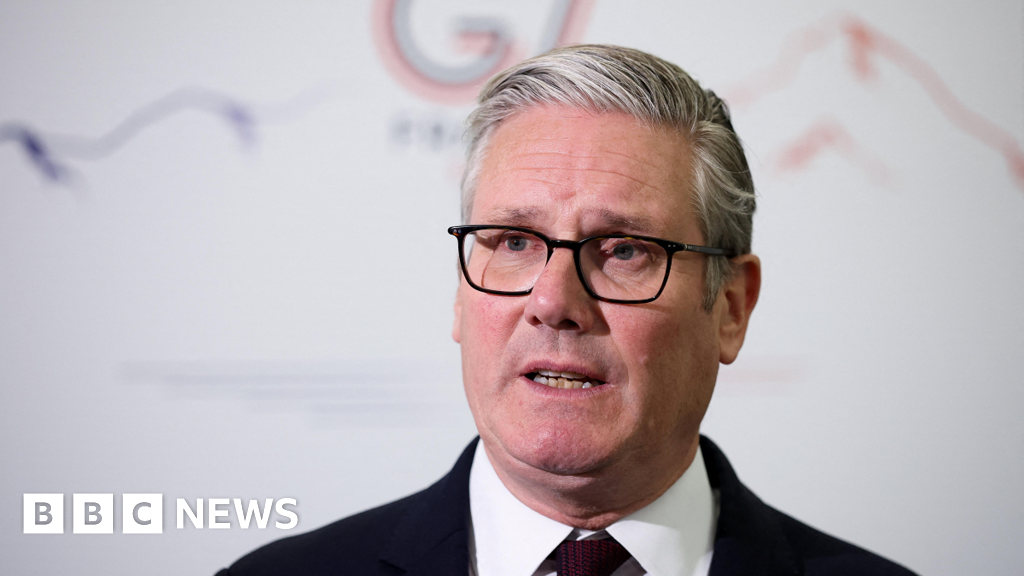
BBC Politics — 16 June 2026
Text:
35
0
0
The UK will play its "full part" in getting the Strait of Hormuz reopened "as soon as possible", Sir Keir Starmer has pledged. The prime minister sai
Read Full Story at BBC Politics →
⚡ Quickyla Analysis
Original editorial context — not sourced from the article above
The UK’s commitment to reopening the Strait of Hormuz underlines a broader geopolitical balancing act as Western powers seek to stabilize one of the world’s most critical maritime chokepoints. The strait, through which roughly a fifth of global oil transits, has become a flashpoint in recent years due to Iran’s aggressive posture, including the seizure of commercial vessels and drone strikes targeting shipping lanes. While the UK’s stance signals solidarity with allies like France, it also raises questions about the practicality of collective action in a region where military intervention carries significant risks. The promise of a full role in reopening the strait suggests a willingness to engage beyond diplomacy, but the absence of a clear timeline or specific strategy leaves open how this will translate into tangible steps.
The broader significance of this pledge lies in its timing. With global oil prices already volatile due to conflicts in Ukraine and the Red Sea, any disruption in the Strait of Hormuz could send shockwaves through energy markets, further straining economies still recovering from post-pandemic inflation. The UK’s involvement also reflects a shift in its foreign policy under Starmer, who has sought to distance himself from the more confrontational approach of his predecessor while maintaining a firm stance on maritime security. Yet, the challenge remains: Iran’s Revolutionary Guard has shown little willingness to back down, and past Western efforts to deter its actions—such as the short-lived maritime task force in 2019—have yielded limited results.
What happens next will depend on whether the UK’s allies can coordinate a unified response. The mention of collaboration with France hints at a European-led effort, but the absence of the US, which has historically taken the lead in the region, complicates the equation. Will this be a multilateral mission, a series of targeted strikes, or a return to negotiations fraught with distrust? The answers will shape not just the strait’s future but also the credibility of Western deterrence in the Persian Gulf. For now, the pledge is a statement of intent—but intent alone will not stop a tanker from being seized or a drone from striking a cargo ship.
" in getting the Strait of Hormuz reopened "
— BBC Politics
Sources

🏛️ Politics
Secretary of State Marco Rubio faces questions about Iran war on Capitol Hill

🏛️ Politics
"Fujimori never again!" Protesters fill streets of Lima ahead of Peru presidential elections

🏛️ Politics
US not 'turning back' on Asia allies, but expects them to boost defence, says Hegseth

🏛️ Politics
Trump: Reports US, Iran stopped speaking ‘false and erroneous’

🏛️ Politics
Pence: There’s ‘clearly” been an effort to ‘rewrite’ Jan. 6 history

🏛️ Politics
Washington, Silicon Valley brace for AI job losses

