🌱 Environment
Live
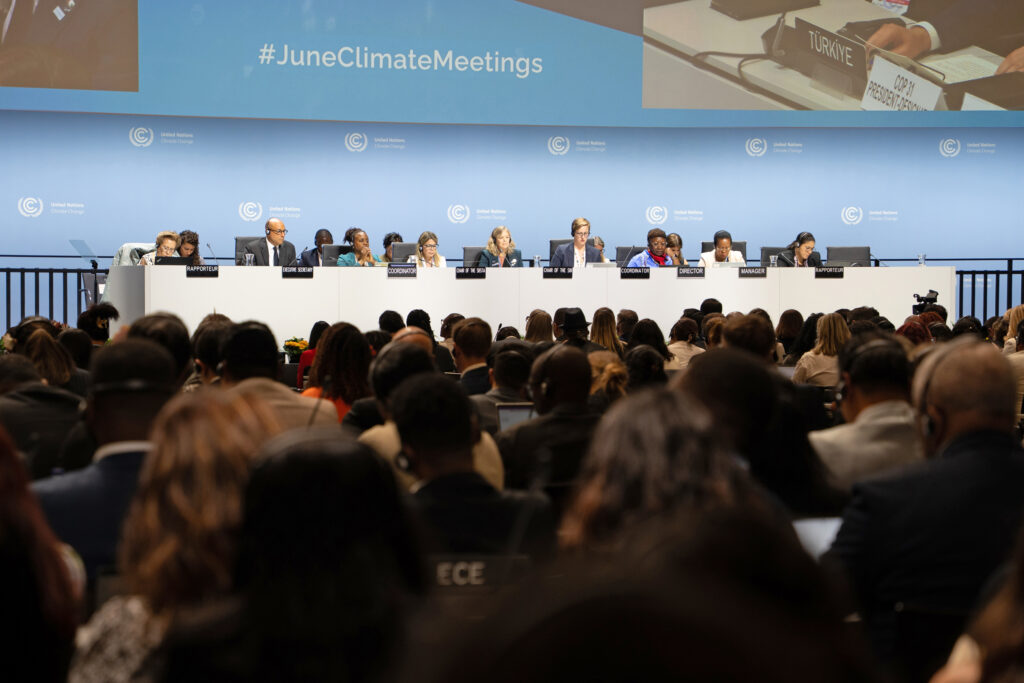
United Nations Climate Talks in Bonn Marked by ‘Sidestepping and Stalling’
The United States did not send a federal government delegation to the latest round of high-level global climate negotiations in Bonn, Germany, but the current administration’s foreign and economic pol
Inside Climate News — 18 June 2026
Text:
24
0
0
The United States did not send a federal government delegation to the latest round of high-level global climate negotiations in Bonn, Germany, but the
Read Full Story at Inside Climate News →
⚡ Quickyla Analysis
Original editorial context — not sourced from the article above
The absence of a U.S. federal delegation at the latest United Nations climate talks in Bonn underscores a troubling shift in global climate diplomacy—one that risks undermining the already fragile consensus on accelerating climate action. While the absence itself is symbolic, its implications are far-reaching. The United States, historically a key player in shaping international climate policy, has sent mixed signals under the current administration, with foreign policy and economic priorities often overshadowing environmental commitments. This disengagement weakens multilateral efforts just as the world grapples with record-breaking temperatures and escalating climate disasters, raising questions about the durability of global cooperation.
The Bonn talks, a mid-year checkpoint ahead of the critical COP29 summit, have long been a proving ground for negotiating positions rather than a venue for breakthroughs. Yet the lack of federal representation from the U.S. sends a message that could embolden other nations to deprioritize climate action, especially those already hesitant to commit to stringent emissions reductions. It also contrasts sharply with the growing momentum from subnational actors—states, cities, and corporations—within the U.S. that continue to push for climate policies despite federal inaction. This disconnect between national and subnational efforts highlights a broader trend: the fragmentation of climate leadership, where progress increasingly depends on non-state actors rather than unified government action.
Looking ahead, the absence of U.S. federal negotiators may further stall negotiations on critical issues like climate finance and fossil fuel phase-outs, where American influence has historically been decisive. It also raises questions about whether the U.S. will re-engage in time for COP29, particularly if geopolitical tensions or domestic political shifts alter its stance. Meanwhile, the void left by the federal government could be filled by other actors, but their impact will likely be uneven and less effective without coordinated state backing.
This moment serves as a reminder that climate diplomacy is not immune to the broader currents of geopolitical rivalry and domestic policy reversals. As the world edges closer to irreversible climate tipping points, the consequences of such sidestepping and stalling are becoming harder to ignore.
Sources

🌱 Environment
Erin Brockovich criticizes Microsoft data center secrecy in Utah

🌱 Environment
Rescues in eastern Syria after the Euphrates River bursts its banks

🌱 Environment
Indonesians mark 20 years since mud volcano eruption swallowed up entire communities in East Java

🌱 Environment
Biden’s Clean Drinking Water Plan Is Being Rebranded as MAHA
🌱 Environment
Heat is Killing Wildlife Across the Animal Kingdom. A New Forecasting Tool May Help

🌱 Environment
Trump’s EPA Unlawfully Cancelled Environmental Justice Grants, Judge Rules

