⚽ Sports
Live
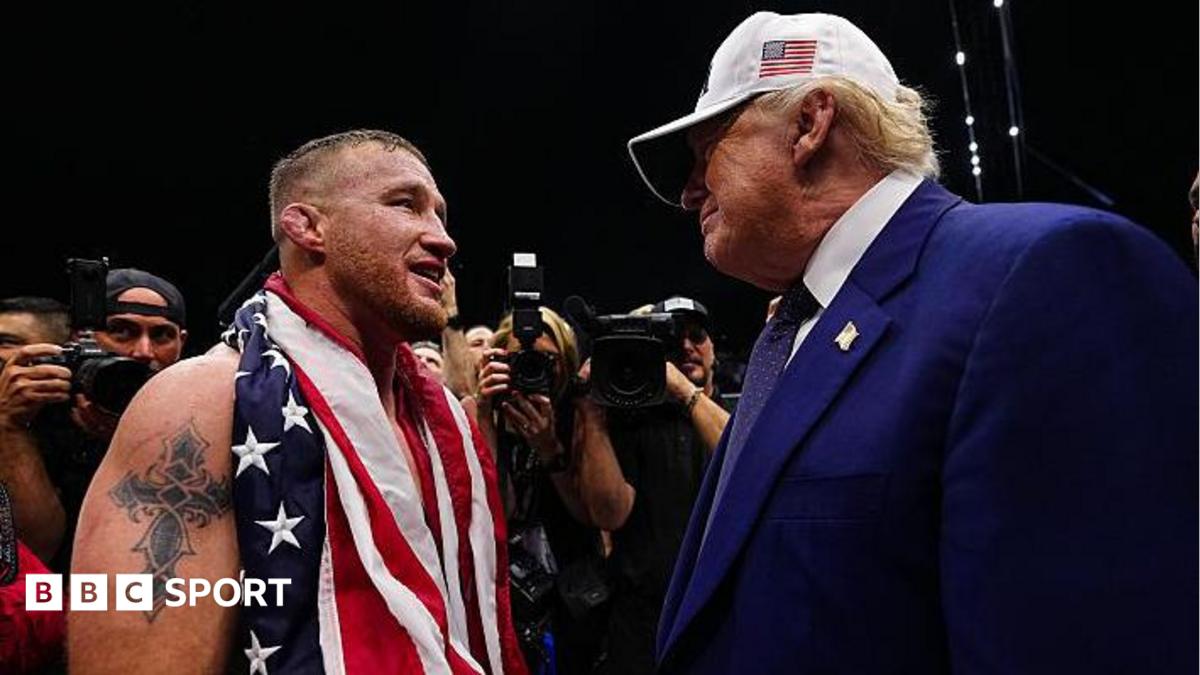
US star Gaethje wins at Trump's UFC White House show
Justin Gaethje provided the perfect ending for American fans at the White House as he shocked Ilia Topuria to win the UFC undisputed lightweight title. American Gaethje, 37, shrugged off his underdo…
BBC Sport — 14 June 2026
Text:
28
0
0
Justin Gaethje provided the perfect ending for American fans at the White House as he shocked Ilia Topuria to win the UFC undisputed lightweight title
Read Full Story at BBC Sport →
⚡ Quickyla Analysis
Original editorial context — not sourced from the article above
The outcome of Justin Gaethje’s victory at the UFC show held at the White House transcends mere sports headlines, embedding itself in the intersection of athletics, politics, and national identity. Gaethje’s decisive triumph over Ilia Topuria not only cements his legacy as one of MMA’s most exciting competitors but also delivers a symbolic boost to American combat sports at a moment when the UFC is expanding aggressively into new markets. For a promotion that has long leaned on narratives of elite competition and global reach, this title fight—staged in the heart of American political power—serves as a calculated PR maneuver, aligning the UFC’s brand with prestige, patriotism, and mainstream appeal.
Gaethje’s journey to the top is itself a compelling narrative, one that underscores the UFC’s ability to transform raw intensity into marketable spectacle. The 37-year-old fighter, once considered a journeyman welterweight, reinvented himself as a lightweight phenom, leveraging a relentless fighting style that resonates with fight fans tired of technical stalemates. His rise coincides with a broader shift in combat sports, where personality-driven athletes—think Conor McGregor or Jon Jones—often eclipse pure technical mastery in generating fan engagement. Gaethje’s persona, steeped in blue-collar grit and unapologetic aggression, fits squarely within this mold, making him a natural draw in an era where entertainment value rivals athletic prowess.
Looking ahead, the fallout from this victory could ripple through several dimensions. Domestically, it may accelerate the UFC’s push into government and corporate partnerships, capitalizing on Gaethje’s newfound status as a champion to court sponsors and broadcast deals. Internationally, Topuria’s defeat raises questions about the UFC’s lightweight division’s future dominance, particularly as younger European and Brazilian fighters continue to rise. Could Gaethje’s reign spark a wave of American title defenses, or will the UFC seek to globalize the narrative further by pitting him against an international rival in a high-profile rematch?
Ultimately, this fight is less about Gaethje’s personal redemption and more about the UFC’s ability to manufacture moments that feel both sporting and culturally resonant. In an age where combat sports vie for legitimacy against traditional athletic leagues, staging a title fight at the White House is a masterstroke of branding—a calculated gamble that the story of an American champion triumphing on the world’s biggest stage will outshine the spectacle itself.
Sources
⚽ Sports
Don’t underestimate young athletes — the NAACP boycott plan could actually work

⚽ Sports
The football fans who went to a World Cup and loved it so much, they stayed
⚽ Sports
Barcelona Is Reportedly Pushing For Roony Bardghji’s Summer Exit

⚽ Sports
Arkansas baseball can't overcome pitching, defensive flaws as 2026 season ends
⚽ Sports
English clubs monitoring Marseille midfielder Tochukwu Nnadi’s situation
⚽ Sports
Vaibhav Sooryavanshi score today: How many runs did teenager score in India A vs Sri Lanka A in tri-series match


