What Hungary must do to receive EU funds frozen under Orban
Hungary must meet 27 binding conditions by August 31 to unlock €16.4 billion in frozen EU funds, including anti-corruption and academic freedom reforms. Failure to comply with any condition risks los…
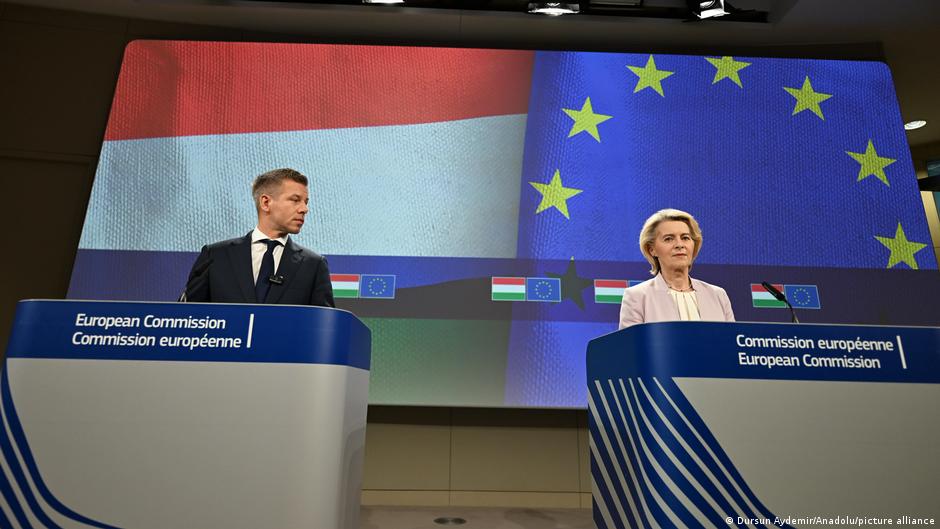
Hungary has taken a critical step toward unlocking €16.4 billion in frozen EU funds after striking a deal with the European Commission, but must now m
Read Full Story at DW World →Why This Matters
The standoff over Hungary’s frozen EU funds isn’t just a budgetary dispute—it’s a test of whether the bloc can enforce its core values against a member state that has systematically undermined them. Brussels’ conditions strike at the heart of Viktor Orbán’s governance model, targeting corruption networks and academic crackdowns that have long insulated his power. If Hungary fails to comply, it could embolden other illiberal leaders to defy EU oversight, while success might set a precedent for conditional funding across the union.
Background Context
Hungary’s relationship with the EU has been rocky since Orbán’s Fidesz party returned to power in 2010, when it began reshaping institutions to concentrate power. The 2020 rule-of-law mechanism tied structural funds to governance standards, but Budapest has exploited loopholes, arguing the conditions are political interference. Meanwhile, Orbán’s government has weaponized state media, weakened judicial independence, and turned universities like Central European University into symbols of resistance—moves that now face EU scrutiny.
What Happens Next
By August 31, Orbán faces a stark choice: concede to reforms or risk permanent funding cuts that could strain Hungary’s already fragile economy. Analysts expect partial compliance—enough to unlock some funds while preserving key pillars of his system—but even cosmetic changes could trigger backlash from his nationalist base. Brussels, meanwhile, must balance enforcement with the risk of pushing Hungary further into Moscow and Beijing’s orbit.
Bigger Picture
This clash reflects a broader erosion of EU cohesion, where democratic backsliding in Hungary, Poland, and beyond tests the bloc’s ability to act collectively. The funds dispute also highlights the limits of financial leverage—if Budapest calls the EU’s bluff, it could force Brussels to either escalate or accept a weakened rule-of-law framework. Either outcome will shape how Europe defines sovereignty and solidarity in the coming decade.








