🕌 Religion & Faith
Live
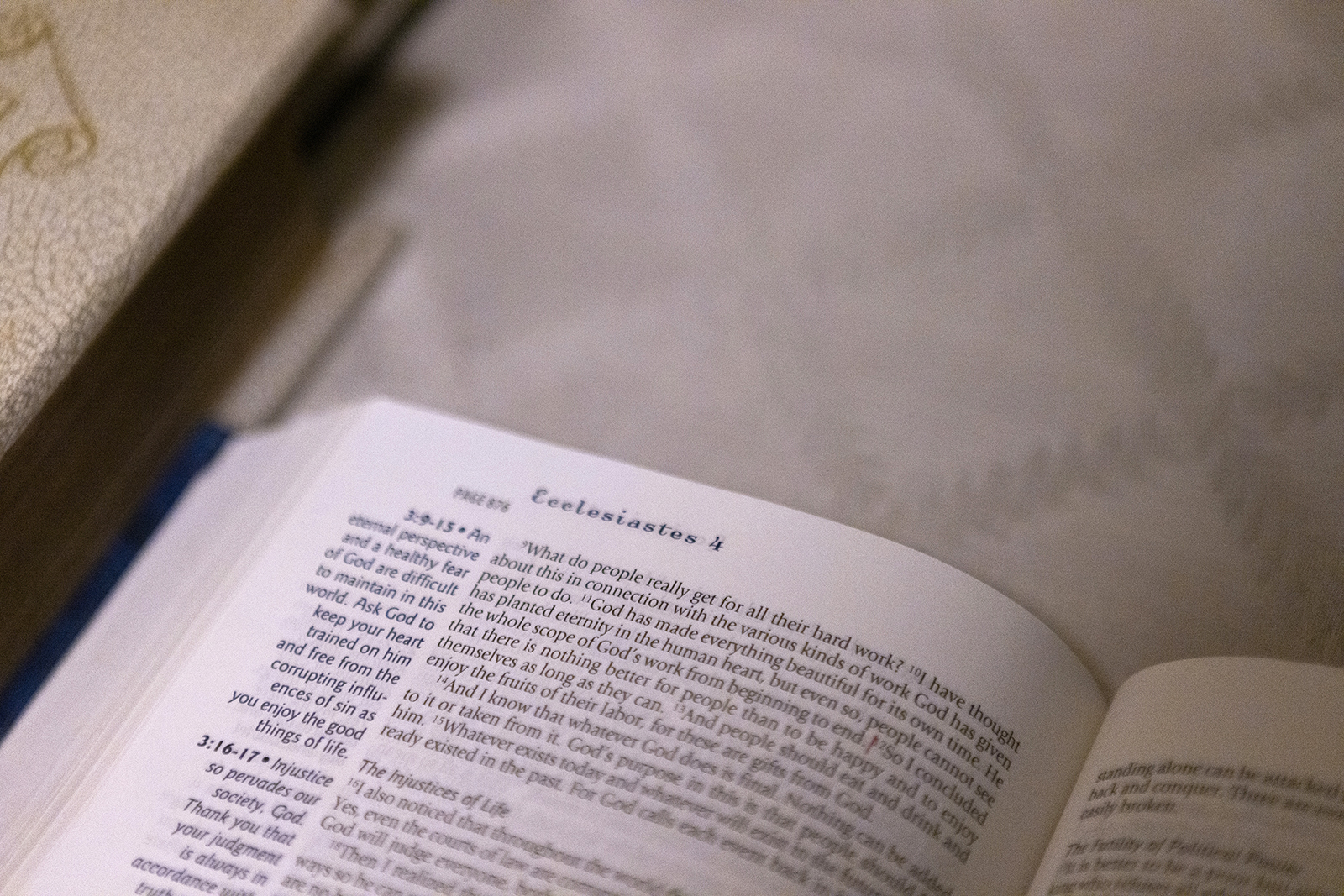
Which Bible passages are in Texas’ proposed student reading list? Here’s what the sections reveal.
(RNS) — The chosen readings, to be voted on by the State Board of Education, draw heavily from Christian perspectives.
Religion News Service — 19 June 2026
Text:
23
0
0
(RNS) — The chosen readings, to be voted on by the State Board of Education, draw heavily from Christian perspectives. This report comes from Religio
Read Full Story at Religion News Service →
⚡ Quickyla Analysis
Original editorial context — not sourced from the article above
The debate over which biblical passages Texas’ State Board of Education will include in its proposed student reading list isn’t just about literature—it’s a flashpoint in a broader cultural and political struggle over the role of religion in public education. The selection process, which leans heavily toward Christian texts, reflects a longstanding tension in how America balances secular governance with religious expression. Texas, with its outsized influence on textbook standards nationwide, often sets a precedent for other states, making this decision particularly consequential.
What makes this moment more fraught than past curriculum debates is the growing polarization around religious identity in education. For decades, conservative Christian groups have pushed for greater inclusion of faith-based texts in classrooms, arguing that biblical literacy is essential to understanding Western civilization. Critics, however, warn that such lists risk privileging one faith tradition over others, potentially alienating non-Christian students or imposing a particular worldview. The absence of robust representation from Jewish, Muslim, or secular perspectives in this draft underscores a deeper anxiety: whether public schools can ever truly be neutral spaces when it comes to religion.
The outcome of the State Board of Education’s vote could signal how aggressively Texas—home to one of the largest public school systems in the nation—will wade into these issues. If the list passes largely unchanged, it may embolden similar efforts in other states, especially where conservative majorities hold sway. Conversely, if opposition mounts, it could set a precedent for more inclusive approaches, particularly as the U.S. grows more religiously diverse.
Yet unresolved questions linger. Will the readings be presented in a historical context, or will they be framed as moral or theological lessons? How will teachers—many of whom lack deep biblical scholarship—handle potential controversies in the classroom? And what recourse do parents or advocacy groups have if they feel the selections are exclusionary? The answers will shape not just what Texas students read, but how the state defines the boundaries of public education in an era of deepening divides.
Sources

🕌 Religion & Faith
Defense Department rejiggers list of recognized religions after backlash, narrows it to 30
🕌 Religion & Faith
Odiong guilty in Texas: Questions remain for several Church leaders
🕌 Religion & Faith
Trump’s latest attack on Leo XIV isn’t really about the pope

🕌 Religion & Faith
Pope Leo XIII updates just war theory

🕌 Religion & Faith
Photos of the Week: Ebola responses, end of Hajj
🕌 Religion & Faith
High hopes, many challenges for Bangladesh’s first Indigenous Catholic MP

