💰 Business
Live
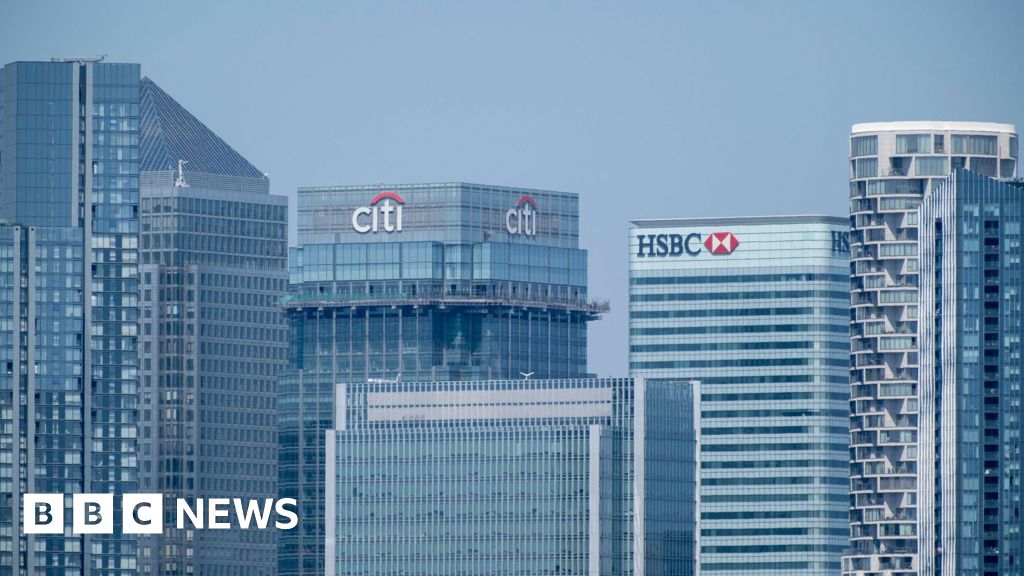
Brexit cost 6% of UK economy, Bank of England company data suggests
The UK economy has taken a 6% hit from the effects of Brexit, according to economists' analysis of internal Bank of England data about the decisions, views and financial results of thousands of Britis
BBC Business — 18 June 2026
Text:
22
0
0
The UK economy has taken a 6% hit from the effects of Brexit, according to economists' analysis of internal Bank of England data about the decisions,
Read Full Story at BBC Business →
⚡ Quickyla Analysis
Original editorial context — not sourced from the article above
The revelation that Brexit has shaved 6% off the UK economy—a figure derived from internal Bank of England data—frames the debate over Britain’s post-membership trajectory less as a political talking point and more as an economic reality. This isn’t just another retrospective on the 2016 referendum; it’s a quantitative confirmation that the structural costs of leaving the single market and customs union have been steep, pervasive, and, in many sectors, irreversible. The significance lies not merely in the magnitude of the loss—a hit comparable to a prolonged recession—but in what it signals for the UK’s long-term competitiveness. Unlike cyclical downturns, this drag is likely to persist, sapping productivity growth and deterring investment in industries now operating under less favorable terms than their European peers.
The backdrop to this finding is a decade of deliberate policy choices. The UK’s trade relationship with the EU evolved from frictionless access to a patchwork of customs checks, regulatory divergence, and delayed adjustments in supply chains. Smaller businesses, with thinner margins and fewer resources to navigate new compliance burdens, bore the brunt early on. Meanwhile, sectors like financial services, which initially weathered the storm through temporary arrangements, now face mounting uncertainty as the EU’s equivalence rulings lapse and capital increasingly flows to continental hubs. The Bank of England’s internal data, drawn from corporate surveys and financial reports, offers a rare unfiltered glimpse into these adjustments—one that avoids the noise of political rhetoric.
Looking ahead, the question isn’t whether Brexit’s economic toll will continue to mount but how the UK will respond. Will policymakers double down on deregulation to offset lost market access, risking divergence from EU standards and further straining cross-border trade? Or will they seek incremental rapprochement, perhaps through mutual recognition agreements or sector-specific deals? The absence of a clear, long-term strategy leaves businesses in a state of prolonged limbo, where investment decisions are deferred and talent pipelines remain precarious.
More broadly, this episode underscores the trade-offs of economic sovereignty in an interconnected world. The UK’s experience serves as a cautionary tale for other nations weighing the allure of regulatory autonomy against the tangible costs of reduced access to a market of 450 million consumers. For Britain, the challenge now is to mitigate further damage—not by rewriting the past, but by making the most of the present.
Sources

💰 Business
How 'confused' AI rollout hurts firms and baffles staff
💰 Business
OpenAI let ChatGPT aid and abet mass shooters, Florida lawsuit claims

💰 Business
AI giant Anthropic announces plans to list on US stock market

💰 Business
Caribbean hot sauce producers warn of shortages and higher prices

💰 Business
Bill debt soars but many don't know help is available

💰 Business
Ferrari wanted to take on Chinese EVs with the Luce - then the backlash started

