💰 Business
Live
Fed holds US interest rates steady as uncertainty over Trump's Iran deal remains
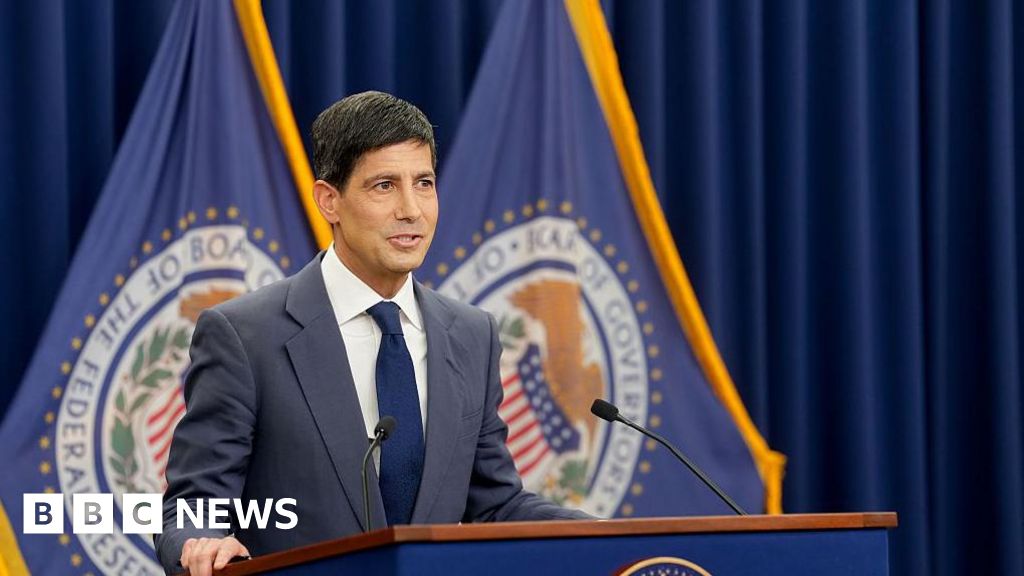
The Federal Reserve held US interest rates between 3.5% and 3.75% after Kevin Warsh's first meeting in charge of the central bank. Fed governors were split on whether to keep rates steady or increas…
BBC Business — 17 June 2026
Text:
22
0
0
The Federal Reserve held US interest rates between 3.5% and 3.75% after Kevin Warsh's first meeting in charge of the central bank. Fed governors were
Read Full Story at BBC Business →
⚡ Quickyla Analysis
Original editorial context — not sourced from the article above
The Federal Reserve’s decision to hold interest rates steady despite internal divisions underscores the delicate balance policymakers face as they navigate economic uncertainty, geopolitical risks, and shifting political winds. While the move itself is incremental, its significance lies in what it reveals about the Fed’s current priorities: stability over aggressive tightening, even as inflation pressures persist and growth shows signs of cooling. The split among governors—some favoring further hikes, others content with the status quo—hints at a deeper debate over whether the central bank has already done enough to curb inflation without stifling a fragile economy. This uncertainty comes at a precarious moment, with the U.S. labor market softening and consumer spending cooling, yet core inflation still running above the Fed’s 2% target.
The backdrop to this decision is a global landscape fraught with unpredictability. The prospect of a renewed Iran nuclear deal—or the collapse of talks—could roil oil markets, adding another layer of risk to inflation forecasts. Meanwhile, the Fed’s leadership transition under Kevin Warsh, a critic of the Fed’s post-crisis monetary policy, introduces an element of unpredictability. Warsh’s tenure so far suggests a willingness to challenge conventional wisdom, which could reshape how the Fed communicates and adjusts policy in the coming months. His appointment also reflects a broader shift in economic governance, where traditional technocratic approaches face scrutiny from political and ideological quarters.
What happens next remains an open question. If inflation fails to decelerate as hoped, the Fed may resume hikes, risking a policy mistake that could tip the economy into recession. Alternatively, if growth slows more sharply than expected, the central bank could pivot to cuts sooner than markets anticipate, testing the resilience of an already debt-laden financial system. The geopolitical wildcard of Iran only complicates the calculus, as energy price shocks could force the Fed’s hand regardless of its preferred trajectory.
This moment is emblematic of a larger trend: the erosion of clear monetary policy playbooks in an era of overlapping crises. With fiscal policy increasingly politicized and global supply chains still fragile, the Fed’s once-predictable toolkit is being stretched in new directions. How it adapts—and whether it can maintain credibility amid such uncertainty—will define not just the next chapter of U.S. economic policy, but the broader narrative of central banking in a post-pandemic world.
Sources

💰 Business
How 'confused' AI rollout hurts firms and baffles staff
💰 Business
OpenAI let ChatGPT aid and abet mass shooters, Florida lawsuit claims
💰 Business
AI giant Anthropic announces plans to list on US stock market

💰 Business
Caribbean hot sauce producers warn of shortages and higher prices

💰 Business
Bill debt soars but many don't know help is available

💰 Business
Ferrari wanted to take on Chinese EVs with the Luce - then the backlash started

