💰 Business
Live
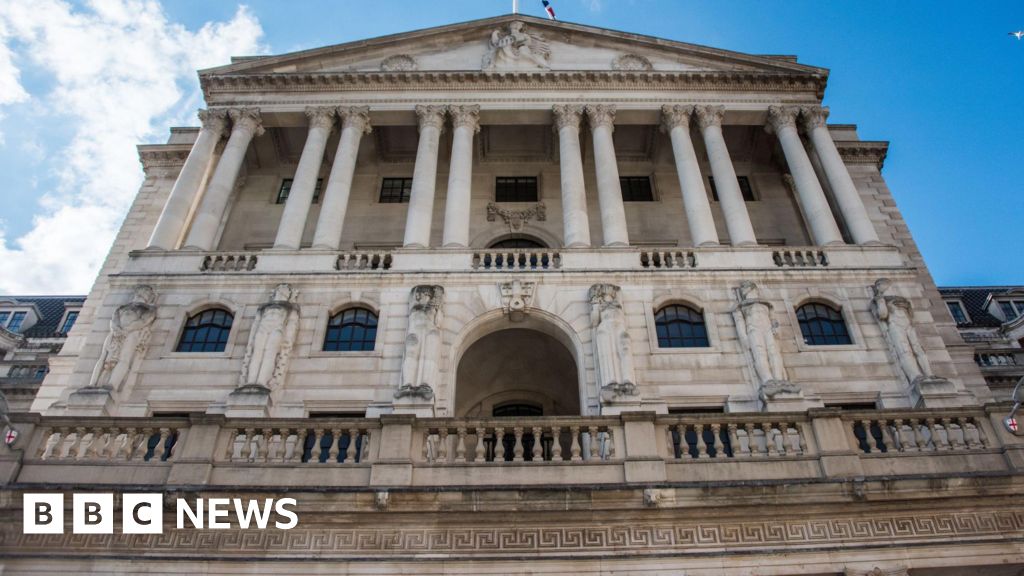
Interest rates expected to be held by Bank of England
Interest rates are expected to be held by policymakers at the Bank of England (BoE) who are keeping a close eye on events in the Middle East. The Monetary Policy Committee (MPC) is widely predicted …
BBC Business — 17 June 2026
Text:
25
0
0
Interest rates are expected to be held by policymakers at the Bank of England (BoE) who are keeping a close eye on events in the Middle East. The Mon
Read Full Story at BBC Business →
⚡ Quickyla Analysis
Original editorial context — not sourced from the article above
The Bank of England’s likely decision to hold interest rates at their current level—despite persistent inflationary pressures—underscores the delicate balance policymakers face in navigating a global economy still scarred by uncertainty. While the Monetary Policy Committee’s stance may seem predictable, the broader implications extend far beyond the immediate announcement. For households already grappling with elevated borrowing costs and for businesses weighing investment decisions, the BoE’s caution reflects a broader caution among central banks worldwide: the risk of over-tightening in an environment where growth remains fragile. The Middle East’s geopolitical volatility adds another layer of complexity, as energy price shocks could reignite inflation just as policymakers seek to stabilize it.
This decision is not made in a vacuum. The BoE has been one of the most aggressive major central banks in raising rates, with the base rate climbing from near-zero in 2020 to its current level. Yet, despite these hikes, core inflation has proven stubbornly high, fueled by services inflation and wage growth that show little sign of cooling. The persistence of these pressures has forced the BoE into a prolonged period of restraint, even as other major economies, like the U.S. Federal Reserve, may be nearing the end of their tightening cycles. The BoE’s reluctance to signal a definitive path—whether toward further hikes or eventual cuts—highlights the uncertainty of the inflation outlook.
Looking ahead, the key question is whether this pause marks the beginning of a prolonged hold or merely a temporary respite. Markets will be watching for subtle shifts in the MPC’s language, particularly regarding its forward guidance. If inflation fails to decelerate as hoped, the BoE may be forced to resume tightening, risking further strain on mortgage holders and corporate debtors. Conversely, if growth weakens more than anticipated, the door could open to rate cuts sooner than expected. The Middle East’s trajectory will remain a critical wildcard, as any disruption to energy supplies could force the BoE’s hand.
Ultimately, this decision is a microcosm of the broader challenges facing monetary policy in a post-pandemic world: balancing inflation control with economic stability in an era of unpredictable shocks. The BoE’s next moves will be scrutinized not just for their economic impact, but for what they reveal about the central bank’s willingness to tolerate slower growth in the name of price stability.
Sources

💰 Business
How 'confused' AI rollout hurts firms and baffles staff
💰 Business
OpenAI let ChatGPT aid and abet mass shooters, Florida lawsuit claims

💰 Business
AI giant Anthropic announces plans to list on US stock market

💰 Business
Caribbean hot sauce producers warn of shortages and higher prices

💰 Business
Ferrari wanted to take on Chinese EVs with the Luce - then the backlash started

💰 Business
Bill debt soars but many don't know help is available

